Gym Membership or Training at Home: The Calculation That Protects Your Budget
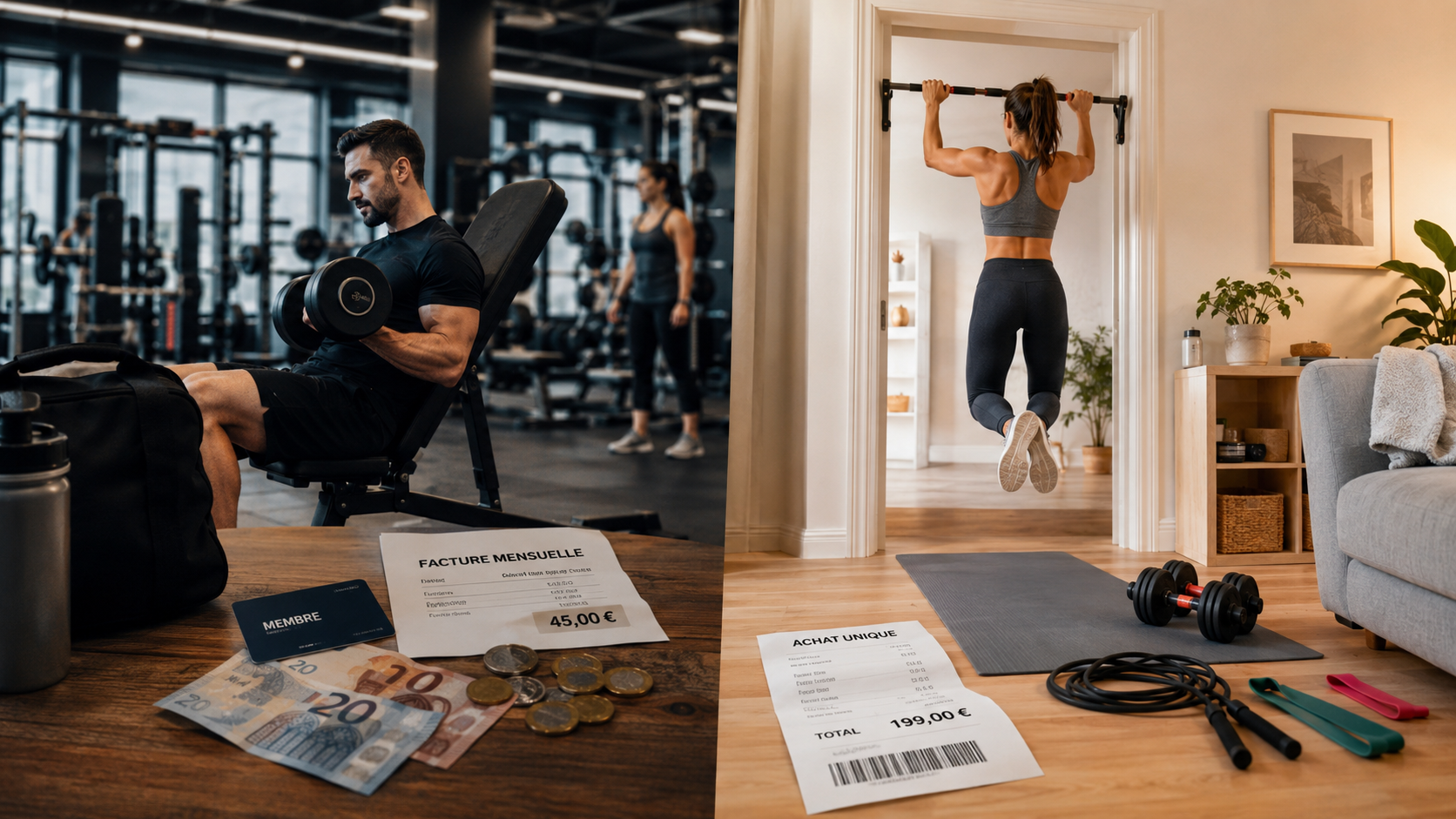
Every January, thousands of people sign a gym membership. Every March, a large share of them stop turning up and keep paying anyway. The real question was never gym or home. It is what exactly am I paying for, and what am I getting back?
The real cost of a membership, the part nobody adds up
The advertised price is rarely the final price. A budget club advertises a monthly rate, then adds a joining fee at signature, an access card, and sometimes an annual maintenance charge. Over a twelve-month commitment the total is well above twelve times the headline number, and the gap is exactly what stings at the end of the month.
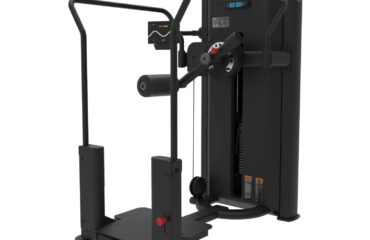
Move up a tier and the invoice climbs further. Budget chains, independent and mid-range clubs, and premium studios with unlimited classes or CrossFit sit at three very different price levels. That spread is not arbitrary: it reflects the quality of the training floor. A well equipped club invests in professional-grade strength training machines built to absorb hundreds of uses a day, where the budget option lines up entry-level equipment. You are not only paying for the building. You are paying for the robustness and the precision of the machines, and for the fact that they are still working in year five.
Then add what the club does not invoice but you pay anyway: fuel or a transport ticket, parking, and above all thirty to forty-five minutes of travel per session. At three sessions a week that is close to a hundred hours a year spent getting there rather than training.
The real black hole is the utilisation rate. A membership used twelve times a month costs very little per session. The same membership used twice a month costs six times as much per session. At that point it is not a subscription, it is a donation.
At home: an investment rather than an expense
Home training inverts the logic. You pay once, and the cost per session only falls from there.
A serious starter kit fits in a cupboard: an exercise mat, a full set of resistance bands, a skipping rope, a pair of adjustable dumbbells and a pull-up bar. Amortised over five years or more, it is ahead of a mid-range membership from the first year. To build it out, kettlebells give the best ratio of versatility to floor space, because a single weight covers conditioning, trunk work and strength. Add a library of free programmes or a low-cost app and you have enough progression for years.
The hidden advantage is elsewhere: at home there is no friction. No bag to pack, no journey, no weather excuse. And consistency beats premium equipment every single time.
What home training does not replace
Three things are genuinely hard to reproduce in a spare room.
Heavy loading. If the goal is a progressively heavier squat or bench press, adjustable dumbbells run out quickly. Training heavy in safety needs a rack or a power cage and a stable bench, equipment few living rooms can take and that clubs amortise across hundreds of members.
Coaching. A coach correcting technique prevents injuries that cost far more than a membership.
The group effect. For many people the atmosphere is the only thing that sustains twelve months of training. Paying to stay motivated is not waste.
The most cost-effective answer is hybrid
Keep the basic kit at home for the twenty-five-minute weekday sessions, the ones that would otherwise be cancelled. Save the club for one or two targeted visits covering what you cannot do at home: heavy loading, or the cardio machines such as treadmills, rowers and bikes, whose serious home equivalent costs more on its own than several years of membership. Many operators sell drop-in sessions or ten-visit passes, which are often better value than an under-used contract.
Three checks before you sign
- Use the trial period. Count the visits you actually make, not the ones you imagine. It is also the moment to judge the training floor: a club that equips to professional standards is easy to spot from the machines and how well they are maintained.
- Divide the annual cost by your real visits. Set yourself a ceiling for the cost per session and reassess if you go past it.
- Read the cancellation clause. That is where twelve-month commitments hide.
What this means if you run the club rather than join it
Everything above is the calculation your prospects are already doing. Two conclusions follow. First, the equipment is the product: the price tier you can defend is the one your training floor visibly justifies. Second, retention is decided by friction and by queues, not by the offer that got the member through the door. A room where the machines work, where nobody waits, and where the induction is structured is a room where the per-session maths keeps working in your favour.
If you are specifying or refreshing a floor, tell us the surface area, the membership profile and the price positioning you are aiming at, and we will build the equipment list around it. Request a quote for a costed proposal.
The best programme is the one you actually follow. The best training budget is the one that still leaves you comfortable at the end of the month.