Gym Equipment for Holiday Rentals: Buying and Installation Guide
Une résidence de vacances s'équipe en matériel professionnel compact, utilisable sans encadrement par des publics de tous niveaux. La saisonnalité de la fréquentation et l'absence de personnel imposent des équipements robustes et sans réglage complexe. L'installation et le sol se traitent en même temps que le matériel.
A fitness room has become one of the amenities guests look for when they book a holiday residence, an aparthotel or a serviced apartment block. It is also one of the easiest amenities to get wrong: the space is small, there is rarely any staff on the floor, and the users change every week. This guide sets out how to specify, install and run a fitness room in a holiday property so that it adds value instead of adding liability.
Specifying the equipment
Start with the available space
Before choosing anything, measure the room. Note the usable floor area, the ceiling height, the position of doors and windows, and the access route the equipment will have to travel on delivery day. A treadmill that cannot pass a stairwell is a common and expensive surprise. The equipment also has to suit the look of the property, not only its dimensions.
Know who actually stays
Guest profile drives the specification. A residence that fills with couples and business travellers needs a different mix from one that fills with families or with groups training for an event. Record what your guests ask for at reception over a season; it is better data than any generic recommendation.
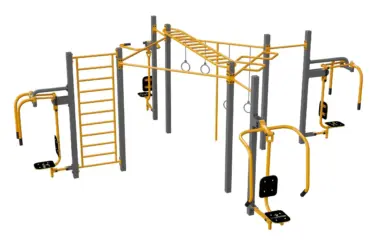
One point deserves care: fitness equipment built to EN ISO 20957-1 is designed for adults. Treadmills and exercise bikes are not children’s equipment and should not be presented as such in an unsupervised room. Where families are the core clientele, the right answer is a clear minimum-age rule posted at the door and, if the site allows, a separate outdoor play or activity area designed under the standards that apply to children’s equipment.
Buy professional-grade equipment
An unsupervised room open to changing guests is a demanding environment. The reference for indoor equipment is EN ISO 20957-1 class S, the professional class for commercial installations. Class S machines cost more at purchase and less over their life, because they survive continuous use by users of every size and ability without constant repair.
Offer a small but complete range
Guests arrive with different habits. A workable mix in a modest room combines at least one cardio machine, a small set of dumbbells with a bench, and clear floor space for mat work. The number of cardio machines follows from the number of units and from observed occupancy, so it is worth counting before ordering. Consider:
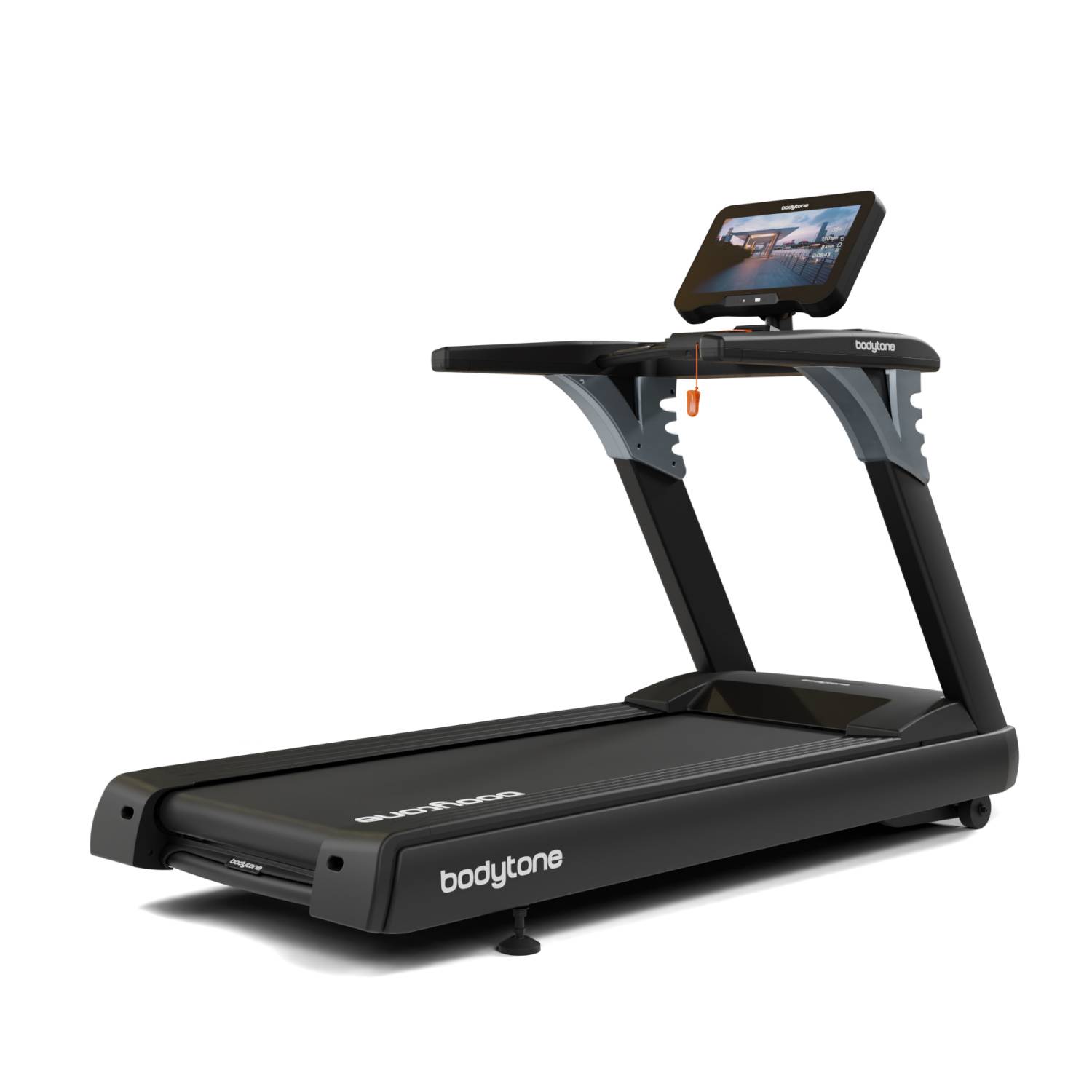
- professional treadmills for the most requested cardio option;
- exercise bikes, comfortable and accessible to almost every guest;
- cross trainers for low-impact full-body work;
- free weights and a bench for guests who train with resistance;
- mats, blocks and straps for stretching, mobility and yoga.
Plan the storage
Small equipment left on the floor is the fastest way to make a small room feel chaotic and unsafe. Provide a rack or a cupboard for mats, dumbbells and accessories, and make it obvious enough that guests use it.
Installing the room properly
Use qualified installers
Correct assembly, correct anchoring where required, and a documented handover are what make the room safe and insurable. Professional installation also brings a second opinion on layout and on the clearances around each machine.
Get the flooring right from the start
Flooring is not a finishing touch; it is part of the equipment specification. It protects the structural floor, cuts impact noise for the rooms below and gives a stable surface for free weights. Specify it at the same time as the machines. See the range of rubber gym flooring tiles.
Ventilate the space
A fitness room needs real air movement. Openable windows or a suitable mechanical ventilation system prevent the humidity and odour build-up that follow a busy morning. In converted basements and garages this is usually the item most often underestimated.
Give clear instructions
Post concise usage and safety instructions beside each machine, in the languages your guests actually speak. Include the opening hours of the room, the minimum age, and a contact number for faults. Clear signage prevents most misuse and most damage.
Provide the comfort items
Seating, a mirror, clean towels, a water point and access to showers and changing facilities turn a room full of machines into an amenity guests mention in reviews.
Running the room across the season
- Daily visual check. Cables, running belts, screens, loose fixings. Two minutes per machine.
- Scheduled servicing. Follow the manufacturer intervals for each model, and book the annual service before the high season rather than during it.
- Fault procedure. Any machine with a defect is taken out of service with a visible notice, not left for the next guest to discover.
- Cleaning. Provide wipes and a bin, and include the room in the daily housekeeping round.
Equipment well suited to holiday properties
| Equipment | Why it works in a holiday residence |
|---|---|
| Treadmill | The most requested machine; suits every fitness level and needs no instruction |
| Exercise bike | Comfortable, low risk, accessible to almost every guest profile |
| Cross trainer | Low-impact full-body work, quiet, good for a room above accommodation |
| Dumbbells and bench | Compact resistance training with a very small footprint |
| Mats and mobility accessories | Cheapest way to widen the offer; also serve stretching and yoga |
Accessories are covered in the fitness accessories range.
Frequently asked questions
How much space does a small fitness room need?
It depends on the machines chosen and on the clearances each manufacturer specifies around them. Take those figures from the technical drawings of the models on your shortlist rather than from a rule of thumb, and add circulation between machines.
Can guests use the room without supervision?
Yes, provided the equipment is professional-grade, the room is signed, the access rules are clear and the maintenance is documented. Those four conditions are what make unsupervised access defensible.
Should children be allowed in?
Adult fitness equipment is not designed for children. Set and display a minimum age, and provide a separate, properly specified play or activity area if young families are a core market.
What about noise for the units below?
Impact noise is controlled by the flooring build-up, not by the machines. Where the room sits above accommodation, specify an acoustic underlay under the surface layer and check it with the building structure.
Planning your fitness room
Every property is different: floor area, ceiling height, structure, guest profile and season length all change the answer. Share the room dimensions and the number of units, and the specification can be built back from there. Request a quote for a costed equipment and flooring proposal for your residence.