
How to Avoid Injuries in the Gym: Eight Ways That Work
Every activity carries some exposure to injury. Gym training rarely produces serious ones, but a poor approach can do lasting damage to tendons, joints and muscles. For an operator that matters twice over: an injured member stops attending, and a room where injuries keep happening has a layout, an induction or an equipment problem rather than an unlucky membership.
This article sets out eight ways to prevent injuries in a gym, the injuries that actually occur most often, and how to bring someone back to full training afterwards. It is written for the people who run the room as much as for the people training in it.
The short version
Warm up properly, hydrate, use equipment that suits the activity, execute with correct technique, raise intensity gradually, allow real recovery, and see a health professional if pain persists. Everything below expands on those points. The most common causes of gym injury are shoulder and knee joint damage, and damage to muscles exposed to increased contraction and stretch during exercise.
Eight ways to prevent injuries in the gym
1. Do not jump in at the deep end
Beginners, over-motivated, sign up and train daily at high intensity, on the assumption that the more frequent and more intense the training, the faster and more durable the result. For someone whose body has never met increased physical load, that approach produces overload and a long break from training instead. More is not always better. Plan the whole training process and progress in small steps.
From the operator’s side, this is an induction question. A structured first four weeks does more to protect a new member than any warning sign on the wall.
2. Pay attention to technique
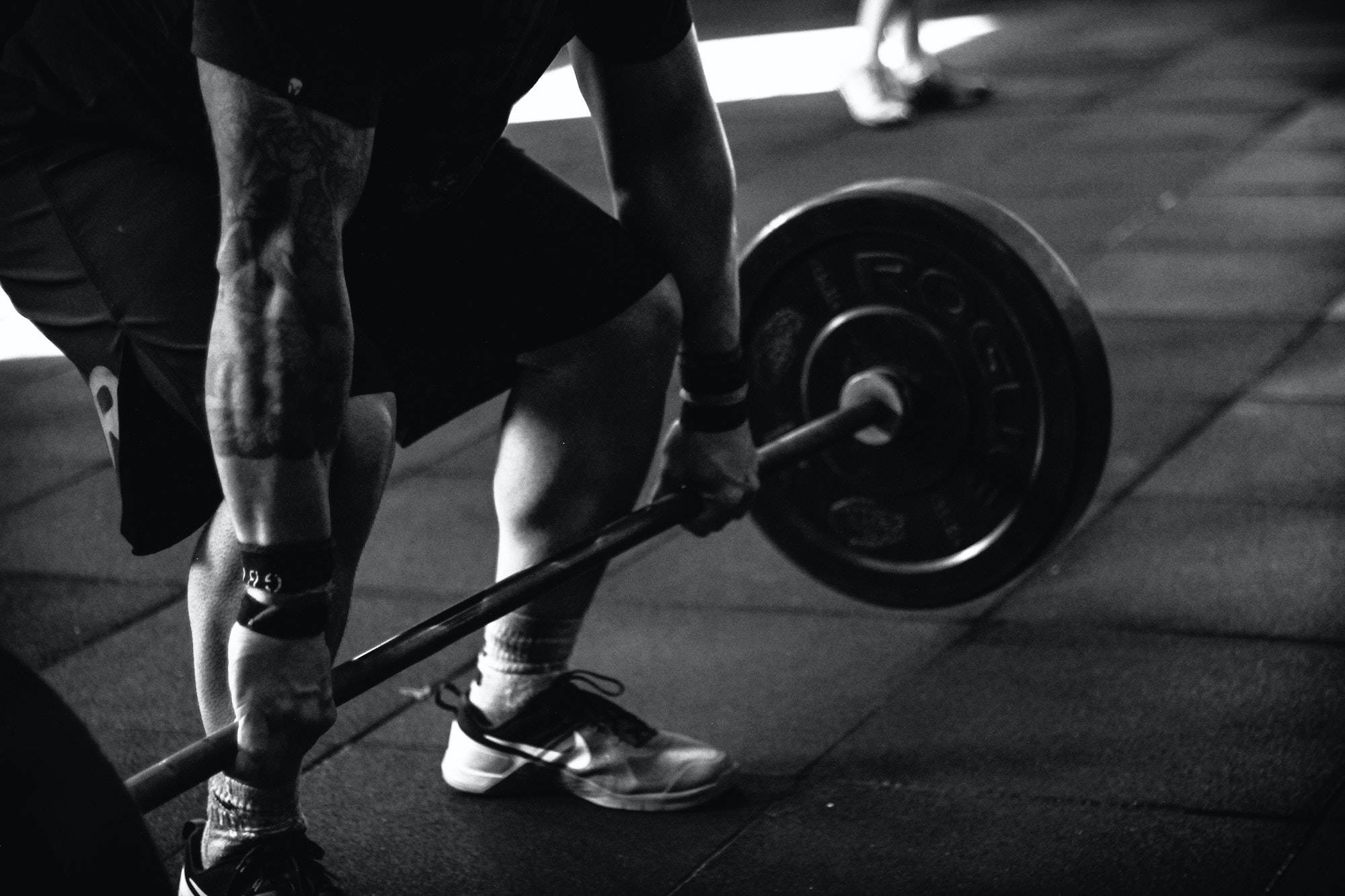
Correct technique is the absolute basics of gym training. Rounding the back, poor knee tracking, hyperextending joints and breathing badly are the most common errors on the floor. At best, poor technique holds back progress. At worst, it produces the injury. Shoulder, knee, wrist and back injuries most often come from incorrect execution, and mainly on multi-joint movements: the deadlift, the squat and the barbell press.
This is where equipment specification interacts with safety. Selectorised and plate-loaded machines guide the path of movement, which is why a mixed-ability membership with limited coaching cover is usually better served by a strong machine circuit than by an all-free-weight floor. Our range of strength training machines covers both.
3. Remember the warm-up
The warm-up is a basic element of every type of training. It prepares the musculoskeletal system for work and considerably reduces injury risk, and it makes the session itself more productive: more weight moved, or a distance covered in a better time. Warming up raises muscle temperature and improves the elasticity of tendons and muscles.
The warm-up has to match the training. You do not warm up the same way before strength work and before a swim. About fifteen minutes is enough for a full warm-up. It is meant to prime you for work, not to tire you out, so plan it accordingly. A dedicated warm-up area with mats and functional training accessories keeps this off the machines and out of the free-weight walkways.
4. Work with a personal trainer
Particularly at the start, a few sessions with an experienced trainer are worth the money. The first weeks are when the biggest single problem is a lack of adequate core stabilisation. A trainer keeps the focus on technique and answers the questions a beginner would otherwise resolve by copying whoever is nearest. Training with a coach also raises motivation, and the coach selects exercises that match the goal and the person’s actual capacity.
5. Choose the right load
Getting the weight wrong is a serious mistake, and not only among beginners. A training plan should add weight slowly but steadily. If you complete the planned repetitions with good technique, try a small increase next session. Leave your ego in the changing room and concentrate on correct execution. That approach produces better results than heavier weights lifted badly. Most common injuries are the result of body strain caused by poor weight selection.
6. Train the whole body
To maintain muscular balance, develop the whole physique and keep the spine stabilised, training has to cover the whole body. Among beginners especially, it is very common to train only a few of the muscle groups they consider important, and most often the lower body is what gets skipped. A weak lower body relative to a strong upper body can cause knee pain or more serious muscular injuries. Full-body work is what allows the body to develop steadily and safely.
7. Use the right kit
This mainly concerns footwear, chosen according to the type of training. Running shoes and gym shoes are not the same thing. Running on hard surfaces calls for a soft, cushioned sole. That shoe works badly in the gym if you plan to squat or deadlift, and can lead to ankle sprains. For those movements a less flexible shoe with a firm sole works much better. Shoes should give good support and grip. Equally, machines and benches have to be adjusted and used correctly if muscle and joint damage is to be avoided.
The floor is part of the kit. Rubber tiles under lifting areas absorb dropped loads and give predictable grip, which is why rubber gym flooring tiles are specified before the racks are, not after.
8. Do not forget recovery
Sometimes recovery matters as much as the training. Without adequate regeneration, satisfying progress is impossible, because supercompensation happens during recovery and not during the session. Sleep enough, use cold or warm baths, sauna, or active rest. These are the simplest and most effective ways to regenerate. Stretching each muscle group after training helps relieve soreness and improves flexibility. Hydration belongs here too: drinking before, during and after effort supports circulation, aids recovery and prevents cramp.
The most common gym injuries
The most common injuries in the gym come from an incompetent approach to training rather than from bad luck. They include:
- joint pain,
- back pain,
- tendinitis,
- muscle strains.
If you use too much weight, do not focus on proper technique, or train harder than your capacity allows, sooner or later one of these will arrive. These are not severe injuries that rule someone out for a long period, but they are enough to stop a member finishing a training block. If one appears, the sensible response is a break from training and a consultation with a physiotherapist. Depending on the injury, a rehabilitation approach is chosen, which may include heat application and stretching work. Persistent pain should be assessed by a health professional, who can judge severity and set out a rehabilitation plan.
Getting back into shape after an injury
The most important thing is to let the injury heal completely, so that it does not return the moment training restarts. Plan the whole rehabilitation process, including the stage that reintroduces intensive training.
If you feel discomfort when you start exercising again, this is definitely not the moment to train at full effort. If you do not have the knowledge or the experience to get back to full fitness on your own, a physiotherapist and a personal trainer will help. After a period of injury, get the body used to repeated, intense effort again, but do it gradually. The more severe the injury, the longer the recovery generally takes.
What this means when you are fitting out a room
Most of the eight points above are behavioural, but four of them are decided by what you buy: guided machines that keep unsupervised users on a safe path, a warm-up and mobility zone that is not in the way, flooring that grips and absorbs, and adjustment ranges that fit the real span of your members. Tell us the floor area, the membership profile and how much coaching cover you have, and we will specify the room around it. Request a quote for a costed proposal.
Sources et références
- Code du sport, articles R322-4 à R322-43 – garanties d’hygiène et de sécurité applicables aux établissements d’activités physiques et sportives (Légifrance)
