Which Gym Equipment Should You Use to Build the Glutes?
In short: the glutes respond to a small number of well-chosen movements – squat, lunge, hip thrust, deadlift, hip abduction – and to the equipment that lets a member load them safely. For a gym operator, the question is less which exercise works than which stations to install so that every member, from beginner to advanced, can train the glutes properly.
The squat: the foundation of glute training
Among the most effective exercises for the glutes, the squat comes first. The movement, which consists of bending the knees while keeping the back straight, works the thigh and glute muscles intensively. It can be performed with bodyweight alone, and for greater intensity with dumbbells or a loaded barbell. That progression is exactly why a gym needs both a free-weight area and a rack: the same movement has to be available at every load level.
Lunges: a must for the glutes
Lunges are the other essential movement. From standing, the member steps one leg forward while bending the rear leg. Lunges mainly recruit the glutes, the quadriceps and the hamstrings. They need very little equipment – a clear floor area and a pair of dumbbells – which makes them a good fit for compact gyms, hotel fitness rooms and studio-format clubs.
Bands and abduction work
Another commonly used piece of equipment for the glutes is the resistance band. It allows leg abduction exercises, where the leg is moved out to the side against the resistance of the band. These exercises mainly recruit the gluteus medius and gluteus minimus. Bands cost little, take up no floor space and are easy to renew, which is why they belong in every well-stocked accessory rack.
Deadlifts and posterior chain work
For more global work on the glutes and legs, the deadlift is particularly recommended. The exercise consists of lifting a load, barbell or dumbbells, starting from a position with the legs bent and rising while keeping the back straight. The deadlift works the glutes, the hamstrings, the quadriceps and the lower back muscles.
Bodyweight movements
Beyond fitness equipment, the glutes can also be trained with bodyweight strength exercises. Among the most effective are squats, lunges, hip thrusts and glute bridges. All of these movements recruit the gluteal muscles and strengthen them, producing firm and well-shaped glutes.
Which stations to install in a commercial gym?
Free weights cover the basics, but a dedicated glute zone changes the picture for a club: it removes the technical barrier for beginners, it shortens the queue at the rack, and it gives coaches something concrete to programme. Three families of stations do the work:
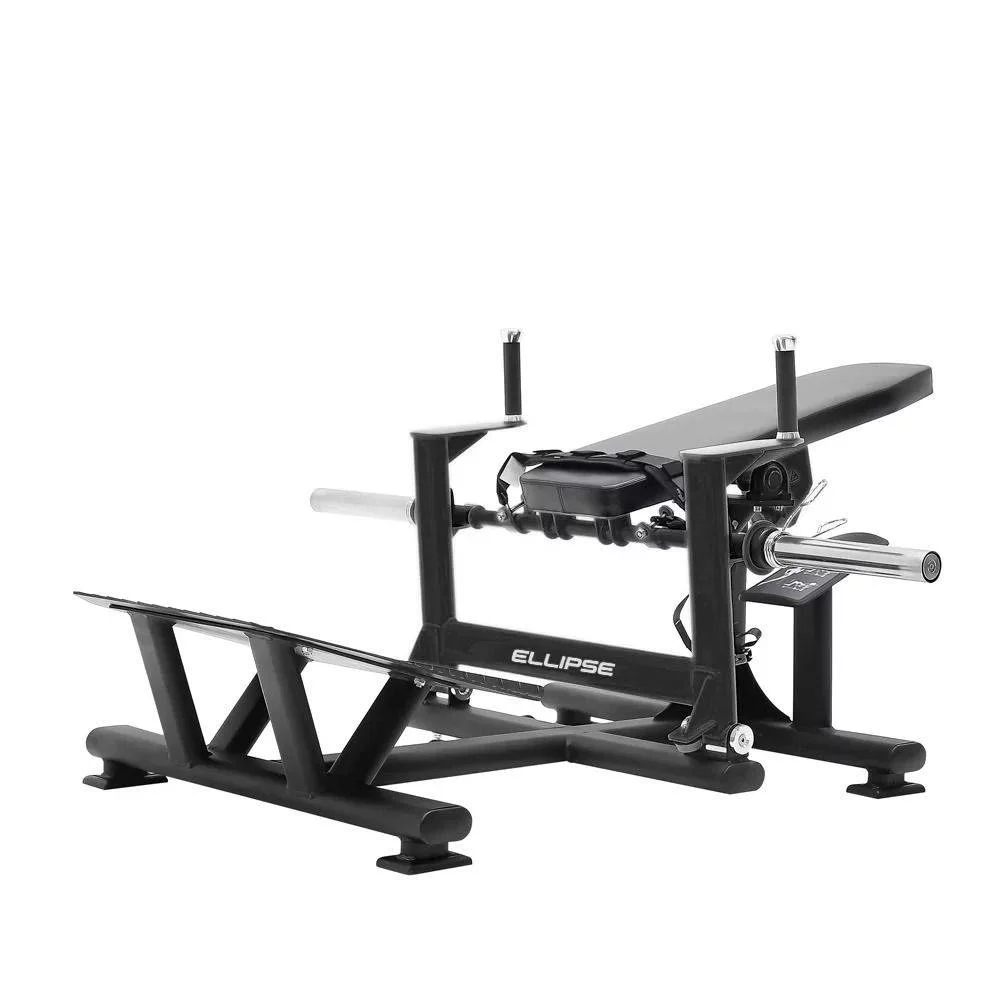
- A hip thrust station, which loads hip extension directly with a stable back support. The Gold Line hip thrust machine is the compact reference for this movement.
- A dedicated glute machine for unilateral hip extension, such as the Gold SPG017 glute machine, which lets a member isolate one side at a time.
- An abductor station for the gluteus medius, complementing band work with a measurable load.
Where the floor plan allows, grouping these stations together creates a coherent zone. Our Booty Area range is built around exactly that idea: a complete lower-body zone laid out as one block rather than as machines scattered across the floor.
Training, nutrition and cardio
Alongside equipment and strength exercises, a balanced diet and regular cardiovascular training matter for overall body composition. Strength work builds and shapes the muscle; nutrition and cardio determine how visible that work becomes. In a club, that argues for a leg and glute zone placed close to the cardio floor, so that a member can move from one to the other within a single session.
In summary, there are many pieces of fitness equipment and many strength exercises that build the glutes and produce visible results. Whether with specific equipment such as bands, dumbbells or exercise balls, or with bodyweight movements, it is possible to tone and firm the glutes while shaping the lower body. Do not forget to warm up before every session and to perform the movements under control, to avoid joint and muscle injuries.
FAQ: equipment for glute training
Which single machine is the most useful for the glutes?
The hip thrust station, because it loads hip extension directly, which is the primary function of the gluteus maximus, and because it is accessible to a beginner after a short induction.
Are resistance bands enough on their own?
They are an excellent complement, particularly for the gluteus medius and minimus through abduction work, but they do not allow the progressive heavy loading that a machine or a barbell provides.
How much floor space does a glute zone need?
It depends on the number of stations and on the circulation you want around them. Send us your floor plan and we will size the zone with you rather than quote a surface that would not match your room.
Building your glute zone
Choosing between a hip thrust station, a dedicated glute machine and a complete lower-body zone depends on your membership, your available surface and your budget. Send us your plan and your requirements through our quotation request page and we will come back with a costed proposal.