Connected Cardio Machines for Gyms: How Networked Cardio Changes Club Operations
Une machine cardio connectée enregistre les paramètres de séance et les restitue via une application ou un écran intégré. L'intérêt pour une salle porte sur le suivi des adhérents et l'animation de l'offre. La partie électronique constitue toutefois un poste de maintenance distinct de la mécanique.
Connected cardio has moved out of the consumer market and into the commercial floor. For a club operator, a networked treadmill or rowing machine is no longer a gadget: it is a source of attendance data, a retention tool and, increasingly, a line in the maintenance budget. This guide explains how connected cardio equipment actually works, what it changes for a gym, a hotel or a rehabilitation centre, and what to check before you specify it.
How connected cardio machines work
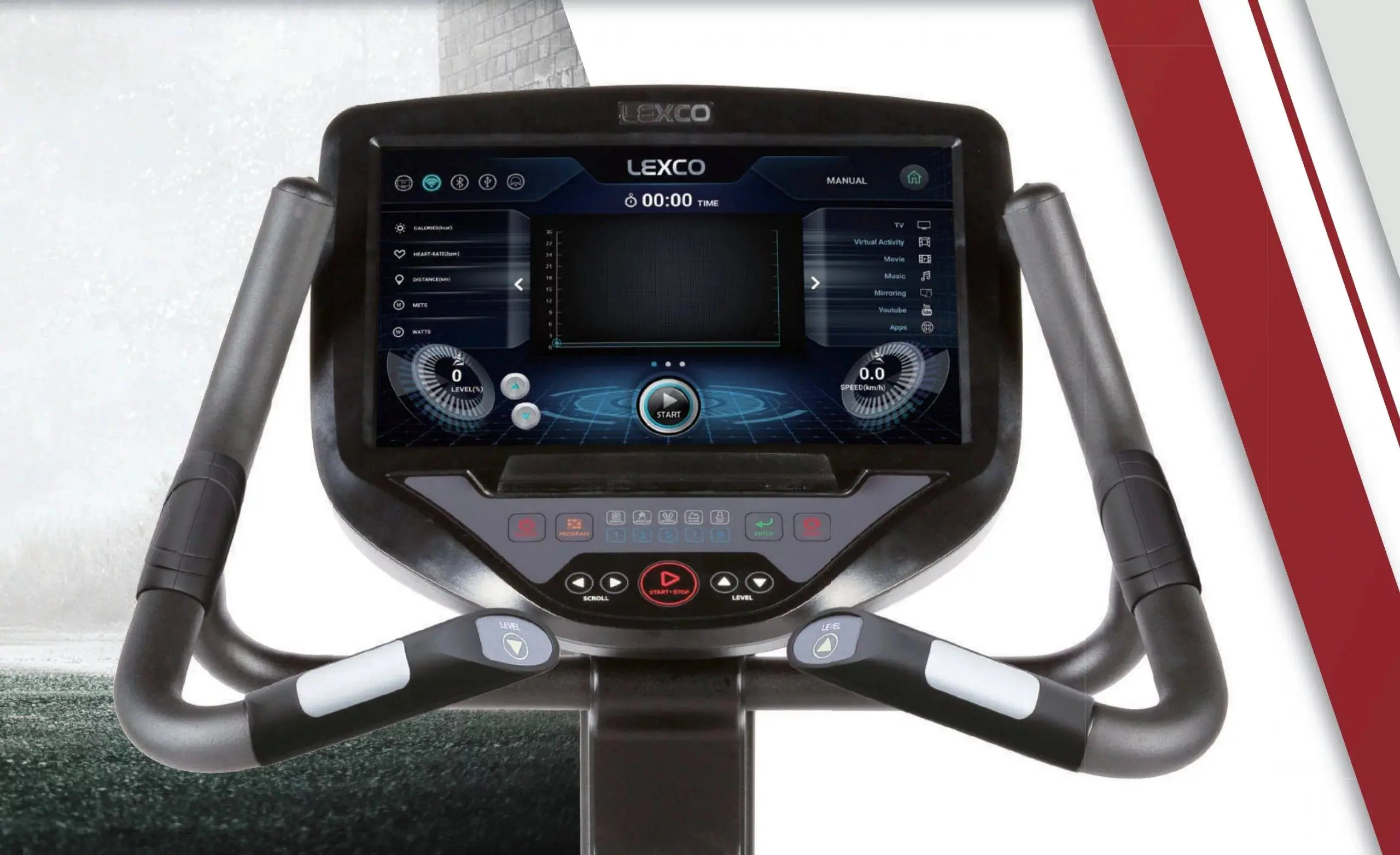
A connected cardio machine is a conventional ergometer fitted with a data layer. Sensors on the machine record the parameters the mechanics already produce: heart rate from a chest strap or hand grips, speed, distance, resistance level, cadence, elapsed time and an estimate of energy expenditure. A console or an embedded module then pushes that session record to an application, either over the club network or through the user own device.
The value for the operator is not the individual metric. It is the fact that sessions become records: who trains, on what, how often and for how long. That record can feed a member application, a coaching dashboard or a progress report handed to a client at the end of a programme. Online challenges and leaderboards are built on the same data and are, in practice, the feature members notice first.
Two points are worth stating plainly. Consumer-grade wearables and machine consoles do not measure the same things, and figures for calories burned remain an estimate derived from workload and body data entered by the user, not a measurement. Treat them as a motivational indicator, not as a clinical value.
What connected cardio changes for an operator
The first change is visibility. Networked machines show which stations are used and which are not. A club that discovers its cross trainers are running at half the occupancy of its treadmills has an argument for rebalancing the next equipment order rather than repeating the previous one.
The second is programming. When session data is available, a coach can build a progression for a member without re-entering anything by hand, and can see whether the programme was followed between two appointments. For a hotel gym or a corporate facility with no permanent staff, the application partly replaces the instructor who is not there.
The third is retention. Challenges, group rankings and shared objectives give an unattended cardio floor a reason to come back. This is the most commonly claimed benefit and also the hardest to quantify: it depends far more on how the club animates the feature than on the hardware itself.
The fourth, and the one buyers underestimate, is maintenance. The electronics are a separate maintenance item from the mechanics. A frame, a belt and a drive system age predictably; a console, a network module and an application do not, and their support life is set by the manufacturer, not by the wear of the machine. Ask about console spare parts and software support duration at the quotation stage, on the same footing as the mechanical warranty.
The connected cardio categories that matter on a commercial floor
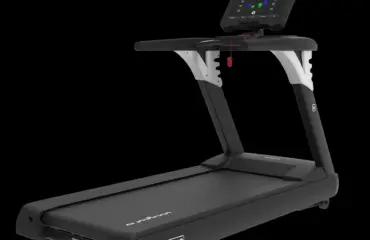
Connected treadmills are the reference station. They produce the richest session data – pace, incline, distance, split times – and they are the machines members most often want to see on an application. They are also the heaviest maintenance item on the cardio floor, and console connectivity does nothing to change that.
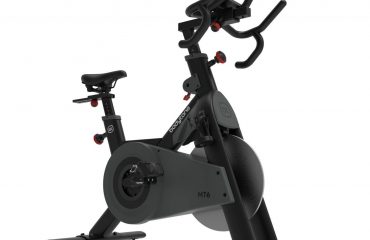
Connected upright and recumbent bikes are the workhorses. Resistance is measured accurately, the format suits long steady sessions, and recumbent models are the entry point for older members and for supervised reconditioning. Our professional exercise bike range covers both formats.
Connected rowing machines give the widest muscular recruitment for the smallest footprint, and their data – stroke rate, split per 500 m, power – is the most immediately readable for a coach. See the professional rowing machines currently available.
Connected cross trainers complete the line by offering a low-impact option for members who cannot absorb ground contact. Across all four formats, the Lexco connected cardio range is the line we most often specify for full-service clubs, alongside the Bodytone and Etenon cardio families – the Etenon V10T multimedia treadmill being a typical multimedia console configuration.
Connected cardio for recovery and reconditioning
Low-intensity work on a cardio machine is a standard tool for active recovery and for supervised return to activity after injury. Rowing machines and recumbent bikes are used here because load can be kept low and controlled, and because neither imposes ground impact.
What connectivity adds is traceability. A recorded session history lets a supervising professional see whether prescribed intensity limits were respected between two appointments, and lets them adjust a progression on evidence rather than on recall. That is a genuine benefit for a rehabilitation centre or a physiotherapy practice.
What connectivity does not add is diagnosis. A cardio console records workload and heart rate. It does not assess healing, and it does not detect overtraining on its own. Any protocol involving a patient remains the responsibility of the health professional in charge, under the national rules applicable in your country.
Specifying connected cardio: what to check before you order
Start with the mechanical specification, because that is what determines whether the machine survives commercial use. Indoor equipment for a professional installation must be certified to EN ISO 20957-1 class S. Class S is the requirement for a facility open to users you do not supervise individually – a club, a hotel, a residence, a municipal gym, a barracks. Class I is a professional class with inclusive access, not a higher intensity grade.
Then check the data layer, item by item. Which protocol does the console use, and does it export in an open format or only into the manufacturer application? Can the club retrieve its own data if it changes supplier? Who holds the member data, and under what terms? How long is console software supported, and are replacement consoles available separately from the frame? A machine whose mechanics will run for ten years and whose console is supported for three is a known and manageable situation – but only if you know it before you sign.
Finally, size the network. A cardio floor of connected machines needs coverage where the machines stand, not where the reception desk is. This is the single most common cause of disappointment after installation.
Frequently asked questions
Is connected cardio worth it for a small club?
It depends on whether anyone will use the data. A club with a coach who builds programmes will get value from day one. An unattended facility that switches on challenges and leaderboards can also get value, provided someone animates them. A club that buys connectivity and never opens the dashboard has paid for a feature it does not use.
Do connected machines require a subscription?
That depends entirely on the manufacturer and the application. Some consoles work standalone, some require an operator licence for the management dashboard. Ask for the subscription terms in writing with the quotation – this is a recurring cost, not a one-off one.
Are the calorie figures reliable?
They are estimates calculated from workload, duration and the body data entered by the user. They are consistent enough to compare one session with the next on the same machine, and they should not be presented to members as a measurement.
Can connected cardio replace supervision?
No. It documents what happened and it keeps members engaged. It does not correct posture, it does not adapt a session to how someone feels that day, and it does not carry clinical responsibility.
Specifying a connected cardio floor
Connected cardio is a sound investment when the club has a use for the data and has budgeted for the electronics as a distinct maintenance line. Light In Fitness has equipped professional facilities since 2013 and supplies the Lexco, Bodytone and Etenon cardio ranges in class S specification. Tell us the surface available, the expected traffic and the software you already use, and we will build the configuration around it – request a quote.
À lire aussi sur le même thème
- Service d’achat d’équipements de musculation et cardio professionnels avec l’entreprise Light in Fitness
- Professional steppers and stair climbers: choosing the right cardio station for your facility
- How to Choose a Seated Exercise Bike for a Professional Facility
- Comment maigrir avec le vélo elliptique ?