Combat Sports and Martial Arts: Disciplines, Differences and What Each One Needs From Your Facility
Combat sports and martial arts are among the few activity categories still growing across every age group, and clubs, municipalities and hotels are adding them to their programme accordingly. For an operator, the question is rarely which discipline is best. It is which disciplines your space can actually host, what each one demands in flooring, ceiling height and dedicated area, and which combination fills the timetable without leaving equipment idle. This guide covers the disciplines, their differences and what each one asks of a facility.
Martial art or combat sport: a distinction that affects your planning
The two terms are used interchangeably, but they describe different things, and the difference shows up in your programming.
A martial art is oriented towards self-defence skill, personal development and, frequently, a body of tradition and etiquette. Judo, kung fu and aikido are the familiar examples. Training is often more flexible in format, sessions are instructor-led, and progression is measured in grades rather than results.
A combat sport is oriented towards competition under codified rules. Competitors score points, win by technical knockout or force a submission, within weight categories, permitted techniques and protective requirements set by a governing body. Boxing and wrestling are the clearest cases.
Many disciplines are both. MMA, wrestling, Brazilian jiu-jitsu, muay thai, kickboxing, karate and taekwondo all have competitive structures and a technical tradition. What matters operationally is that a competition-oriented programme brings equipment demands – regulation surfaces, protective equipment storage, weigh-in and warm-up space – that a purely recreational class does not.
The striking disciplines
Boxing. Two competitors in a ring, punches only, in rounds of a defined length with short breaks. Blows below the belt, elbows and head strikes are prohibited, and weight categories keep competitors matched. Technically it rests on the straight punch, the hook and the cross, trained for precision, speed and power. Facility demand: bag space above all. A wall or ceiling bag rail is the single most useful fitting a club can add, and it costs far less than a ring.
Kickboxing. Boxing technique combined with kicking. Contested in a ring, in weight categories, scoring on strikes or stoppage. Protective equipment is worn in training and competition. Facility demand: as boxing, plus clear floor for kicking drills – a bag rail and a matted area cover it.
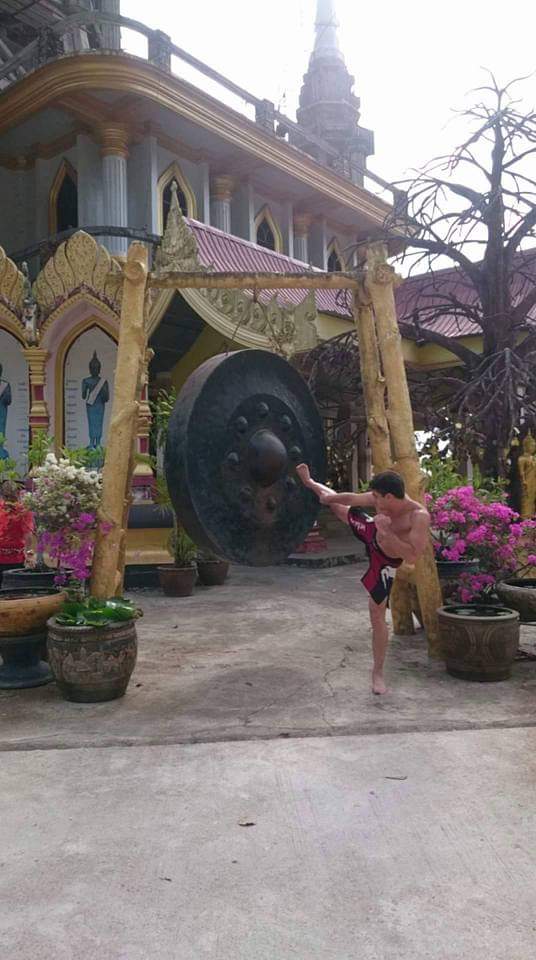
Muay thai. The Thai discipline using fists, feet, elbows and knees, with heavy emphasis on the clinch, where knees and elbows are worked at close range. Training is intense and conditioning-led. Facility demand: heavy bags rated for kick loads, matted floor, and space for pad work in pairs.
Karate. A Japanese art practised on mats, built on punches, kicks, blocks and evasion, with kata – fixed technical sequences – and kumite, controlled sparring. Styles differ considerably: Shotokan, Wado-ryu, Kyokushin and Goju-ryu among them. Facility demand: a clean matted area and clear ceiling height. No fixed equipment required, which makes it one of the easiest disciplines to add to an existing hall.
Taekwondo. The Korean discipline known for dynamic kicking, hand strikes and forms called poomsae. Practitioners wear a dobok, and sessions typically open with a formal salutation. Competition takes place on a matted competition area rather than in a ring. Facility demand: matted area, generous ceiling height for jumping kicks.
The grappling disciplines
Wrestling. One of the oldest combat sports, contested in two styles: freestyle, where the legs may be used to attack and defend, and Greco-Roman, where leg attacks and defences are prohibited. An Olympic sport contested on a mat, standing and on the ground, scoring by exposing an opponent on their back or by executing controlling techniques. Facility demand: a full matted surface is non-negotiable – wrestling is the discipline that dictates your flooring specification.
Judo. The Japanese art developed by Jigoro Kano in the late nineteenth century, built on throws, breakfalls, strangles and joint locks, designed to work without relying on superior physical strength. Competitors wear a gi. Facility demand: impact-rated mats. Throwing loads are the most demanding thing a martial arts floor absorbs, and mats specified for a striking class are not adequate for judo.
Brazilian jiu-jitsu. Ground fighting built on leverage, positional control, submissions and strangles, practised on mats and suited to children, adults and mixed ability because it rests on technique rather than strength. Facility demand: continuous matted area with no gaps, and more of it than operators expect – BJJ classes are dense.
Mixed and specialist disciplines
MMA. Competitors draw on boxing, muay thai, wrestling, Brazilian jiu-jitsu and judo, fighting standing with punches, kicks and knees and on the ground with submissions and strangles. Bouts take place in rounds inside an eight-sided enclosure – the octagon, commonly called the cage. Facility demand: a cage is a substantial fixed installation and the decision that shapes the room around it. A floor-level MMA cage suits a training hall, while a podium MMA cage suits a club that stages events.
Krav maga. An Israeli self-defence method built on efficiency and simplicity, using natural reflexes and movements, which makes it comparatively quick to learn. It focuses on defending an attack and counter-attacking immediately, mainly standing but including ground defence. Facility demand: matted floor and pad work – the lowest equipment threshold of any discipline here.
Kung fu, or wushu. A broad family of Chinese styles – Shaolin, tai chi, wing chun, wudang, jeet kune do – using punches, elbows, knees and kicks at varying range, with forms known as taolu and, in some styles, weapons work with sword, staff, sabre or spear. Facility demand: clear floor area and, for weapons styles, ceiling clearance and secure storage.
Capoeira. The Brazilian art combining movement, acrobatics and music, played in a circle known as the roda, with participants singing and playing traditional instruments – berimbau, pandeiro, atabaque, agogo. Its characteristic movement is the ginga, a continuous shifting between positions. Facility demand: a large clear circle, high ceiling for acrobatic movement, and tolerance for live music in the timetable.
Kendo. The Japanese sword art, contested with bamboo shinai in armour known as bogu, which protects the head and face. Scoring is by striking defined target areas. Facility demand: a sprung or resilient floor rather than mats, plus storage – bogu is bulky and cannot be left in a pile.
What this means for your flooring
Flooring is where combat sports programming succeeds or fails, and it is the one decision that cannot be corrected later without closing the room.
Striking disciplines need a resilient matted surface that tolerates footwork and pad work. Grappling disciplines need impact-rated matting sized for throws and falls. A hall running judo and BJJ in the same week needs the higher specification for both, not an average of the two.
For a permanent dojo area, tatami mats are the reference surface. For a multi-purpose hall where the floor has to be cleared between sessions, roll-out mats are what make a shared room viable, and the deciding factor is who rolls them out and how often.
Whatever surface you choose, confirm the fire classification against your building requirements and reproduce it exactly as certified, smoke index included – a surface specified without checking this is a surface you may have to replace.
Choosing what to programme
Work backwards from your space rather than forwards from a discipline.
If you have a hall with a permanent matted area and good ceiling height, karate, taekwondo, judo and BJJ are all available to you, and the constraint is instructor availability rather than equipment.
If you have a strength floor and a spare wall, boxing and kickboxing are reachable with a bag rail and a modest matted zone, and they draw a membership that also uses the rest of your facility.
If you are building a dedicated combat sports offer and intend to stage events, the cage decision comes first because everything else is laid out around it.
Two to three sessions a week is the standard starting frequency for a beginner in any of these disciplines, which is the number to plan your timetable and your capacity against.
Frequently asked questions
Which discipline is easiest to add to an existing facility?
Boxing or krav maga. Both need a matted area and modest fittings, and neither requires a fixed installation.
Can one matted area serve several disciplines?
Yes, if it is specified for the most demanding one. Judo throws set the requirement; a floor that handles judo handles everything else on this list.
Do we need a cage for MMA classes?
Not for training. Classes run on mats. A cage becomes necessary when members compete in that format or when you stage events.
What ceiling height should we plan for?
The disciplines involving jumping kicks and acrobatic movement – taekwondo, capoeira, some kung fu styles – are the constraint. Check the clear height under any lighting or ductwork before committing to a room.
Are these disciplines suitable for children?
Judo, karate, taekwondo and BJJ all run established children’s programmes, and clubs generally structure separate groups for children and adults. Supervision by a qualified instructor and an appropriately specified surface are the two conditions.
Equipping your combat sports area
The right answer depends on the room you have, the disciplines you can staff and whether you intend to host events. Light In Fitness has equipped professional facilities since 2013 and supplies cages, tatami, roll-out matting and bag rails for clubs, municipalities and armed forces facilities. Send us the room dimensions and the disciplines you plan to run, and we will propose the layout – request a quote.
Réalisations documentées
- Cage street workout ultime, Hub Armées – DICOM-GSB EFG / Division Métiers
- Cage street workout ultime, CFIM 6 de Fréjus – armée française
À lire aussi sur le même thème
- Roulement musculaire : qu’est-ce que c’est, quels effets ça donne ? Quand et combien de temps faut-il masser ses muscles ? Conseils et exemples d’exercices
- Tractions sur une barre – effets, quels muscles travaillent, technique correcte. Comment commencer à faire du sport sur barre ?
- Boostez vos fessiers avec la Machine Hip Thrust LPS124 Lexco
- Lexco LPS-117 Leg Press: A Buyer Guide for Commercial Gyms