Gym Equipment for Fitness Clubs: How to Choose It Properly
Gym equipment is the single largest line in the budget of any fitness facility, and the one that members judge you on every day. Choosing well is less about picking famous brands than about matching the machines to the people who will actually use them. This guide sets out the method professional buyers use when they specify a fit-out for a club, a hotel gym, a corporate wellness room or a municipal facility.
Start with your members, not with the catalogue
Before comparing a single machine, define who trains in your facility and what they come for. Which types of exercise do your members prefer? Which muscle groups do they want to work? A club whose peak hours are filled with group cardio sessions needs a completely different mix from a strength-focused facility, and a hotel gym serving guests for thirty minutes before breakfast needs a different mix again.
Answer those questions first and the equipment list writes itself. Working the other way round, from an attractive catalogue page to the floor plan, is how facilities end up with three machines nobody uses and a queue at the only one that matters.
Build the mix around three families
- Cardio. Treadmills, bikes, cross trainers and rowers carry the highest usage rate per machine and set the first impression of the floor. The professional cardio range covers the standard station types.
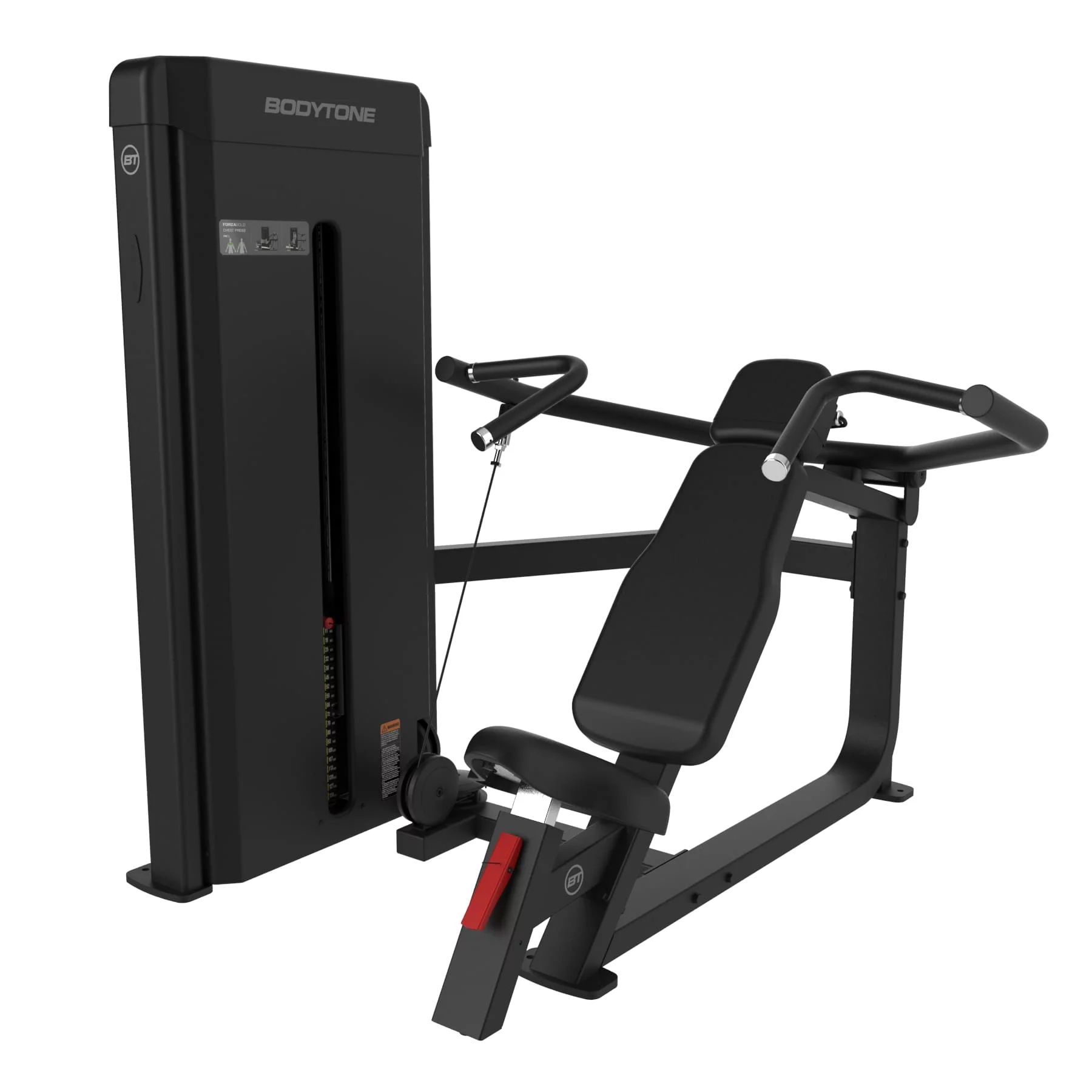
- Selectorised strength. Guided-load machines are what allow a member with no coaching background to train safely and unsupervised. A guided circuit such as the Forza selectorised range is the backbone of most commercial floors.
- Free weights and racks. Dumbbells, benches and racks and power cages serve your most committed members and take up the least capital per training position.
Insist on genuine commercial-grade build
Equipment in a supervised commercial facility should be built to EN ISO 20957-1 class S, the class defined for professional use. Lighter specifications are designed for a handful of sessions per week, not for a machine that is loaded and unloaded several hundred times a day. Frames, bearings, upholstery and cable runs are where the difference shows up, usually in year two or three rather than on the showroom floor.
Ergonomics matter just as much as robustness. Adjustable seats and pads, clear movement paths and load increments small enough to be usable by a deconditioned member are what prevent injuries and keep people coming back. A machine that only fits an average-sized athlete excludes a large part of your membership.
Look for range, not just quantity
Your equipment must let members train different muscle groups and offer enough resistance levels to serve everybody from a first session to an advanced programme. That means continuous weight progressions rather than isolated increments, and a spread of stations that covers push, pull, legs and core rather than four variations on the same movement.
Do not forget the floor
The surface under the equipment is part of the specification, not an afterthought. Rubber gym flooring protects the slab, cuts impact noise between zones and defines the boundary between the free-weight area and the rest of the floor. It is far cheaper to install with the equipment than to retrofit around it.
Frequently asked questions
How much equipment does a gym need per square metre?
There is no universal ratio: it depends on your ceiling height, circulation routes, opening hours and the number of simultaneous users you expect. This is exactly what a layout study is for, and it should be done before any order is placed.
Should I buy a full circuit at once or build up gradually?
Both approaches work, provided the phasing is planned. If you build up gradually, reserve the floor space and the electrical supply for the later stations from the start so that the finished layout still makes sense.
What matters most on a tight budget?
Build quality on the stations with the highest usage, and enough variety to cover the whole body. It is better to have a well-built, complete short circuit than a long circuit of machines that will not survive the first two years.
Planning your fit-out
Light In Fitness has equipped more than 2,500 customers since 2013, from independent clubs to hotels, local authorities, schools and rehabilitation centres. Send us your floor plan, your opening hours and your member profile, and we will put together the layout study and the equipment list that go with them. Request a quote for your project.