Converging Strength Machines: How to Equip a Gym
Une machine convergente existe en deux formats : sélectorisée à colonne de poids ou plate-loaded à disques olympiques. Le sélectorisé permet un réglage rapide entre utilisateurs, le plate-loaded une sensation de charge plus proche du libre. Le choix dépend du flux d'utilisateurs et du public accueilli.
Converging machines have become a standard part of the strength area in commercial gyms, training centres, clubs and rehabilitation facilities. They are often bought for the wrong reason, though, because the term is used loosely for almost any guided machine. Before adding one to a specification, it is worth being precise about what converging actually means, which formats exist, and what a professional operator should look at before ordering.
What a converging machine actually is
A converging machine is defined by its movement path, not by its frame or its accessories. The two handles or arms travel towards each other as the movement progresses, so the hands finish closer together than they started. That path follows the natural arc of a pressing or pulling movement far more closely than a purely linear guided machine, which is why users generally report a more comfortable and more complete contraction at the end of the range.
The principle applies to a defined family of exercises: chest press, incline press, shoulder press, seated row and lat pulldown. Each arm moves independently, so both sides work on their own and the strong side cannot compensate for the weak one. That is the real benefit for a mixed audience, and it is also why converging machines are common in rehabilitation and return-to-sport settings.
Converging machines are not a way to isolate every muscle group in the body, and they are not multi-purpose cable stations. Abdominal, arm and glute work is done on other equipment. Keeping that distinction clear avoids buying a converging line and then discovering that half the intended programme is missing.
Two formats, two operating models
A converging machine exists in two formats, and the choice between them is the first real decision.
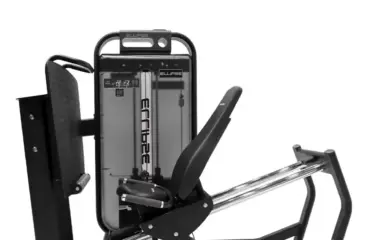
The selectorised format uses a weight stack with a selector pin. Changing the load takes a second, the plates stay on the machine, and nothing has to be carried or stored. In a busy room where users rotate quickly and supervision is limited, that is decisive: throughput is higher, the risk of loose plates on the floor disappears, and the machine is immediately usable by someone who has never trained before. You will find this format across our converging strength machines range.
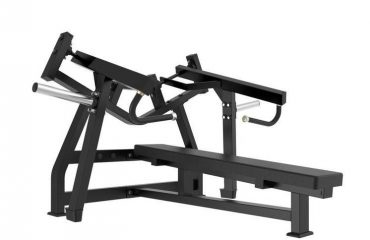
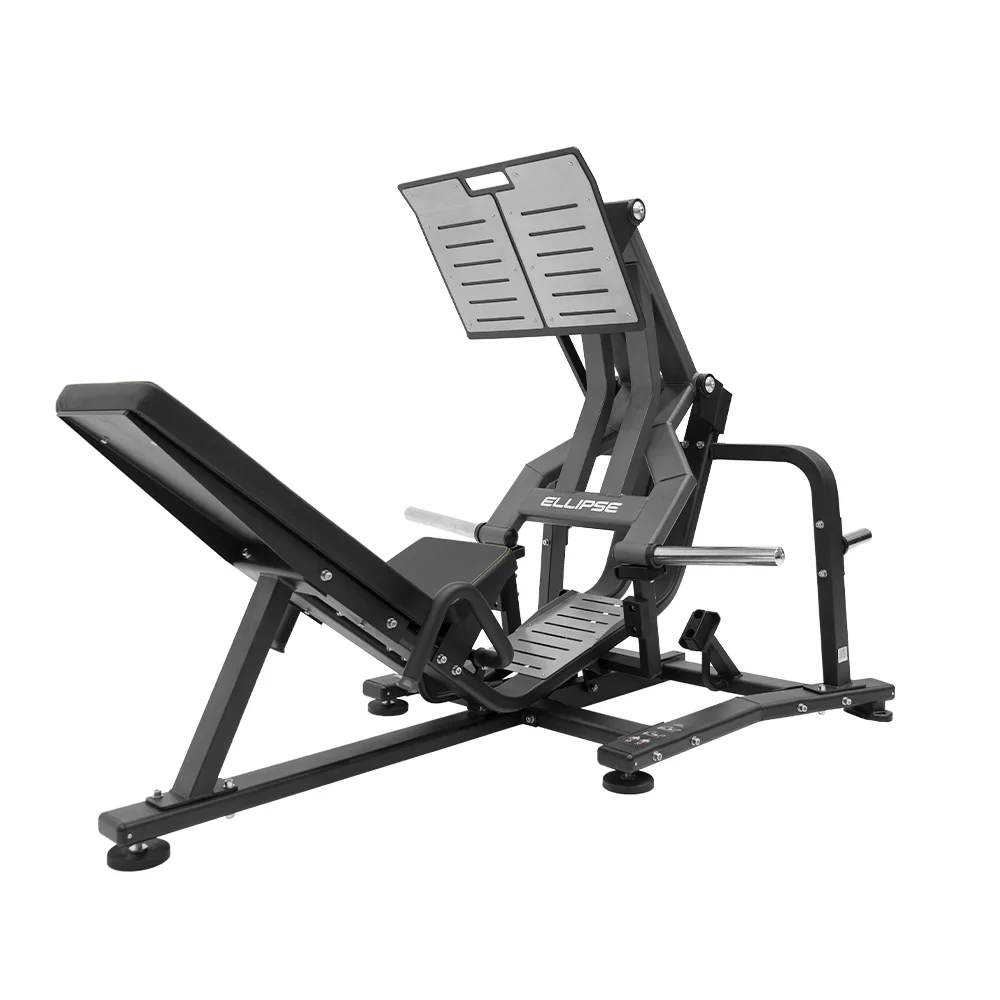
The plate-loaded format takes Olympic discs on loading pins. The loading feel is closer to free weights, the maximum load is limited only by the pins, and the unit price per station is lower. In exchange, the room needs disc storage close to the machine, loading and unloading takes time between users, and the audience has to be capable of handling discs safely. Plate-loaded converging equipment sits in our converging plate-loaded machines and Strong Line plate-loaded ranges.
Neither format is better in the abstract. Selectorised suits high user flow and mixed ability. Plate-loaded suits trained users, performance-oriented rooms and budgets where station count matters more than turnaround speed.
What to check before ordering
Adjustment range comes first. A machine used by a wide range of body sizes needs a seat and, where relevant, a back pad or handle position that adjusts over a genuinely useful range, with clear indexing so a user can find their setting again without help. A machine that only fits average users will quietly stop being used by everyone else.
Frame and bearings come second. In a commercial room the failure points are the pivots, the bushings and the cable or belt path, not the paintwork. Ask what is used at each articulation and how it is replaced, because that is what determines whether the machine is still smooth after several years of continuous use.
Footprint and access come third. Converging machines need clearance behind and beside them, and a plate-loaded version needs a disc tree within a few steps. A line that looks right on a plan can be unusable once real circulation is added, so the layout has to be drawn before the order is placed, not after delivery.
Finally, consider the mix. A strength area built only from converging machines will be strong on pressing and pulling and weak everywhere else. In practice, a converging line works best combined with selectorised machines for the remaining muscle groups, racks and benches for free-weight work, and a cardio area that supports the overall programme.
Building a coherent strength area
For a hotel, a residence or a corporate facility, a small number of converging stations covering press and row usually delivers most of the perceived value, because those are the movements users recognise and can perform safely on their own. For a club, the converging line is the backbone of the pressing and pulling section, and the number of stations follows peak-hour attendance rather than floor area. For a rehabilitation or return-to-sport centre, the independent arms and the guided path are the reason to specify converging equipment in the first place, and the priority moves to fine load increments and low starting resistance.
In every case, the useful question is not how many machines fit, but how many users have to be served at the busiest hour and which movements they need.
Frequently asked questions
What is the difference between converging and divergent machines?
On a converging machine the arms move towards each other during the effort, which suits pressing movements. On a divergent machine they move apart, which suits pulling movements such as rows and pulldowns. Many manufacturers build both, and a complete strength area usually contains both.
Selectorised or plate-loaded for a commercial gym?
Selectorised when the room is busy, the audience is mixed and supervision is limited. Plate-loaded when the users are trained, the loading feel matters and station count is a priority. Many rooms use both, with selectorised on the main circuit and plate-loaded in a dedicated performance zone.
Are converging machines suitable for beginners?
Yes, and this is one of their strengths in a professional setting. The path is guided, the movement is intuitive and the risk of a bad trajectory is low, which makes them appropriate for unsupervised use, provided the adjustments are clearly marked.
Can converging machines replace free weights?
No, and they are not meant to. They cover pressing and pulling patterns efficiently and safely, but a complete offer still needs racks, benches, free weights and a cardio area. Equipment for shared, professional use should be specified as a whole rather than machine by machine.
Specify your strength area with us
Choosing converging machines is a question of audience, user flow and available surface before it is a question of catalogue. Tell us how your room is used, at which hours and by whom, and our team will propose a coherent strength line with the layout that goes with it. Request a quote and we will come back with a costed configuration.