Certified Commercial Gym Equipment: Excellence and Reliability for Your Facility
Un équipement certifié pour usage commercial répond à la norme EN ISO 20957 classe S, qui vise l'usage professionnel intensif. Cette classe garantit des exigences de résistance et de sécurité supérieures à celles des classes domestiques. Elle conditionne également la couverture assurantielle en cas d'accident en établissement.

Fitting out a commercial gym is not a matter of taste. Every machine on your floor is handled by dozens of members a day: beginners who read the pictogram and get it half right, and experienced lifters who load the frame to its limit. The equipment has to hold, and it has to be documented as holding. That is precisely what certification to EN ISO 20957-1 class S covers, and it is the first question a serious buyer should ask a supplier.
This guide sets out the selection criteria that actually matter to an operator, the categories no commercial floor can do without, what certification buys you beyond the label on the frame, and how to run a fit-out without paying twice.
What class S certification means for an operator
EN ISO 20957-1 is the general safety standard for stationary training equipment. It defines construction and test requirements, and it splits equipment into classes according to the use it is designed for. Class S is the professional class: equipment intended for supervised, intensive use in a facility open to third parties, such as a gym, a hotel wellness area, a club, a rehabilitation centre or a municipal sports hall.
In practice, class S means higher requirements on frame strength and stability, on protection against entrapment of fingers and feet, on the retention of moving masses, and on permanent marking and instructions. It is also what your insurer will look for if a member is injured on a machine. Equipment that cannot be shown to meet the professional class is a liability you are carrying yourself.
One point is regularly misrepresented in sales conversations: class I is a professional class for inclusive access, designed so that users with reduced mobility can transfer onto and operate the machine. It is not an intensity tier above class S. If a supplier presents it as a premium upgrade, treat that as a signal about the supplier.
Note also that this standard applies to indoor equipment. Outdoor adult fitness equipment falls under EN 16630, and children equipment under EN 1176-1 with impact-attenuating surfacing under EN 1177. The three families are not interchangeable, and a machine certified for one will not be compliant in the other context.
The selection criteria that matter
Build quality and durability
Look past the upholstery. What determines the service life of a machine is the section and wall thickness of the steel, the quality of the welds, the type of bearings and bushings on the pivots, the cable and pulley specification, and the surface treatment. Powder coating over a properly prepared surface will survive years of sweat and cleaning products; a thin decorative finish will not. Ask what the frame is made of, not what colour it comes in.
Certification and documentation
A claim is not a certificate. Ask for the declaration of conformity, the reference of the test report and the class the equipment was tested to. Reputable manufacturers hand this over without hesitation. If the paperwork takes weeks to arrive, or arrives referring to a different model in the range, you have your answer.
Versatility and adjustability
Floor space is the scarcest resource in most facilities. Equipment that adjusts across a wide range of user heights and limb lengths serves more members per square metre and reduces the number of machines you need to buy. Adjustable seats and pads, converging or independent arms, and stations that support several movements all raise the return on each square metre. It also keeps programming varied, which is one of the levers on member retention.
Serviceability and spare parts
Ask how long spare parts remain available for the range, and whether wear items such as cables, pads and grips can be ordered separately. A machine you cannot repair in year six is not a durable machine, whatever the frame warranty says.
The categories a commercial floor cannot do without
Cardio
Treadmills, cross trainers, exercise bikes, indoor cycling bikes and rowers carry the largest share of casual traffic and are usually the first contact a new member has with your facility. They need to be robust, simple to start, and quiet enough that the room stays usable. Console simplicity matters more than console features: a machine whose start sequence needs explaining will be avoided. See the full professional cardio equipment range.
Strength
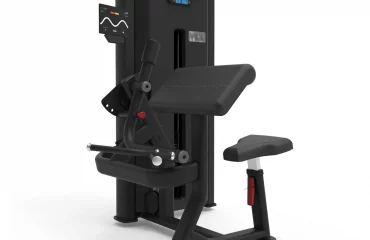
Selectorised machines, plate-loaded machines, benches, racks and free weights form the core of the offer for members who come to train rather than to sweat. Guided machines lower the entry barrier and the supervision load; racks and free weights serve the experienced part of your membership. Both need to be there. Browse the professional strength training machines and the commercial weight benches.
Accessories and functional area
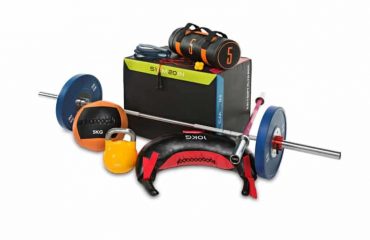
Resistance bands, medicine balls, kettlebells, mats and storage furniture are inexpensive relative to the machines, and they are what makes small-group coaching and warm-up work possible in the same room. They also need proper storage: loose accessories on a training floor are the most common cause of minor incidents. See the professional fitness accessories.
What certified equipment gives back
User safety, and the paperwork behind it
Certified equipment is designed for the loads and the frequency of a commercial setting, with the guarding and marking that go with it. That reduces incidents, and when an incident does happen it puts you in a position to show that the equipment was fit for the use it was put to.
Lower maintenance spend
Professional-grade bearings, cables and frames fail far less often than equipment built to a lower specification and pushed beyond it. The purchase price difference is usually recovered within the first few years through fewer service call-outs, fewer machines out of order, and a longer replacement cycle.
Reputation and retention
Members notice equipment that feels solid, and they notice machines with an out-of-order sign on them. A floor that is fully operational every day is a retention argument that costs nothing to make.
Buying advice
Compare on evidence, not on claims. Every brand describes itself as professional. Ask to test the machines, ask for reference sites of a comparable size, and ask what the range looks like after five years of use in a busy facility.
Plan the room, not just the list. Floor loading, ceiling height above racks, circulation width between machines and the sports flooring under the free weight area are part of the specification. A rack fitted on unsuitable flooring will damage the slab and the bars.
Buy the range, not the item. Machines from the same range share adjustment logic, pad formats and spare parts. Mixing four brands on one floor multiplies your maintenance references for no benefit to the member.
Time the purchase. End-of-series units, showroom equipment and trade show orders can be considerably cheaper than list price, provided the class and the warranty are identical. Confirm this in writing rather than in conversation.
Frequently asked questions
Is EN 957 the same thing as EN ISO 20957-1?
EN 957 is the earlier reference. The current standard is EN ISO 20957-1, and a quotation should state the standard and the class in full. A document that mentions only a standard number without a class is not telling you what you need to know.
Can class S equipment be installed outdoors?
No. Indoor equipment certified to EN ISO 20957-1 class S is not designed for permanent exposure. Outdoor adult fitness equipment is covered by EN 16630, with the corrosion protection and anchoring requirements that go with open-air installation.
Which documents should I ask for before signing?
The declaration of conformity, the class the equipment was tested to, the assembly and user instructions in the language of the site, the warranty terms per component group, and the spare parts availability commitment.
Does certification cover installation?
It covers the equipment, not the installation. Anchoring, floor preparation, safety distances between machines and the surfacing under lifting areas remain the responsibility of the operator and the installer, and are worth writing into the contract.
Planning a fit-out?
Light In Fitness has been supplying professional fitness equipment to gyms, clubs, hotels, local authorities, schools and rehabilitation centres since 2013. Send us your floor plan, your membership profile and your budget range, and we will come back with a specified layout and a costed proposal. Request a quote.