The Best Professional Strength Machines for a Gym
Un plateau professionnel se construit sur la couverture des groupes musculaires, pas sur le nombre de machines. Huit à dix postes couvrent l'ensemble du corps : presse, tirage vertical, tirage horizontal, développé assis, épaules, leg curl, leg extension et poulie. Les postes spécialisés s'ajoutent selon le public accueilli.
Equipping a commercial gym is not a matter of buying the longest possible list of machines. It is a matter of covering every major muscle group with the smallest number of stations that still keeps members moving at peak hour, on frames certified for collective use. Eight to ten well-chosen strength stations cover the whole body. Everything beyond that is specialisation for a particular audience.
Start from muscle-group coverage, not from the catalogue
Before comparing brands, list the movements your floor has to offer. A core line that leaves no gap looks like this:
- Leg press for the quadriceps, glutes and hamstrings under guided load
- Leg extension and leg curl to isolate the front and back of the thigh
- Lat pulldown for the back and the biceps
- Seated row for the mid-back and posture work
- Chest press for the pectorals and triceps
- Shoulder press for the deltoids
- A cable station for arms, core and the free-path movements machines cannot reproduce
Add an abdominal station and a hip abductor or adductor if your membership asks for them. Specialised stations belong at the end of the list, not the start.
Selectorised machines: the backbone of a lightly supervised floor
Guided machines let a member load a specific muscle group along a fixed path, without a spotter and without long instruction. They keep the risk profile of the room low, they are quick to reset between users, and they are what makes a floor workable when staff are not permanently on it. Our professional strength training machines are built for that duty cycle: full steel frames, guarded weight stacks and adjustable seats and pads so that one station fits users of very different heights.
Free weights: dumbbells, barbells, benches and racks
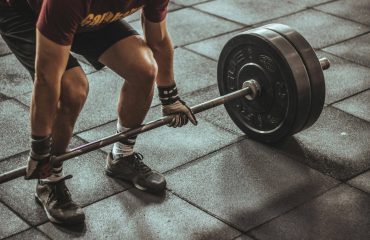
Dumbbells remain the most versatile item on the floor. One rack covers pressing, pulling, unilateral work and almost every accessory exercise, at a lower cost per training station than any machine. Adjustable weight benches multiply that range: flat, incline and decline pressing for the chest, triceps and shoulders, supported rows for the back, and a base for core work. For squats, pressing and pulling under a bar, a rack such as the Gold Line squat rack and power cage gives you several training stations inside one footprint, with safety catches that make heavy work possible without a partner.
Cardio completes the offer
A strength floor without cardio loses the members who come for conditioning and weight management. Treadmills load the legs, especially the quadriceps and calves; cross trainers spread the effort over the whole body including the glutes, without the ground impact of running. Rowing machines add the posterior chain and the upper body in a single movement and take very little floor space. Two or three cardio units per ten strength stations is a reasonable starting ratio for a general-purpose club.
Group training and functional space
Reserving an open area for classes changes what a club can sell. Cross training, conditioning circuits, mat work and Pilates need very little hardware: resistance bands, medicine balls, skipping ropes, mats and enough clear floor to move safely. That area is usually the cheapest square metres in the building and the most profitable per hour.
Quality, usage class and spare parts
Everything on a commercial floor should be certified to EN ISO 20957-1 class S, the class written for professional and commercial environments. Beyond the certificate, judge a supplier on frame construction, on the quality of bearings, cables and upholstery, and above all on whether spare parts will still be available in five years. Bodytone and Xebex sit alongside our own lines for exactly that reason: they are ranges that can be serviced rather than replaced.
Frequently asked questions
How many strength machines does a gym need?
Count movements before machines. Eight to ten guided stations cover the whole body; the right number for your club then depends on attendance at your busiest hour, not on the size of the room.
Guided machines or free weights?
Both. Guided machines carry beginners and lightly supervised hours; free weights carry experienced members and cost less per training station. A floor with only one of the two loses part of its market.
Can a multi-station gym replace a full strength line?
In a hotel, a residence or a company gym, yes. In a club open to the public it becomes a bottleneck at peak hour, because only one or two people can use it at a time.
What should I check before ordering?
The usage class, the footprint including safety clearances, the weight-stack range and increments, and the availability of parts. Ask for the certificate rather than for a marketing description.
Build the plate around your members
The best professional strength machines are the ones that fill the gaps in your floor and hold up to your opening hours. Send us your surface area, your ceiling height and the profile of your membership, and we will propose a station-by-station layout. Request a quote to get a costed equipment plan.