The Best Gym Machines for Compound Exercises
Les exercices polyarticulaires, squat, presse, tirages et développés, sollicitent plusieurs articulations et produisent le plus de résultats par unité de temps. Rack, presse à jambes, tirage vertical et développé assis couvrent ces mouvements en salle. Les machines d'isolation complètent ce socle sans le remplacer.
Introduction
Compound exercises are the backbone of any serious strength programme. They recruit several muscle groups at once, they build coordination as well as force, and they deliver more result per minute of training than any isolation movement. For a facility, they are also the most efficient use of floor space: one well chosen station covers several patterns and serves beginners and experienced lifters alike. This guide reviews the machines that make compound training work on a commercial floor, and what to look for when you specify them.
1. The leg press
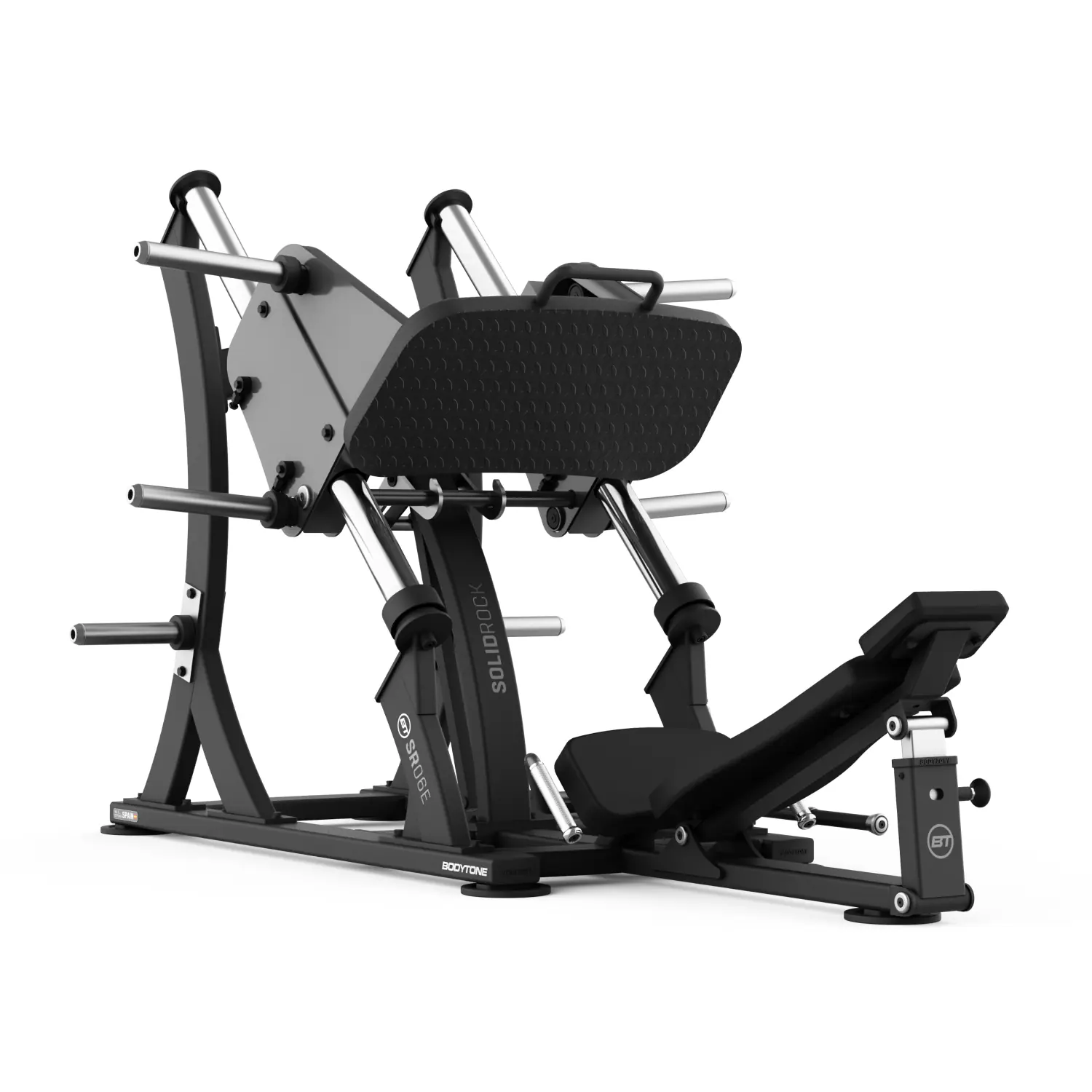
The leg press is the most versatile lower body station on the floor. It loads the quadriceps, the hamstrings and the glutes in a single, safe movement.
Advantages
- A true compound movement: it drives several joints, the hips and the knees in particular.
- Less load on the spine: an excellent option for members with lower back limitations.
- Adjustable: it adapts to very different levels of mobility and strength.
Specification tip: choose a leg press with an adjustable back platform so the angle can be varied and the emphasis shifted between muscle groups.
2. The lat pulldown
The lat pulldown is the reference upper body pulling station. It recruits the latissimus dorsi, the trapezius and the biceps together.
Advantages
- Builds the back: the most direct way to develop back width.
- Easy to perform: a controlled, guided movement that a new member can use safely.
- Several variations: wide, close and neutral grips on the same station.
Specification tip: choose a pulldown with polyurethane coated cables, which resist fraying far longer under continuous use.
3. The Smith machine
The Smith machine is a guided barbell system that covers a long list of compound exercises: squats, bench press and upright rows among them.
Advantages
- Added safety: the guided bar path suits beginners and anyone training without a spotter.
- Versatility: several exercises on a single footprint, with no machine change.
- Stability: it removes the balance component from heavy loads.
Specification tip: insist on adjustable safety stops. See the professional Smith machine range.
4. The chest press
The chest press is the essential upper body pushing station, working the pectorals, the triceps and the anterior deltoids.
Advantages
- A compound push: shoulders, elbows and chest are loaded together.
- Easy to use: guided travel suits beginners and confirmed athletes equally.
- Multiple settings: seat and angle adjustments vary the emphasis.
Specification tip: an inclined version targets the upper chest more directly. Browse the chest press machines.
5. The squat rack
The squat rack is arguably the most versatile piece of equipment for compound work. Squats, lunges, overhead presses and much more happen inside the same footprint.
Advantages
- Extreme versatility: it supports a very wide range of exercises.
- Whole body strength: legs, trunk and upper body are all recruited.
- Configurable: it combines with dumbbells, Olympic barbells and resistance bands.
Specification tip: choose a rack with an integrated safety system. See the squat racks and power racks.
6. The pulley station
A cable station allows functional, multi joint movements: low rows, lateral pulls and cable crunches among many others.
Advantages
- Wide range of motion: it works the body from many angles.
- Complete coverage: back, shoulders, arms and abdominals on one frame.
- Easy to adapt: suitable for beginners and advanced users alike.
Specification tip: adjustable pulley heights are what make the station genuinely versatile. See the cable stations.
7. The hack squat machine
The hack squat is an excellent alternative to the traditional squat, with a guided, secure path that loads mainly the quadriceps, the hamstrings and the glutes.
Advantages
- Controlled movement: less joint stress, which suits members with knee issues.
- Targeted work: an efficient way to load the lower body.
- Adjustable: the angle can be varied to change the intensity.
Specification tip: a non slip platform coating is what keeps the movement safe under heavy load.
Comparison of the main compound machines
| Machine | Muscle groups | Advantages | Target users |
|---|---|---|---|
| Leg press | Quadriceps, hamstrings | Cushioned, safe, versatile | Beginners and professionals |
| Lat pulldown | Back, biceps | Easy to use, several variations | All levels |
| Smith machine | Whole body | Safety, stability, versatility | Beginners and advanced users |
| Chest press | Pectorals, triceps, shoulders | Precise targeting, guided path | All levels |
| Squat rack | Legs, trunk | Versatility, whole body strength | Athletes and professionals |
| Pulley station | Back, shoulders, abdominals | Flexibility, wide range of motion | All levels |
| Hack squat | Quadriceps, glutes | Guided movement, safety | Beginners and advanced users |
Why buy your compound stations from Light In Fitness
- Quality and durability: machines built from robust materials for intensive use.
- Customisation: equipment adapted to your own specification.
- After sales service and warranty: full follow up after the installation.
- Proven expertise: equipment tested and approved by professional athletes.
Frequently asked questions
How many compound stations does a floor need before adding isolation machines?
Cover the five patterns first: a squat or leg press, a hinge, a horizontal push, a horizontal pull and a vertical pull. Isolation stations are added on top of that base, never instead of it.
Is a Smith machine a substitute for a squat rack?
No. It complements it. The rack teaches free barbell technique, the Smith machine allows heavy work without a spotter.
Conclusion
Compound exercises are the key to balanced, functional strength. Investing in the right machines improves your members’ results and, just as importantly, the efficiency and profitability of your facility. Explore the complete strength machine range, or request a quote and we will design the floor with you.