Why Invest in Professional Strength Equipment?
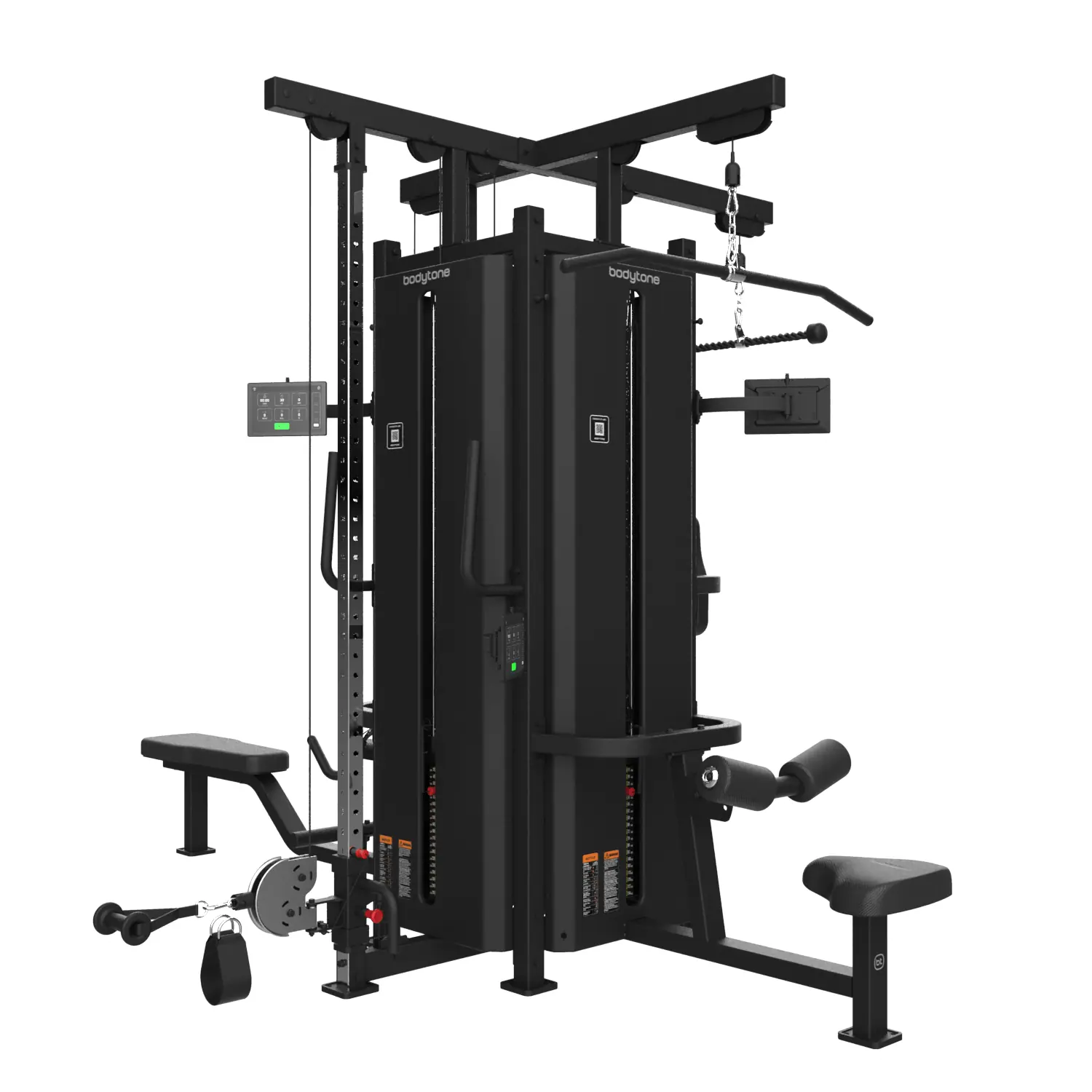
Professional strength equipment is a capital investment, and like any capital investment it has to be justified by what it returns. For a gym operator, a hotel, a sports club or a corporate wellness room, that return comes in three forms: members who stay because the floor works for them, a safety record that holds up, and equipment that is still in service ten years after the invoice. Here is why the professional specification pays for itself, and what it actually delivers on the floor.
Why invest in professional strength equipment
Equipment built for commercial duty differs from lighter ranges in ways that only become visible over time: frame section, weld quality, bearing specification, cable rating and upholstery resistance. Under EN ISO 20957-1 class S, a machine is dimensioned for continuous multi-user duty in a facility open to the public. That is the difference between an asset and a running cost. Six arguments make the case concrete.
1. Complete coverage of the body
A coherent line of professional machines covers every major muscle group in a predictable footprint. Where free weights require the user to know what they are doing, a machine line lets an operator guarantee that arms, legs, back and chest all have a dedicated station. That completeness is what allows a club to advertise a full programme rather than a collection of equipment.
2. Safety and stability
Professional machines support the body through the movement and keep the load captive on a defined path. Safety catches, locking systems and range limiters mean a user can work close to their limit without a spotter, which matters enormously during unsupervised opening hours. For an operator this is not a comfort feature: it is a risk-management argument that insurers and inspection bodies understand.
3. Time and throughput
Changing the load on a selectorised machine takes one movement. Over a busy evening, that difference in dwell time per station translates directly into how many members your floor can serve at peak. Machines also shorten the induction: a new member can be productive on a machine line within one session, where a free-weight programme takes several.
4. Progress tracking
Many professional machines carry rep counters, calibrated resistance settings and performance-tracking functions. Members can record what they did, repeat it and see it improve. Progress that is visible is progress that keeps people subscribed, which makes tracking a retention feature as much as a training one.
5. Versatility of programming
The same machine line supports traditional strength work, functional strength programmes and supervised return-to-activity sessions. Adjustable seats, pads and range settings adapt each station to the user in front of it, from a first-time member to an experienced lifter. One investment therefore serves several very different audiences, including rehabilitation and older-adult programmes.
6. Programmes and support
Professional ranges usually arrive with structured programmes and technical guidance built by specialists. That material shortens staff training, standardises how members are inducted and reduces the number of technique corrections your team has to make. Combined with a supplier who supports the equipment after installation, it turns a delivery into an operating system for the floor.
What the investment covers
A realistic budget includes more than the machines. Delivery and unloading, assembly and levelling, anchoring where required, protective flooring under loaded stations, and the maintenance plan all belong in the calculation. So does spare-part availability: cables, pads and pulleys are consumables on a commercial floor, and a range with no parts pipeline becomes expensive long before it wears out. Our professional strength machines, selectorised machines and Bodytone Forza FH range are specified with that whole-life view.
FAQ
What does professional equipment offer over general strength training? Greater safety and stability, complete coverage of the muscle groups, and a wider range of exercises on equipment dimensioned for continuous multi-user duty.
Is professional equipment only for experienced users? No. Adjustable settings make the same machines usable by beginners and by advanced members, which is precisely why they suit a mixed commercial membership.
Does strength equipment help with weight management? Strength training increases lean mass and raises energy expenditure, and it is normally programmed alongside cardio work as part of a broader plan.
How long before members see results? It depends on their starting point, their consistency and their nutrition. With regular training, visible change usually begins within a few weeks.
Does professional equipment prevent injuries? It reduces risk. Guided paths, body support and safety devices remove the most common failure modes, but they do not replace induction and supervision.
How much space does it need? Take the footprint from the technical sheet of each reference and add circulation space around every station. Never size a floor from a catalogue image.
Build the business case with us
Send us your floor plan, your peak attendance and your membership profile, and we will propose a configuration with a costed budget. Request a quote and you get figures you can put in front of a lender or a board.