Where to Buy Rubber Gym Tiles at a Fair Price (Without Getting the Quality Wrong)
Buying rubber floor tiles at a fair price is not the same as hunting the lowest price per square metre. The real objective is to pay the right price for the right use, backed by evidence you can verify: density, durability, safety (slip, fall, fire), indoor air emissions, warranty, and above all the real delivered cost – rubber is heavy.
This guide sets out a clear method for buying intelligently, avoiding the expensive mistakes, and choosing where to buy according to your situation.
Understanding the product
What exactly is a rubber floor tile?
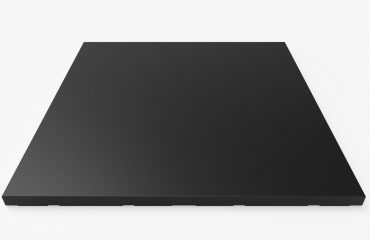
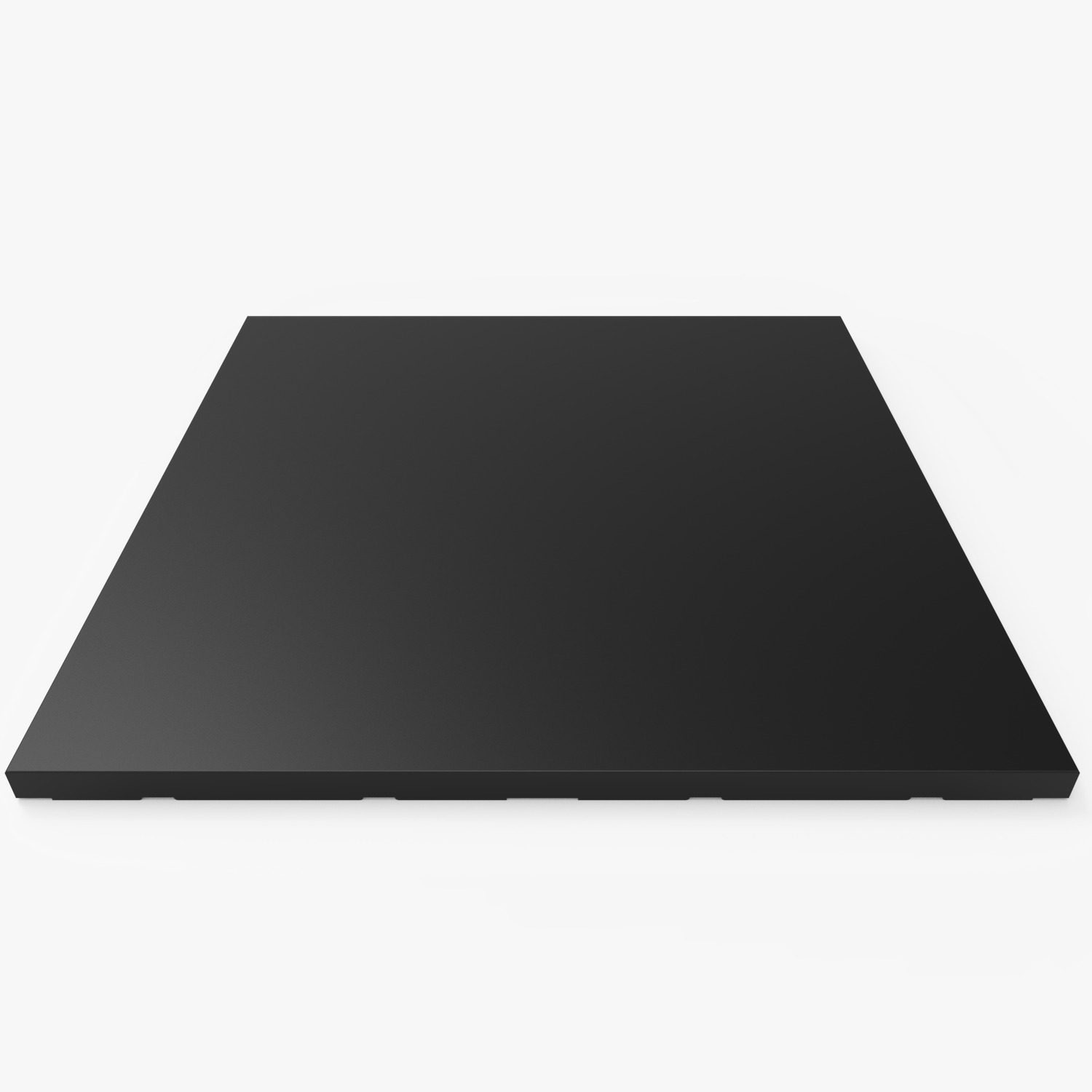
A rubber tile is a modular floor covering, generally produced from granulates – most often recycled SBR, or EPDM depending on the application – bound with resin. It is specified in order to:
- absorb impact (barbells, kettlebells, jumps),
- protect the substrate (concrete, tiling, timber),
- limit noise (impact and vibration),
- make the practice safer (grip, stability),
- extend the life of a sports area, a corridor, a terrace or an outdoor zone.
The market is dominated by:
- 100×100 cm formats, widely used in gyms, boxes and sports halls,
- 50×50 cm formats, easier to handle but with more joints,
- solid or drainage tiles for outdoor use.
Which contexts?
The most frequent requirements come from:
- gyms and studios: controlled drop, noise, comfort,
- cross-training boxes: repeated impact, heavy traffic,
- buildings open to the public: reaction-to-fire and safety requirements,
- play areas: attenuation sized to the fall height,
- outdoor areas (terraces, public spaces): drainage, UV, frost, stability.
The technical principles behind a fair price
A price is only reasonable if the essential criteria line up:
- Thickness (15, 20, 25, 40, 50, 60 mm and beyond).
- Density and mass: at equal performance, a denser tile takes intensive use better.
- Finish (fine grain, smooth surface, wood effect, fleck).
- Installation system: loose lay, interlocking, partial bonding, edge borders.
- Fire classification (Euroclasses) where the building receives the public.
- Safety standards according to use (falls, indoor sport, slip resistance).
The mistakes that cost the most
- Buying too thin: the tile crushes, marks or fails to protect the substrate.
- Buying too thick just in case: wasted budget, and sometimes an unstable feel under certain movements.
- Forgetting reaction to fire in a public building (Bfl-s1, Cfl-s1 or Dfl-s1 depending on the constraint).
- Choosing an outdoor tile with no drainage – or a drainage tile in a zone that has to be cleaned easily.
- Comparing prices without comparing weight, density, warranty and standards.
What is actually at stake
Why rubber tiles are worth the investment when the product is right
A well-chosen rubber floor:
- reduces injury risk from impact and slipping,
- improves training comfort,
- protects the substrate for the long term,
- reduces noise nuisance in a building or a shared hall,
- improves the customer experience through cleanliness and visual coherence.
Safety: falls, slip, fire, indoor air
1) Fall attenuation (play areas) – EN 1177. This standard verifies a surfaces ability to reduce the severity of injury in a fall, through indicators such as HIC and g-max, and it is dimensioned against the fall height of the equipment above it.
2) Reaction to fire – EN 13501-1. Floor coverings are classified (Efl, Dfl-s1, Cfl-s1, Bfl-s1 and so on) according to their fire behaviour and their smoke emission. The smoke index is part of the class: never quote a class without it.
3) Indoor air quality. Volatile emissions from floor coverings are regulated in several European countries, with national labelling schemes that differ from one market to another. Ask the supplier for the VOC emissions test report for the product you are buying, and check what your own national rules require for the building type.
4) Composition – REACH and PAH. The EU has restricted polycyclic aromatic hydrocarbons in certain uses of loose granulate and mulch on sports surfaces and play areas, with a limit value and traceability obligations. Even where your project uses tiles rather than loose fill, the sound purchasing practice is the same: ask for evidence of REACH compliance and test reports when the material is recycled and destined for intensive use.
Durability: the real price is the price over three to seven years
Rubber is bought to last. The total cost depends on frequency of use, loading (drop, traffic, machines), maintenance, stability (joints, borders, interlocks), and after-sales support including batch availability. That is precisely why a reasonable price has to include warranty, density, resistance and standards compliance.
The expert method
Step 1: define the use
Answer six questions before you compare anything:
- Main use: strength training, cross-training, circulation, play area or terrace?
- Intensity: occasional, regular, intensive professional?
- Substrate: concrete slab, tiling, timber, resin?
- Fire constraints: is the building open to the public?
- Attenuation required: light drop, heavy drop, child fall height?
- Cleaning constraints: chalk, outdoor, mud, humidity?
Step 2: choose the thickness, which is the main budget lever
| Use | Recommended thickness | Why |
|---|---|---|
| Cardio zone, circulation | 15-20 mm | comfort plus light protection |
| Standard strength training | 20-25 mm | best cost to attenuation ratio |
| Intensive cross-training | 25-40 mm | more frequent impact |
| Weightlifting, heavy drop | 40-60 mm and above | maximum protection |
| Play area (by fall height) | 40-100 mm according to HIC | dimensioned to the fall |
Our rubber gym flooring tile range is organised by thickness for exactly this reason. For standard strength areas, a high-density reference such as the 25 mm 1000 kg/m3 tile is the usual specification.
Step 3: handle the public-building constraint
If you run a gym, a studio, a hotel or a municipal facility, your project is likely to be subject to fire safety requirements set by the national building rules for premises open to the public. EN 13501-1 structures the fire classification of floor coverings (Cfl-s1, Bfl-s1, Dfl-s1 and so on), and a compliant tile carries that class on its declaration of performance. Our fire-rated rubber tiles state the class explicitly, which is what a fire safety inspection will ask to see.
Step 4: think in delivered cost, not price per square metre
Rubber is heavy. A square metre in 20 to 25 mm can weigh in the region of 18 to 25 kg depending on density and construction, and some 100×100 models are stated at around 19 kg. A reasonable price therefore has to absorb transport cost, site access (floor level, pallet, tail lift), lead time, packaging and after-sales policy. A tile that is two euros cheaper per square metre and arrives on a pallet you cannot unload is not cheaper.
Step 5: check the quality you cannot see
- Density and construction (single or dual layer) where stated,
- A written warranty – ask for the term in writing before you order,
- Fire class where required (Cfl-s1, Bfl-s1, Dfl-s1, Efl),
- EN 1177 where the surface is under play equipment,
- Indoor air emissions test report,
- Chemical compliance: request REACH and PAH information when the material is recycled and the use is intensive.
A professional view
What a fair price actually means
A fair price is a product consistent with your use, technical information you can verify, reliable logistics, and a floor that does not force you to buy again in twelve months.
The cheapest-option trap is simple: you save on purchase, then you pay in tiles that curl or shift, joints that open, unpleasant odours or emissions, difficult maintenance, uncontrolled noise, non-compliance in a public building, and non-existent after-sales support.
The standards worth knowing
- EN 1177: impact attenuation performance in a fall, for play areas.
- EN 13501-1: reaction-to-fire Euroclasses for floor coverings.
- National indoor air emissions labelling: check the scheme applicable in your country.
- REACH and PAH: EU restrictions on certain uses of rubber granulate in sport and play areas – a useful reference when you ask for traceability.
Where to buy: four channels compared
Option 1 – A sports flooring specialist
This is the most relevant option if you want tiles engineered for sport, complete technical data sheets, fire classifications for public buildings, a coherent selection of useful thicknesses and professional formats, and a delivery process designed for heavy goods. It is the best balance of price, evidence and service.
Option 2 – Direct from manufacturer, in volume
Attractive if you order by the pallet, but the price is only reasonable if you control delivery constraints, batch consistency (colour and odour), defect handling and documentation (fire, EN 1177). In practice many projects come back to a specialist when they need the evidence and the after-sales cover secured.
Option 3 – General building or renovation supply
If you simply need floor protection for a light workshop or a corridor, some tiles will do the job. Be aware that sports-grade grip and stability are not always there, technical information can be limited, and the product is rarely designed for repeated drop.
Option 4 – Second hand
The price can be unbeatable and so can the risk: invisible wear, odours, deformation, incomplete batches, no fire or EN 1177 evidence, no warranty. Worth considering only for non-critical or temporary use.
A fast method for the best quality-to-price ratio
- Measure the exact area in square metres.
- Identify the heavy-drop zone, typically 10 to 20 per cent of the total area.
- Choose thickness by zone: for example 20-25 mm throughout with 40-60 mm on platforms.
- If the building is open to the public, lock down the required fire class first.
- If it is a play area, dimension against the fall height rather than by guesswork.
- Compare like with like: weight and density, plus warranty, standards and delivery.
Conclusion
Buying rubber tiles at a fair price comes down to one thing: buying right, not buying cheap. A good purchase rests on thickness matched to the use, evidence (EN 1177 for falls, EN 13501-1 for fire, air emissions where relevant), logistics that account for the weight, and a range built for sport and intensive use.
Frequently asked questions
Which tile format works best in a gym?
100×100 cm is usually the most effective in sport: fewer joints, faster installation, cleaner finish. 50×50 cm is easier to handle but multiplies the joints.
Which thickness for a strength training area?
20-25 mm is generally the best compromise for standard strength training. For heavy drop, move to 40-60 mm depending on intensity.
Are rubber tiles mandatory for cross-training?
Not a legal requirement, but strongly recommended to protect the substrate, reduce noise and improve safety, especially under intensive use.
Which standard applies to a play area tile?
EN 1177 is the reference for impact attenuation according to the fall height of the equipment installed above the surface.
Which fire class for a rubber floor in a public building?
It depends on the type of premises and on the project, but the Euroclasses (Cfl-s1, Bfl-s1, Dfl-s1) all refer back to EN 13501-1.
Do rubber tiles emit VOCs?
Like any floor covering, it depends on the product. Ask for the emissions test report and check the labelling scheme applicable in your country.
How do you pay less without dropping quality?
By dimensioning zone by zone (the minimum useful thickness everywhere, reinforced zones where the drop happens), by anticipating delivery (pallet, access), and by comparing at equal quality: weight, density, warranty, standards.
Send us your area and we will size it
Give us your surface area, your activity, whether the building is open to the public and where the heavy-drop zone sits, and you will get a coherent thickness selection – which is what a reasonable budget actually looks like: request a quote.
Réalisations documentées
- Dalles et sols sportifs : livraisons documentées – plusieurs chantiers
- Sol sportif extérieur, square Georges-Vallerey – Taverny (95)
À lire aussi sur le même thème
- Quelle épaisseur de dalle caoutchouc choisir pour une salle de musculation (20/25/30/40 mm) ?
- Rubber gym flooring: what drives the cost per square metre and how to calculate the quantity
- Quel classement au feu choisir pour un sol sportif en ERP (Efl Cfl-s1 Bfl-s1)
- Dalle caoutchouc emboîtable ou à coller : choisir la pose