Weight Management Programmes: The Complete Guide for Fitness Operators

Weight management is the reason a large share of new members walk through the door, and the reason a large share of them stop coming three months later. For operators, the question is not whether to offer a slimming programme but how to build one that produces results, keeps members enrolled and does not overload the equipment you already own. This guide sets out what an effective weight management programme contains, which current trends are worth building an offer around, and what it means for your equipment plan.
Weight management is a health question, not a cosmetic one
Losing weight is not simply about reaching an ideal figure on the scales. It involves physical and mental health together. The way the subject is understood has shifted over the decades, moving beyond purely aesthetic criteria towards overall balance. A well-designed programme takes nutrition, physical activity, sleep and stress management into account. A holistic approach is the one that holds a healthy weight over the long term, which is precisely what a facility needs if it wants members to stay enrolled beyond the first quarter.
The four fundamentals of an effective programme
1. Initial assessment
Before anyone commits to a programme, an initial assessment is essential: health screening, a review of eating habits and a look at lifestyle. This is what allows the programme to be personalised and the individual needs to be identified. For a commercial facility it is also the moment that sets expectations, which is the single biggest predictor of whether the member is still there in month four.
2. Balanced nutrition
Nutrition is the foundation of any weight management programme. A balanced, nutrient-dense diet supports weight loss while protecting health. In practice that means favouring whole foods such as fruit, vegetables, lean protein and whole grains, and limiting processed foods high in sugar and saturated fat. Nutritional advice must be delivered by someone qualified to give it under the rules that apply in your country.
3. Regular physical activity
Exercise plays a decisive role. Varied, regular activity, whether resistance training, cardio or team sport, burns calories and supports the metabolism. The usual expert recommendation is at least 150 minutes of moderate activity per week for optimal results. Translated into a timetable, that is roughly three to five visits, which is the attendance pattern your floor has to absorb at peak hours.
4. Follow-up and adjustment
An effective programme requires regular monitoring of progress: weight, but also body measurements and fitness assessments. Adjustments are made according to the results obtained and how the member feels. This is what prevents plateaus and keeps motivation alive.
What this means for your equipment
Weight management members need volume and variety, not maximal loads. Three families of equipment carry almost the whole programme.
- A properly sized cardio equipment line, since this is where the 150 minutes are accumulated and where queues form first.
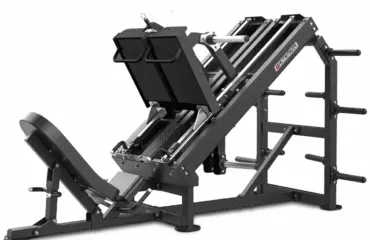
- Strength training machines with guided movement, because preserving lean mass while losing fat is what makes the result durable, and guided stations are the safest entry point for a deconditioned member.
- A stock of professional fitness accessories for circuit and group formats, which is how you deliver variety without buying more machines.
All indoor equipment specified for this kind of continuous, high-turnover use should meet EN ISO 20957-1 class S, the professional class.
Current trends worth understanding
Intermittent fasting
Once confined to more traditional practices, intermittent fasting has grown in popularity for its promise of effective weight loss. The method alternates periods of fasting with periods of eating, aiming to improve metabolism and reduce cravings. Each individual has to judge whether it fits their own way of life, and a facility should present it as one option among several rather than as house policy.
Plant-based diets
More and more people are turning to plant-based diets, for ethical reasons but also because of research showing health benefits. Diets rich in plants are often lower in calories and high in fibre, which supports satiety.
Sleep
Sleep is the most underestimated element of any weight management programme. Studies have shown that a lack of sleep disturbs the hormones that regulate appetite, which can lead to weight gain. Good sleep quality has become an integral part of the process.
Personalised and sustainable, or not worth running
Every programme has to be personalised. There is no universal method: each body is different and the response to a diet or an exercise routine varies from one person to the next. That is why qualified professionals, whether nutritionists or coaches, matter so much.
It is equally important to remember that weight loss should be a sustainable goal. Rather than focusing only on the number on the scales, members should aim to establish lifestyle changes that benefit their health in the long term. A programme has to encourage adherence to new habits, which is the hardest part and the essential one.
Emotional support decides retention
Emotional support is the element operators most often leave out. The road is full of obstacles, physical and emotional alike. A support network, whether a community, friends or a professional, considerably improves motivation and resilience. As one nutritionist puts it, losing weight is not simply a physical challenge but above all a psychological journey, and the mind matters as much as the body. Being surrounded by people with the same goals creates the conditions for success, which is a strong argument for group formats over solo programmes.
Frequently asked questions
How much cardio capacity does a weight management offer need?
It depends on how many members you enrol and on your peak hour, not on total membership. Send us your attendance profile and we will size the line.
Can we run this offer in a hotel or a corporate facility?
Yes, provided the equipment is professional class S and the space allows both cardio and guided strength work. Smaller footprints usually rely more on multi-station equipment.
Do we need qualified staff?
Yes. Programme design and any nutritional guidance must come from professionals qualified under the regulations applicable in your country.
Build the offer on equipment that can carry it
A weight management programme is a win for the member and for the operator, but only if the floor can absorb the traffic it generates. Tell us how many members you expect to enrol, your surface area and your peak hour, and we will specify the line. Request a quote and we will cost it for you.