Sustainable Weight Loss: Equipment and Programming Guide

Weight loss is the single most common reason people join a gym, book a personal trainer or use a hotel fitness room. For an operator that makes it a commercial question as much as a health one: the members who sign up for it are the members most likely to leave within three months if the offer does not work for them. This guide sets out what actually drives sustainable weight loss, and what it means for the equipment and the programming you put on your floor.
What an effective weight loss approach looks like
An effective approach rests on three pillars: balanced nutrition, regular physical activity and a healthy overall lifestyle. The decisive criterion is not how fast the first kilos come off but whether the routine can be sustained over time, without the member feeling deprived. Anything that cannot be kept up for a year is a programme that will be abandoned, and an abandoned programme is a cancelled membership.
That has a direct consequence for your facility. A site built only around punishing intensity attracts a narrow, self-selecting group. A site that lets a beginner start comfortably, progress in visible steps and vary the stimulus keeps people long enough for results to appear.
Pillar 1: nutrition, the primary factor
Nutrition is the foundation. Unlike a restrictive diet that deprives the body of essential nutrients, a varied and balanced intake allows weight loss while preserving energy and mood, which is precisely what keeps someone turning up for their sessions.
Weight loss occurs when energy intake is lower than energy expenditure. The intake should therefore be reduced progressively, without creating a deficit so large that it undermines the rest of the routine. Three principles are worth communicating to members:
- Prioritise satiating foods. Foods rich in fibre, vitamins and minerals such as vegetables, fruit, lean proteins and healthy fats promote a feeling of fullness.
- Consider intermittent fasting. The 16/8 pattern, fasting for 16 hours and eating within an 8 hour window, is a widely used way of reducing overall intake.
- Control portions. Smaller plates and taking time to chew help people eat less while still enjoying meals.
Operators are not dietitians, and nothing here replaces individual advice from a qualified professional. What a facility can do is partner with one, and make sure the training side supports rather than contradicts the nutritional side.
Pillar 2: exercise, and the equipment that supports it
Nutrition comes first, but exercise accelerates weight loss by raising energy expenditure, and it improves mood, reduces stress and supports better sleep, all factors that are frequently overlooked and directly affect weight management.
Four training modes do most of the work, and each maps onto a distinct part of your equipment budget.
High intensity interval training. Alternating intense effort with recovery burns a lot of calories in a short session and keeps metabolism elevated afterwards. On the floor this means air bikes, rowers, ski ergometers and open functional space. Our functional training rigs turn a small footprint into a station that handles a full group class.
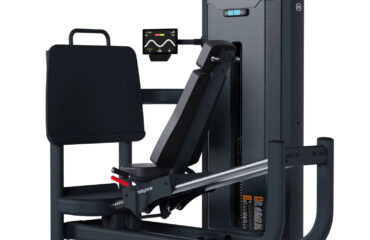
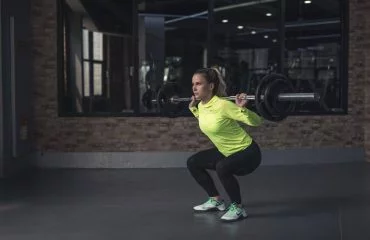
Strength training. Building muscle is central, because more muscle means more calories burned even at rest. It is also the mode that changes body composition rather than only scale weight, which is what members actually want. A guided range of strength training machines lets a complete beginner train safely from week one, which free weights alone do not.
Steady cardio. Brisk walking and running remain simple and effective when done regularly, and they are what most deconditioned members will accept at the start. Treadmills, cross trainers and upright bikes from the cardio equipment range cover this, and the number of stations you install decides whether your peak hour works.
Non-exercise activity thermogenesis. Everyday movement such as walking and taking the stairs adds up to a considerable share of daily expenditure. It costs nothing to promote, and it is the easiest win to give members who train twice a week.
Pillar 3: lifestyle, the factor most often ignored
Beyond nutrition and training, sleep quality, stress management and hydration play a decisive role. They act directly on hormones, on available energy and on how consistently someone trains.
- Stress management. Chronic stress raises cortisol production, which encourages fat storage, particularly around the abdomen. Meditation, yoga and breathing work help.
- Sleep. Insufficient sleep disrupts hunger hormones, driving cravings and fat storage. Seven to eight hours a night supports the rest of the effort.
- Hydration. Drinking enough water helps maintain an efficient metabolism and avoids confusing thirst with hunger.
For a facility this is where a quiet stretching corner, a recovery area or a simple hydration point earn their space. They cost little and they address the pillar most competitors ignore.
Setting realistic goals
Weight loss should be approached progressively. Targets set too high lead to frustration and to people dropping out. A club that frames member goals in achievable steps, and measures progress by strength, endurance and body composition rather than by the scale alone, keeps members through the plateau phase where most memberships are lost.
Frequently asked questions
What is the best single method for losing weight?
There is no single method. The best approach combines balanced nutrition, regular physical activity and a healthy lifestyle, kept up over the long term rather than as a short intensive push.
Is cardio or strength training better for weight loss?
Both, for different reasons. Cardio raises expenditure during the session, strength training builds muscle that raises expenditure at rest and improves body composition. A floor should offer both.
What equipment should a facility prioritise for weight loss members?
Enough cardio stations to absorb the peak hour, a guided strength circuit a beginner can use unsupervised, and one functional area for interval sessions. That combination covers the great majority of weight loss briefs.
Do you help design the layout?
Yes. We work from your floor plan, your audience and your opening hours to propose a station list and a layout before anything is quoted.
Equip a facility that keeps members
Light In Fitness has equipped professional sites since 2013, from municipal gyms and hotel fitness rooms to clubs and rehabilitation centres. Tell us who your members are and what results they come for, and we will propose the equipment mix that supports them. Request a quote to get started.