The Triceps Extension Machine: Why and How to Use It in Your Gym
La machine à extension des triceps guide l'extension du coude contre une charge réglable, en isolant le triceps sans sollicitation de l'épaule. Elle convient aux publics débutants et aux séances à haut volume où la fatigue dégrade la technique en charge libre. Elle complète les dips et le développé couché prise serrée sur un plateau complet.
Resistance training is the core lever for building muscle mass, gaining strength and developing the upper body, whether members work with free weights, dumbbells or guided machines. Among the stations a facility puts on the floor, the triceps extension machine holds a strategic place: it targets the triceps precisely, a muscle group that determines arm power and the overall balance of the upper body.
Here is why it earns its space and how to have it used correctly and safely.
Why put a triceps extension machine on the floor
1. It targets the triceps effectively
The machine allows direct, focused work on the triceps, which account for the larger part of upper-arm volume. Strengthening them improves how the arm looks, but it also improves performance on many compound movements, in particular:
- presses (bench, incline, overhead)
- press-ups
- dips
- pushing movements in general
2. It protects the joints
Thanks to a guided load and a more stable movement, the machine limits unnecessary strain and reduces the scope for poor execution, in particular at:
- the elbows
- the shoulders, depending on the model and the settings
That makes it particularly useful for training the triceps without depending on the balance or the technical demands of free weights, which is exactly the situation on an unsupervised floor.
3. It adds variety to programming
Including a machine triceps extension diversifies the programme, which helps to:
- avoid monotony
- vary the angles and the sensation of the work
- restart progress when an exercise stalls
That applies as much to a mass-building block as to conditioning work.
4. It makes progression straightforward
Machines allow the load to be adjusted in seconds, which makes progression simpler and more consistent:
- beginners: light loads and learning the movement
- experienced users: progressive overload with controlled training volume
The station is therefore easy to programme across a mixed membership.
5. It also works in a compact facility
For a small studio or a room where floor area is the constraint, a focused station is a real advantage: it delivers guided, repeatable training that is often easier to perform cleanly than a technical dumbbell movement. For a commercial installation, specify equipment certified to EN ISO 20957-1 class S, which is the professional class for indoor equipment.
How to use the triceps extension machine
1. Starting position
- Sit correctly, with the back well supported against the backrest.
- Keep the elbows close to the torso, or on the pad provided depending on the machine.
- The handles should be at a comfortable height, allowing the set to start with the arms flexed without twisting the shoulders.
The objective: a stable posture, shoulders down, the movement centred on the elbows.
2. Selecting the load
- Choose a load appropriate to the training level.
- The user should be able to complete the repetitions without joint pain, without compensating through the back and without accelerating uncontrollably.
A good rule: a load that challenges, with clean execution from the first repetition to the last.
3. Performing the movement
- Grip the handles, pronated or supinated depending on the machine.
- Push by contracting the triceps until the arms are almost straight.
- Do not snap the elbows into lockout: leave a small margin at the end of the movement.
- Return slowly to the starting position, controlling the eccentric phase.
The movement should be smooth and controlled, with no swing and with the shoulders staying down.
4. Sets and repetitions
For standard muscular development:
- 3 to 4 sets
- 8 to 12 repetitions
- rest: 30 to 60 seconds, according to intensity
For endurance and conditioning work, 12 to 15 repetitions with a slightly lighter load is the usual prescription.
5. Placing the exercise in a programme
The triceps respond well when the exercise sits:
- at the end of a pushing session (chest and shoulders)
- or as a complement to compound movements
Combinations that work:
- incline press (chest) plus triceps extension (isolation)
- rows or pull-ups (back) plus arm work, for upper-body balance
- shoulders plus triceps, following a push logic
Alternating between machine and free weights helps members avoid plateaus.
6. Warm-up and stretching
Before: mobility work for the elbows and shoulders, then one or two light sets on the machine. After: gentle stretching of the triceps, shoulders and torso, which supports recovery and limits residual tension.
Specifying the station
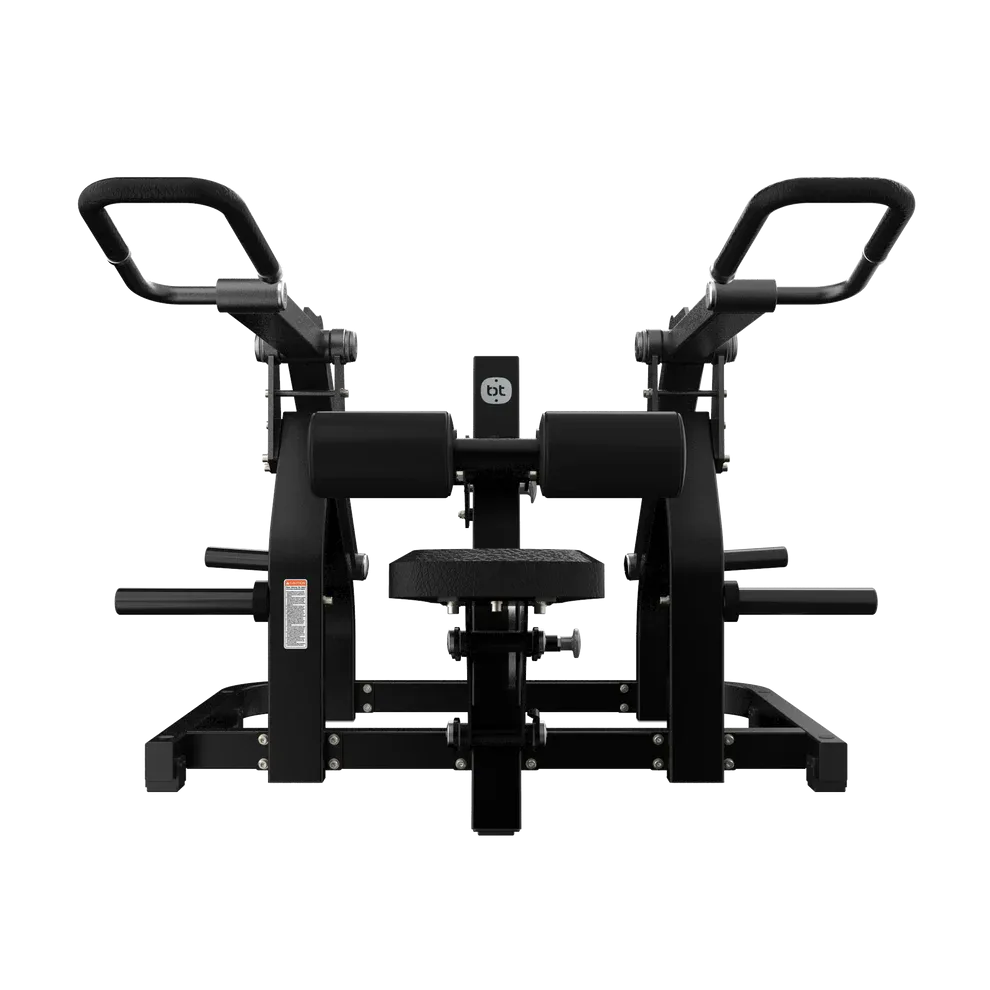
The SRX31 triceps extension is a good reference point for a commercial specification. The full range of guided-load stations sits in our selectorised machines category, and the plate-loaded equivalents in the Solid Rock plate-loaded range. The SRX31 triceps extension product page carries the technical detail.
Frequently asked questions
Why use a triceps extension machine in a gym?
It allows direct, focused triceps work with a guided and stable movement. It is effective and easy to programme, provided the settings and the execution are respected.
How does it help on the basic exercises?
Strengthening the triceps improves performance on pushing movements: presses (bench, incline, overhead), press-ups, dips and pushing work in general.
Is the machine gentler on the joints?
Often yes, because the load is guided and the movement is stable, which limits unnecessary strain at the elbows and, depending on the model and settings, at the shoulders. Technique and the absence of pain remain the priority.
How should a user set up on the machine?
Back supported against the backrest, elbows close to the torso or on the pad provided, handles set at a comfortable height so the set starts with the arms flexed without twisting the shoulders. Stable posture, shoulders down, movement centred on the elbows.
How is the right load chosen?
Choose a load that can be controlled without joint pain, without compensating through the back and without accelerating. The load should challenge, but execution must stay clean from start to finish.
What sets and repetitions build muscle?
For standard muscular development: 3 to 4 sets of 8 to 12 repetitions, with 30 to 60 seconds of rest according to intensity.
And for endurance or conditioning?
Aim for 12 to 15 repetitions with a slightly lighter load, keeping the same priority: control, a managed range of motion and no compensation.
Where does the exercise belong in a session?
It sits well at the end of a pushing session (chest and shoulders) or as a complement to compound movements. Alternating machine and free weights helps avoid plateaus.
Is warming up and stretching necessary?
Before: mobility for the elbows and shoulders plus one or two light sets on the machine. After: gentle stretching of the triceps, shoulders and torso to support recovery and limit tension.
Conclusion
The triceps extension machine is an effective station for strengthening and developing the arms safely. It delivers targeted, progressive and stable work, and it protects the joints better than a poorly controlled free-weight movement does.
Whether your members are beginners or experienced, the station earns its floor space. To specify one for your facility, send us your room dimensions and user profile through our quote request page.