Strength Training Machines: Names, Functions and a Complete Buying Guide
In short: the core professional strength machines are the bench press (chest), leg press (quadriceps), lat pulldown (back), chest press (seated chest), leg curl (hamstrings), leg extension (quadriceps), pec deck or butterfly (chest isolation), converging machines (multi-group), the Smith machine and the squat rack. Each one targets a defined muscle group with a guided, repeatable and safe movement.
Strength machines are the backbone of a productive, safe and legible training floor. Whether you run a gym, a physiotherapy practice, a hotel fitness room or a municipal facility, you need to know exactly what each machine does, which muscle group it targets and how to choose between them.
This guide sets out the machines by name and by function, the technical points that separate a professional machine from a lighter one, and the criteria that should drive a purchase decision.
1. Machine names decoded
Strength machine names are broadly standardised across the industry. Each name maps to a defined function, a target muscle group and a specific biomechanical logic. Below are the machines you will find in most modern commercial gyms.
Machines by name and muscle group
| Machine | Primary muscle group | Movement pattern |
|---|---|---|
| Leg press | Quadriceps, glutes, hamstrings | Horizontal or inclined push |
| Leg extension | Quadriceps | Knee extension |
| Leg curl | Hamstrings | Knee flexion |
| Glute kickback | Glutes | Hip extension |
| Chest press | Chest, triceps | Horizontal push |
| Pec deck / butterfly | Chest | Arm adduction |
| Shoulder press | Shoulders, trapezius, triceps | Vertical push |
| Lat pulldown | Latissimus dorsi, biceps | Assisted vertical pull |
| Seated row | Back, biceps, rear shoulder | Horizontal pull |
| Abdominal crunch | Abdominals | Trunk flexion |
| Abductor / adductor machine | Hip abductors / adductors | Leg abduction and adduction |
| Cable crossover | Chest, arms | Crossing cable movement |
| Smith machine | Multi-joint (guided bar) | Guided free-weight movement |
| Hack squat | Quadriceps, glutes | Inclined vertical push |
| Standing calf raise | Calves | Standing plantar flexion |
| Seated calf raise | Calves | Seated plantar flexion |
2. Why knowing the names and functions matters
These are not commercial labels. Each machine is a training station, and the selection you make has direct consequences for:
- How legible the training journey is for a member walking your floor
- The ergonomics and circulation of your training space
- The quality of muscular progression you can actually deliver
- Your ability to offer a balanced programme rather than a lopsided one
- Compliance with rehabilitation protocols in medical or post-injury settings
A mastered vocabulary also reassures your clients and reinforces your credibility as a sports or health professional.
3. Building a coherent machine park
Light In Fitness has specialised in professional sports equipment for more than ten years. Our role does not stop at selling machines: we work on the design of the whole training space, on the coherence of the equipment mix, on safe use and on the return you get from the investment.
- Strategic advice on machine selection based on the real user profile
- Professional machines built to EN ISO 20957-1 class S, the standard for equipment in supervised commercial use
- Reinforced steel, welded structures, maximum load up to 450 kg
- Machine customisation: colours, logo, upholstery, options
- Design of dedicated zones: circuit training, abdominal area, cardio and strength zones
- Professional installation and scheduled maintenance
The full range is organised across selectorised machines, plate-loaded machines and racks and cages.
4. Technical focus: three machines no gym should be without
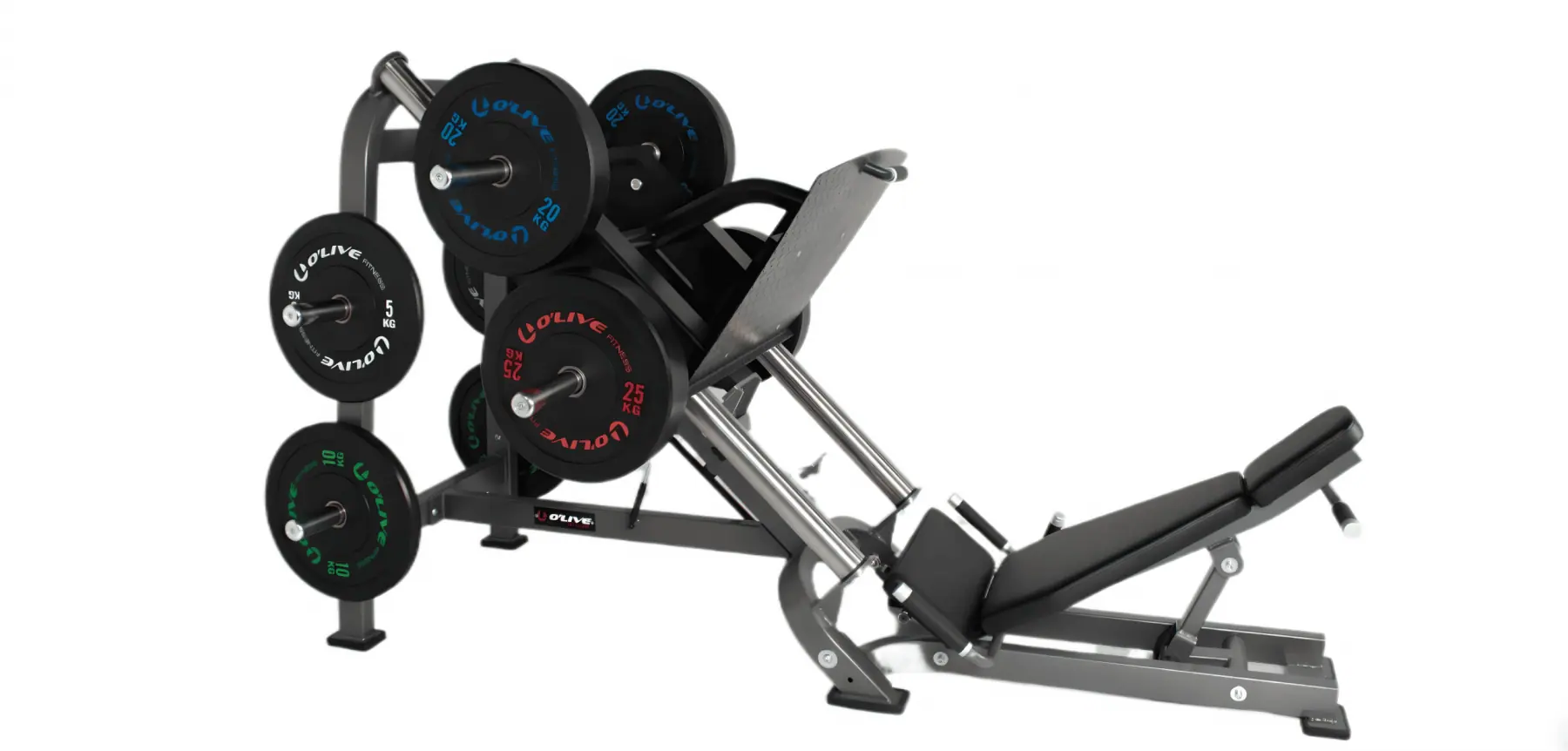
The inclined leg press
- Selectorised or plate-loaded
- Inclination angle optimised to protect the knees
- Adjustable backrest for all body sizes
- The reference machine for lower-limb hypertrophy
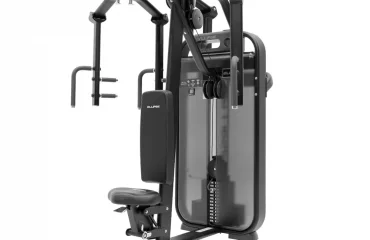
The chest press
- Natural movement reproducing the bench press
- Suitable for every level thanks to its built-in safety
- One of the most used machines on any floor, by men and women alike
- Strong chest recruitment without putting the shoulder at risk
The lat pulldown
- Ergonomic bar, adjustable pulley height
- Seated position with adjustable thigh pad
- Complete back development, suitable for beginners and advanced users alike
5. Buying professional strength machines
Every machine comes with a tailored quotation, dedicated commercial support and rigorous after-sales follow-up.
- Direct manufacturer pricing, without intermediaries
- Leasing and finance options
- Long-term warranty, up to 10 years depending on the range
- 3D layout plans to optimise your floor space
- Single machines or complete fit-outs
6. Standards and safety
All our strength machines are designed and supplied in line with European safety requirements.
- EN ISO 20957-1 class S: general safety requirements for stationary training equipment intended for supervised commercial use
- REACH compliance: materials free of restricted hazardous substances
- Anti-corrosion treated steel, solvent-free powder coating
- Antibacterial upholstery, high-density foam, abrasion tested
Class S is the professional class. Equipment declared to a lower class belongs to a different category and has no place on a commercial floor, whatever the marketing says.
7. Frequently asked questions
Which machines are essential for a small gym?
A leg press, a lat pulldown, a seated chest press, a high and low cable station and an abdominal machine cover the essentials.
Are these machines suitable for rehabilitation?
Yes. Many are well suited to rehabilitation work thanks to the guided movement, the precise adjustment range and the seated support.
Can machines be ordered individually?
Yes. Whether you need a single machine or a complete strength room, the specification is built around your project.
Machines or free weights?
Machines are safer and isolate the target muscle, which makes them the right choice for beginners and for rehabilitation. Free weights recruit more stabilisers and suit experienced users. A complete floor has both.
What does a professional strength machine cost?
Typically between 1,500.00 EUR excluding VAT and 6,000.00 EUR excluding VAT depending on the brand (Bodytone, ZIVA, Etenon and others), the intensity of use and the type of machine, from single-joint isolation stations to multi-function units.
Conclusion
Knowing the names of strength machines and what they actually do is the starting point of any serious sports, health or performance project. Every machine has its place, its role and its impact inside a structured programme.
Tell us your floor area, your membership profile and your budget, and we will return a machine list, a 3D layout and a costed proposal. Request a quote for a single machine or for a complete strength room.
Sources et références
- NF EN ISO 20957-1 – équipement d’entraînement fixe, partie 1 : exigences générales de sécurité et méthodes d’essai (AFNOR)
- AFNOR Normalisation – dossier thématique sur les appareils d’entraînement fixes et leurs classes d’usage