Powerlifting: The Complete Guide for Beginners and Gyms
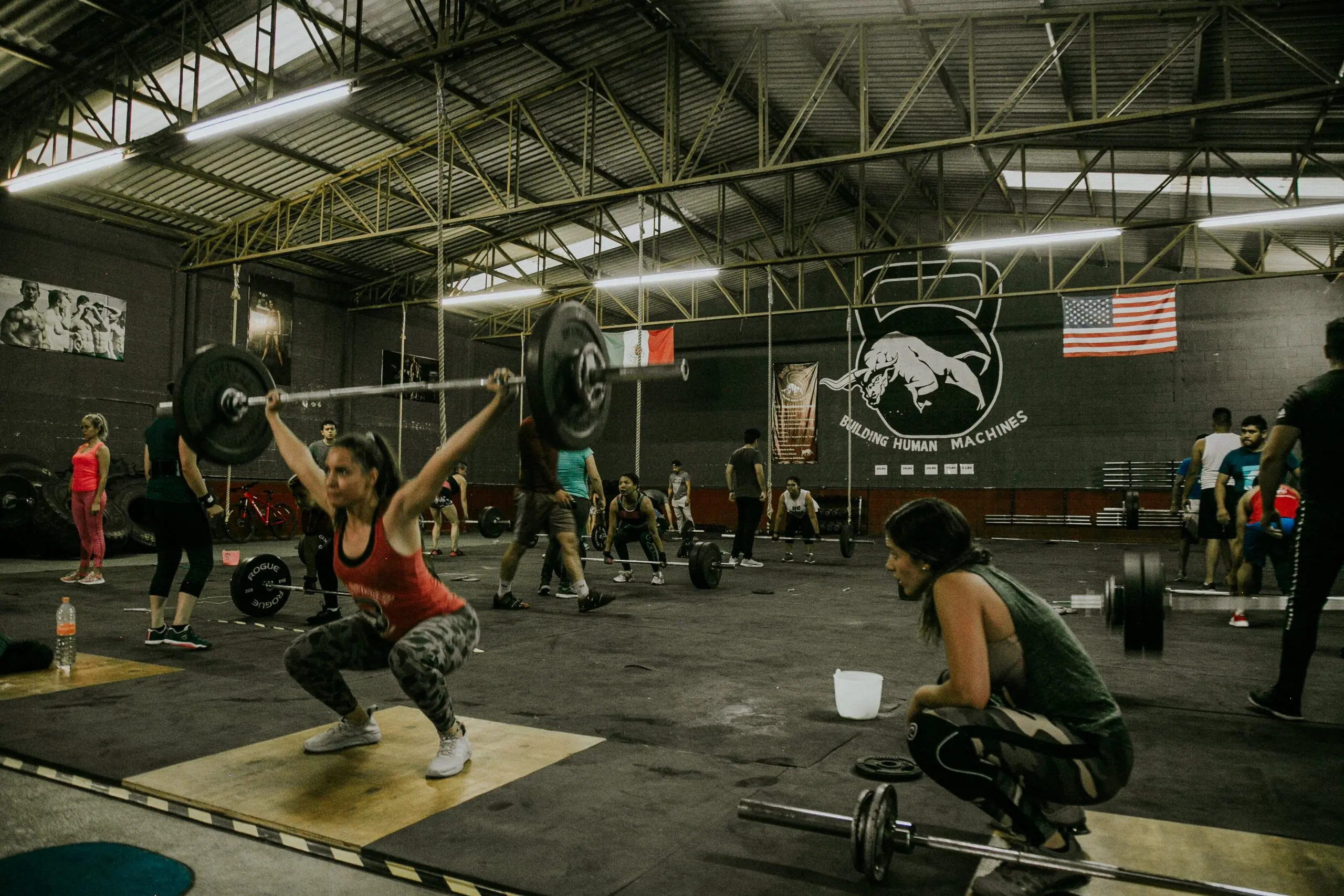
Powerlifting has moved from a niche corner of the weights room to a discipline that commercial gyms, cross-training boxes and university sports centres now plan for deliberately. It rests on three competition lifts, the squat, the bench press and the deadlift, and on a level of technical discipline that has as much to do with patience as with raw strength. This guide covers the discipline itself, how the three lifts are executed, how lifters eat, and what a facility has to install to host them properly.
Why powerlifting keeps growing
The appeal is partly that the barrier to entry is low. A barbell, plates, a rack and a solid floor are enough to start, and the progression is measurable from the first session. Social platforms and coaching videos have made the technique visible to people who would never have walked into a strength-focused gym a decade ago, and the age range of participants has widened accordingly. For an operator the consequence is practical: members who used to ignore the free-weight area now ask for a rack, a competition bench and a platform, and clubs that used to treat the strength corner as an afterthought are rebuilding it as a destination.
Where powerlifting came from
The discipline took shape in the training culture of 1960s America, among lifters who wanted a competitive format distinct from Olympic weightlifting and its two lifts, the snatch and the clean and jerk. Rather than explosive overhead work, the new format rewarded maximal load in three slower, heavier movements. Organised competition followed quickly, and the International Powerlifting Federation was founded in 1972, giving the sport its own governing structure and its own world championships. Since then powerlifting has grown steadily worldwide around the same three lifts, judged on technical standards as much as on the weight on the bar.
The three competition lifts
The three lifts are the whole of the sport. Each demands strength, but also a precise execution that a judge can validate. A strong lifter with poor technique loses attempts that a technically sound lifter converts, which is why coaching matters as much as programming.
The squat
The squat recruits more muscle mass than any other lift in the sport. The bar rests across the upper back and shoulders, hands gripping outside shoulder width, feet roughly shoulder width apart with the toes turned slightly out. The lifter descends by bending at the hips and knees until the thighs reach at least parallel with the floor, keeping the torso braced, the chest up and the head in a neutral position with the gaze forward. From the bottom position the lifter drives back to standing by extending the hips and knees together.
Throughout the movement the whole body stays under tension, particularly the legs, the back and the trunk, because stability is what allows the load to travel in a straight line. A sound squat takes time to build; with consistent practice and competent coaching it becomes the most reliable of the three lifts.
The bench press
The bench press loads the upper body, mainly the pectorals, triceps and anterior deltoids. The lifter lies on a flat bench, grips the bar slightly wider than shoulder width, unracks it and holds it with the arms extended above the chest. The bar is lowered under control to the chest without flaring the elbows excessively, then pressed back to full arm extension.
The whole body contributes: the back stays tight against the bench, the trunk is braced, and the feet keep contact with the floor. Lifting the hips off the bench or letting the head come up breaks the position and, in competition, invalidates the attempt. A steady tempo, neither rushed nor artificially slow, gives the most consistent results.
The deadlift
The deadlift involves the widest range of muscle groups of the three: the posterior chain, the glutes, the quadriceps and the hamstrings, along with the grip and the whole trunk. The lifter stands facing the bar, feet roughly hip to shoulder width with the toes slightly out, bends at the hips and knees and grips the bar with the hands just outside the legs.
The lift is a push through the floor as much as a pull. The back stays flat and the gaze forward while the bar travels close to the body up to the standing position. The lifter then lowers the bar under control, still without rounding the back. Jerking the bar off the floor or letting the spine flex is where injuries occur, which is why the deadlift is the lift most worth coaching from the first session.
Nutrition for powerlifters
Training only produces results if recovery keeps up with it. A powerlifter needs enough protein to support muscle repair, enough carbohydrate to fuel heavy sessions, and healthy fats for sustained energy. In practice that usually means lean meat, fish, eggs and dairy for protein, complex carbohydrates such as brown rice, sweet potato and pasta for training fuel, and sources such as avocado, nuts and seeds for fats.
Requirements vary considerably from one athlete to another, and body-weight categories add a further constraint. A qualified nutrition professional should build the individual plan; generic templates rarely survive contact with a real training week. The principle to keep is simple: cover the energy demand of the programme with quality nutrients, and recovery follows.
Equipping a powerlifting area
Hosting the discipline properly changes the specification of the strength area. It needs a rack that stays stable under maximal load, a bench designed for pressing rather than general use, calibrated bars and plates, and above all a floor able to absorb repeated heavy loading. Our squat racks and power racks, Olympic barbells and weight benches are dimensioned for continuous professional use under EN ISO 20957-1 class S, and the platform area is normally finished with weightlifting rubber tiles to protect both the slab and the bar.
FAQ
Is powerlifting suitable for beginners? Yes, provided the load is scaled and technique comes before weight. The three lifts are taught at low load long before anyone approaches a maximal attempt.
How much space does a powerlifting area need? Enough for the rack, the bench, the platform and safe circulation around all three. Take the footprint from the technical sheet of the exact references you plan to install and add the walkway.
Does a gym need a dedicated platform? For deadlifting at heavy load, yes. A platform protects the slab, controls noise transmission and keeps the loading area clearly defined.
Plan your strength area
If you are adding or rebuilding a powerlifting zone, send us the surface area, the ceiling height and the number of users you expect. Request a quote and we will propose a rack, bench, bar and flooring configuration that matches the space.