Obstacle Course Racing: The Complete Preparation Guide
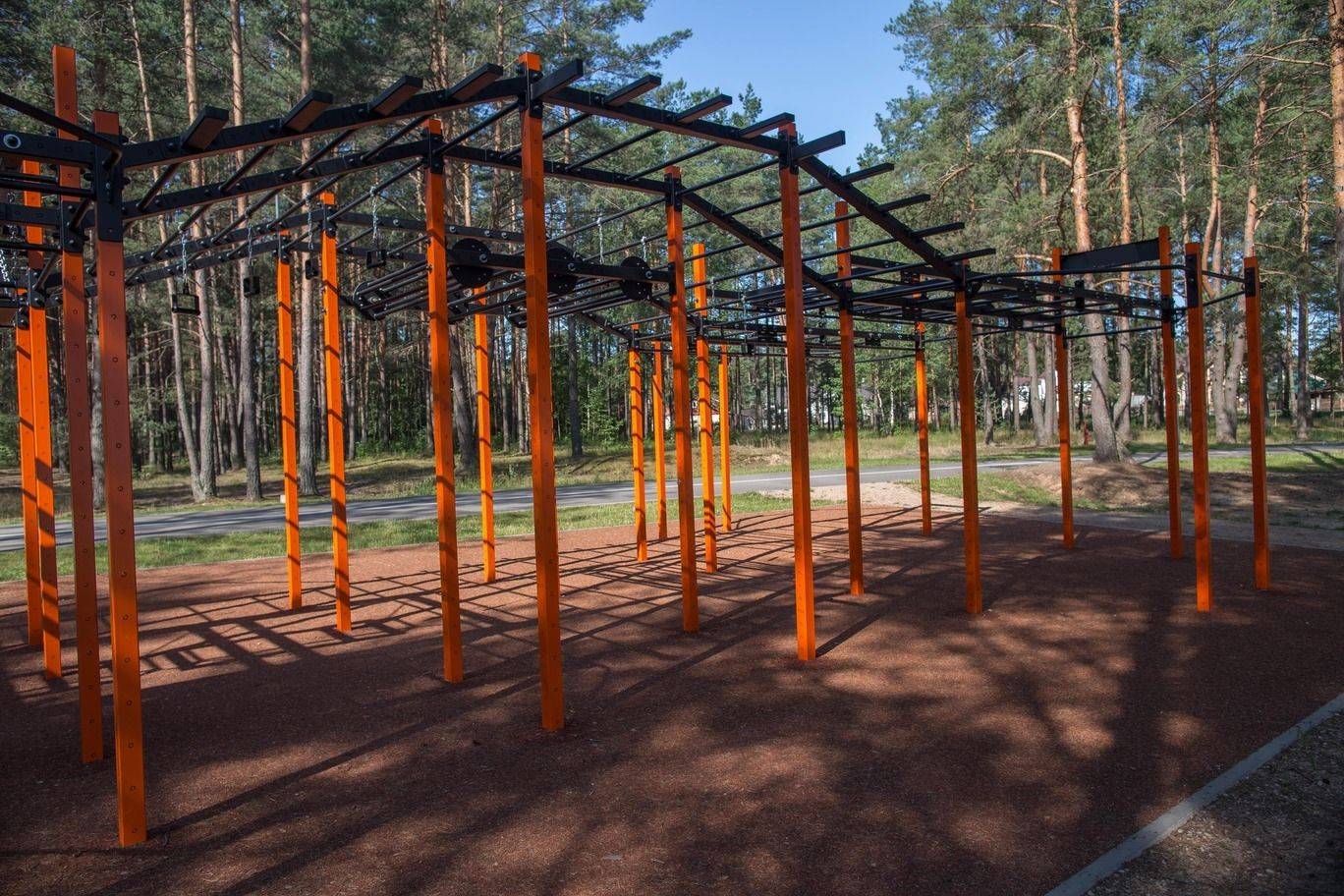
Obstacle course racing has stopped being a once-a-year novelty. Spartan Race, Tough Mudder and a growing calendar of regional events now feed a year-round demand for training that mixes running, grip strength, climbing, crawling and carrying. For gym operators, cross-training box owners, campsites, holiday villages, clubs and local authorities, that demand is a programming opportunity: obstacle racers train several times a week, they train in groups, and they need equipment a conventional weights room does not provide.
This guide follows what a competitor actually has to prepare – physical conditioning, obstacle technique, race-day tactics, the hard moments on course, and recovery – and, at each stage, what a facility needs on the floor to support it.
Preparing for an obstacle course race
Preparation looks intimidating from the outside, but it breaks down into a small number of decisions. The first is the training mix. Nobody needs to become a bodybuilder to finish an obstacle race, yet a purely cardio background falls apart at the first wall or carry. A combination of endurance work and strength work builds both the aerobic base to keep moving between obstacles and the pulling, gripping and pressing capacity the obstacles themselves demand.
The second is mental preparation, and it matters more than most first-timers expect. An obstacle course is deliberately overwhelming: unfamiliar tasks, unpredictable footing, other competitors moving past. Rehearsing the course in the mind – visualising each obstacle being cleared and the finish line being crossed – sounds like a cliche and works anyway, because it removes the surprise factor that makes people freeze.
The third is kit. Clothing that tears or restricts movement turns into a problem within the first kilometre. Comfortable, stretchable layers that allow a full range of motion, and footwear with genuine grip and ankle support, make a measurable difference on running sections and on anything that has to be climbed. None of this is expensive; it is simply chosen in advance rather than the night before.
For an operator, this stage is where retention is won. Racers who can train the specific qualities of their event at your site – and not only run on a treadmill – come back three times a week for months before the event.
Mastering the obstacles
Turning up on race day and expecting to improvise every obstacle is the equivalent of sitting an exam without opening the book. Each obstacle is designed to test a different quality. Some are almost purely upper-body strength: walls, ropes, rigs, monkey bars. Others test agility, balance and reaction speed. Others test grip endurance, which is the single most common reason competitors fail an obstacle they are strong enough to complete.
Knowing what is being tested is the starting point, because it tells an athlete where to put training time. After that, repetition is what separates people who clear obstacles from people who queue at them. Walking a course once is not practice. Practice means repeating each movement enough times to find the version that works for a particular body – a taller athlete and a lighter athlete will not attack the same wall the same way, and neither approach is wrong.
The last layer is strategy: finding the route through each obstacle that costs the least energy. Energy saved early is energy available in the second half, and on a long course that is the difference between finishing strong and walking the last section.
This is where permanent structures pay for themselves. A rig that stays up all year lets members rehearse the same movements weekly, in a controlled environment, instead of discovering them for the first time under a race number. Our OCR obstacle courses and ninja warrior rigs are built for exactly that repeat use.
Race-day tactics
Race day is not only about finishing – it is about finishing in control. Three things decide that.
Warming up properly comes first. Starting a course with cold, tight muscles is how avoidable injuries happen. A few minutes of mobility work and enough activity to raise the heart rate is all that is required, and it costs nothing.
Hydration and fuelling come second. Fluid intake has to continue across the whole course, not only at the start, so every opportunity to drink should be taken. On the nutrition side, carbohydrate and protein before the event give the body something to work with when the obstacles start stacking up.
Pacing comes third and is the one most often ignored. Going out at maximum effort and burning out halfway is the classic first-timer error. Finding a sustainable rhythm early and holding it is what allows an athlete to still have grip strength left when the hardest obstacles arrive – and the hardest obstacles are rarely at the beginning.
Getting through the hard moments
Obstacle racing tests physical and mental strength together, and it frequently tests tolerance for heights, for confined spaces and for plain exhaustion. Preparation reduces all three, but something will still come up mid-course.
Heights are the most common. For anyone uncomfortable with exposure, climbing a wall or moving along a suspended obstacle can be genuinely frightening. The workable answer is to break it into single actions: one hold at a time, eyes on the next grip rather than on the ground, breathing kept steady. Most exposure on a course lasts a matter of seconds.
Confined spaces are the second. Tunnels and enclosed sections can trigger a strong reaction in people who never expected one. Keeping attention on the movement itself, and on the exit, is usually enough to get through what is by definition a short passage.
Fatigue is the third and the most universal. After a series of obstacles the body slows and the mind starts negotiating. That is the moment to fall back on prepared motivation – the finish line, the people waiting there, the training already invested. And if a short pause is needed to recover breath, taking it is not a failure. Obstacle races are supposed to be hard; they are also supposed to be enjoyable, and finishing without clearing every single obstacle is still finishing.
Recovery after the race
Recovery deserves as much attention as preparation, because the body has just been through a genuinely demanding effort. It starts with stretching and gentle mobility work in the hours after the finish, which limits the stiffness that otherwise arrives the following morning.
Cold water immersion is the second tool, and the one competitors talk about most. A few minutes in cold water after a hard effort is used widely to manage post-exercise inflammation and to shorten the return to normal training. It is not comfortable, and that is not the point. For a facility, a permanent cold water installation is one of the few recovery services that visibly differentiates a site: our cold plunge baths are designed for continuous commercial use rather than occasional private use.
Relaxation practices close the loop. A few minutes of breathing work or meditation releases residual tension, and massage or a wellness session extends the effect. The objective through all of it is unchanged: a body and a mind that are ready to train again rather than merely intact.
Equipping a site for obstacle race training
From an operator point of view, obstacle racing training needs three things a standard gym floor rarely has: structures that can be hung from and climbed, ground that tolerates outdoor use in all weather, and enough footprint for a group to rotate through stations without queueing.
Modular outdoor structures answer the first two. They can be configured as a short technical loop for a small site or as a full course for a public park or a holiday village, and they stay usable through the year. The choice between a compact station and a complete course is mostly a question of available surface and of how many people have to train at once.
Frequently asked questions
How long does it take to prepare for a first obstacle race?
It depends entirely on the starting point and on the event chosen. What is consistent is the structure of the preparation: an aerobic base, dedicated grip and pulling work, and repeated practice of the specific obstacles rather than general training alone.
Do members need a full course to train for obstacle racing?
No. A rig that allows hanging, traversing and climbing already covers the majority of the qualities an obstacle race tests. A full course adds realism and lets a group train together, which is why sites with space tend to move towards one.
Can obstacle structures be used by non-competitors?
Yes, and most sites report that this is where the volume comes from. The same structures serve general functional training, group sessions and youth programmes, which is what makes the investment work outside of race season.
What surface should be installed under an outdoor obstacle structure?
Ground treatment depends on the structure, its fall heights and the audience using it, so it is specified together with the equipment rather than chosen afterwards. Send us the layout and the intended users and we will specify it with the structure.
Planning your installation
Obstacle racing rewards preparation, and so does equipping for it. Whether the goal is a training rig inside an existing gym, a compact outdoor station for a campsite, or a full course for a municipality or a club, the starting point is the same: available surface, expected number of users, and how the space will be programmed across the year.
Send us those three pieces of information and we will come back with a configuration and a costed proposal. Request a quote and our team will work through the options with you.