How to Equip a Fitness Facility: Buyer Guide
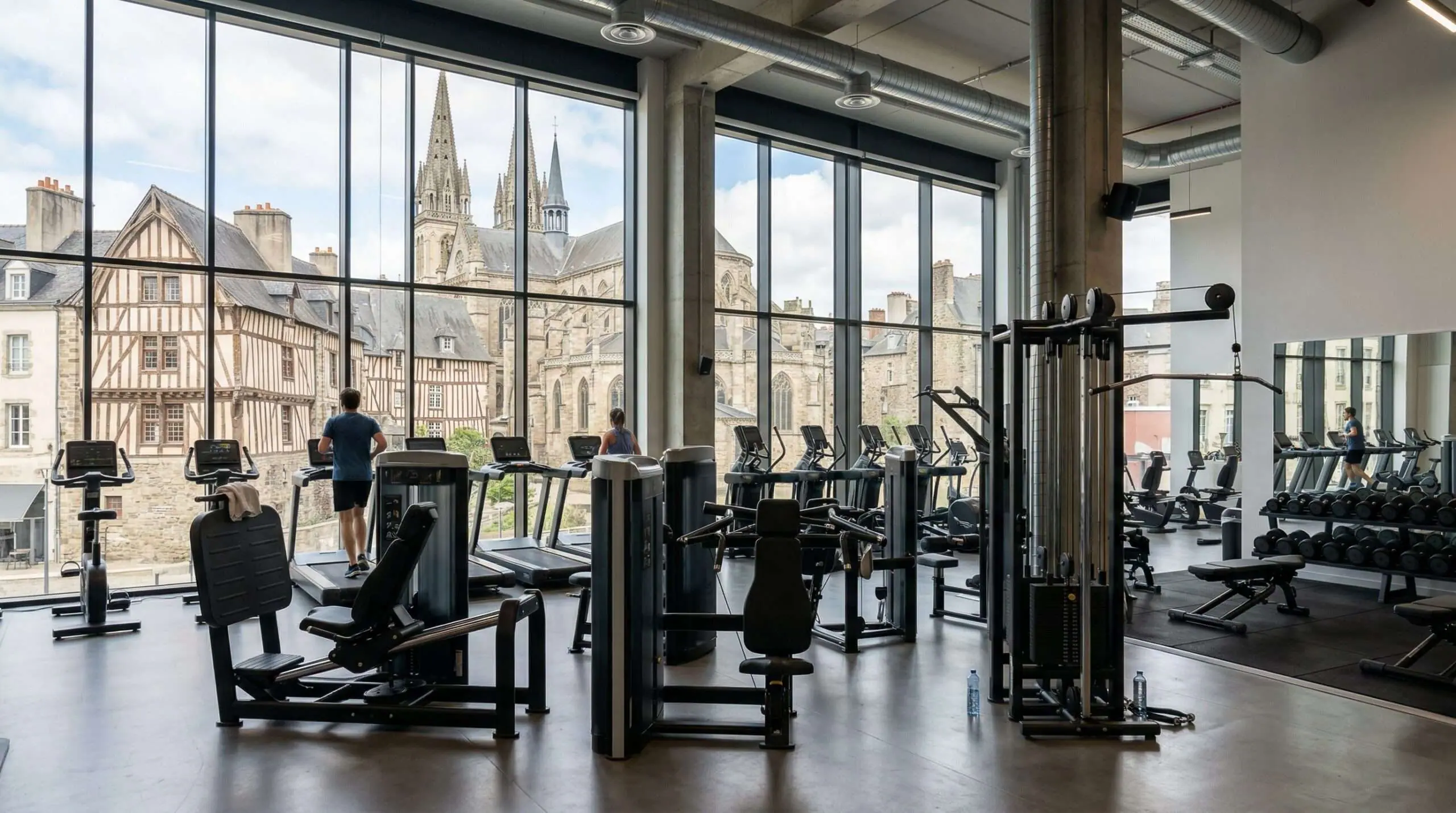
Equipping a gym is not a shopping list, it is a project. It commits an operator for several years, it decides how many members the floor can serve at peak, and it is judged by the people who use it every day. This guide sets out the equipment families a professional facility needs, the criteria that separate a serious supplier from a catalogue, indicative budgets by type of operation, and the steps of a project that opens on time.
Which equipment families a professional gym needs
Equipping a facility means more than buying machines: it covers zoning, selecting equipment against the activities you intend to programme, choosing the flooring and adding recovery space where the positioning justifies it. Here is the overview.
Strength equipment: the backbone of the room
The strength area is the heart of every facility. It has two families.
- Selectorised and cable machines: ideal for beginners and for members returning from injury. They limit the risk of poor technique and need little supervision. See our strength training machines.
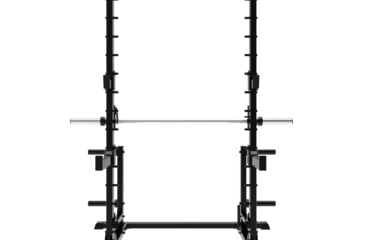
- Free weights: dumbbells, Olympic barbells and adjustable benches, essential for experienced members and for functional progression.
For a room of 150 to 300 square metres, a ratio of around 60 per cent guided machines to 40 per cent free weights works well. The criteria to check are load capacity, ease of servicing, the durability of cables and weight selectors, and the manufacturer warranty, ideally three to five years for intensive commercial use.
Cardio: volume and variety
Cardio typically occupies 30 to 40 per cent of the floor area. The machines in strongest demand are these.
- Motorised treadmills: the most used machine of all. Choose a wide, quiet belt for shared buildings such as hotels and residences.
- Upright and recumbent bikes: excellent for older members, rehabilitation profiles and longer sessions.
- Cross trainers: valued for reduced joint impact.
- Rowers and air bikes: growing fast, carried by cross-training and HIIT culture.
Connected cardio, with training data available through an app, has become a standard expectation in premium clubs. Our full range is in cardio equipment.
Sports flooring: the structural investment
Flooring is one of the most important and most frequently neglected parts of a project. The wrong surface causes injuries, premature wear of the equipment and a poor impression of the room. The professional options are rubber tiles of 10 to 20 mm for free-weight and strength zones, PVC vinyl rolls for cardio areas thanks to their slip resistance and easy cleaning, weightlifting platforms with integrated shock absorption for functional zones, and indoor artificial turf for athletic performance areas. See our rubber gym flooring.
Cross-training cages and functional space
Many operators now add a functional area with a cage, pull-up bars, rings and kettlebell accessories. These zones generate strong member engagement and support the group formats that younger members ask for. See our cross-training cages.
Outdoor equipment: street workout and fitness trails
Public authorities are particularly active on outdoor sport. Parks, riverbanks and university campuses all suit street workout rigs and outdoor fitness trails. This equipment answers a clear social demand, giving free access to training in everyday places, and it needs minimal maintenance. Outdoor fitness equipment for adults is covered by EN 16630.
Wellness and recovery
Wellness is the fastest growing segment in the industry. Hotels, spas and premium clubs now add recovery space: sauna, steam room, cold plunge, aqua bikes and mobility equipment. It strengthens the commercial positioning and widens the offer to older members and to anyone looking for overall wellbeing. See wellness equipment.
How to judge a supplier
1. Depth of catalogue
A serious business supplier should cover every family a complete project needs: strength, cardio, flooring, functional, outdoor and wellness. A multi-range supplier simplifies the commercial relationship, reduces logistics costs and keeps the room visually coherent.
2. Delivery capability
Delivery is the criterion most often underestimated. What matters is that the supplier states the lead time that applies to your site and your country, in writing, before the order. Delivery and installation conditions are confirmed per country, and a fixed opening date should always be named in the quotation.
3. Compliance with professional standards
For facilities open to the public, indoor equipment must meet EN ISO 20957-1 and be specified in class S, the professional class for commercial use. Class S is what any facility used by members should require, and it is the level our indoor range is built to. Outdoor equipment installed in public space falls under EN 16630 for adult fitness equipment; children’s play equipment is a separate matter, covered by EN 1176-1 with EN 1177 for the impact-attenuating surfacing.
4. After-sales service and spare parts
A machine out of service is a machine your members cannot use. A good supplier guarantees spare-part availability over five to ten years and answers service requests quickly. Ask about response times and about the technician network before you sign.
5. Project support
Beyond selling products, the best suppliers provide 2D and 3D layouts, zoning advice and equipment recommendations matched to the target membership and the available budget. That support matters most on a first project or a large one.
| Criterion | Questions to ask | Importance |
|---|---|---|
| Depth of catalogue | Does it cover strength, cardio, flooring, outdoor and wellness? | High |
| Delivery | What lead time and transport cost apply to my country? | High |
| EN ISO 20957-1 compliance | Is every indoor product certified class S? | Critical |
| Commercial warranty | How long on frame, cables and electronics? | High |
| Service and spare parts | Response time? Parts held in stock? | High |
| Project support | Are layouts and advice included? | Medium to high |
| References | Comparable facilities already equipped? | Medium |
Equipping by type of facility
Independent club or franchise, 200 to 500 square metres
The most common model. Every square metre has to work while the offer stays attractive to a mixed membership. Indicative priorities and budget ranges are as follows.
- Cardio zone, 8 to 15 machines: 15,000 to 40,000 EUR
- Selectorised strength zone, 10 to 20 machines: 20,000 to 60,000 EUR
- Free-weight zone with benches, dumbbells and racks: 8,000 to 25,000 EUR
- Sports flooring throughout: 3,000 to 12,000 EUR
- Optional cross-training cage: 2,500 to 8,000 EUR
Indicative total: 50,000 to 150,000 EUR, depending on the range selected and the area equipped.
Hotel with a fitness room, 20 to 80 square metres
Business travellers expect a functional fitness room, and the challenge is maximum versatility in a small space: two to four compact cardio machines, one or two multi-function strength machines, a free-weight kit with adjustable dumbbells and a bench, and optionally a compact sauna or steam room for premium positioning. Indicative total: 12,000 to 45,000 EUR.
Public authority: municipal sports centre or outdoor site
Public buyers need robust, easy-to-service equipment able to take intensive public use, certified outdoor equipment under EN 16630, urban sports furniture such as street workout rigs and fitness trail stations, and complete technical documentation for safety inspections.
Corporate wellbeing space, 30 to 100 square metres
Companies increasingly integrate a training space to reduce absenteeism and retain staff. The workable answer is a compact space with light cardio, bodyweight strength and, where the room allows, a relaxation area.
Trends worth investing in
| Trend | Equipment concerned | Budget impact | Priority |
|---|---|---|---|
| Functional training and HIIT | Cages, kettlebells, suspension trainers, plyo boxes | 5,000 to 15,000 EUR | High |
| Wellness and recovery | Sauna, steam room, aqua bikes | 10,000 to 40,000 EUR | High for premium clubs |
| Outdoor equipment | Street workout, fitness trails | 8,000 to 30,000 EUR | High for public authorities |
| Connected machines | Connected cardio, integrated screens | 20 to 40 per cent above standard | Medium, depends on positioning |
| Cardio fleet renewal | Treadmills, bikes, cross trainers | 15,000 to 40,000 EUR | Continuous, five to seven year cycle |
The five steps of an equipment project
Step 1: define the positioning and the target membership
Before buying anything, decide what the facility is: low cost, premium, specialist studio or corporate space. That answer drives every equipment, finish and budget decision that follows.
Step 2: produce a layout
Zoning is critical. Each area has to be planned around flows, safety and user experience. A professional supplier can produce 2D and 3D layouts including machine footprints and circulation space.
Step 3: build a realistic budget
The budget must include equipment, delivery, flooring installation, any electrical work required by cardio machines, and a contingency of 5 to 10 per cent. Annual maintenance belongs in the plan from the start.
Step 4: compare quotations properly
Ask for detailed quotations stating the standards expected, EN ISO 20957-1 class S for indoor equipment, the delivery lead time and the warranty conditions. Favour suppliers able to deliver the whole order in one shipment, which reduces logistics costs.
Step 5: plan installation and commissioning
Coordinate the supplier with your other trades and allow a technical acceptance period to test every machine before opening.
Frequently asked questions
What equipment is essential to open a gym?
At minimum a cardio zone, a selectorised strength zone, a free-weight area with benches and a rack, suitable sports flooring and accessories such as mirrors and storage. For a well-equipped 200 square metre facility the starting budget is generally in the range of 50,000 to 100,000 EUR. All indoor equipment should be EN ISO 20957-1 class S.
Which standards apply to professional gym equipment?
Indoor stationary fitness equipment for commercial use falls under EN ISO 20957-1, specified in class S, the professional class. Outdoor fitness equipment for adults installed in public space is covered by EN 16630. Children’s playground equipment is separate, under EN 1176-1, with EN 1177 for impact-attenuating surfacing.
Are public funding schemes available for sports equipment?
Public bodies can often draw on national or regional investment funding for sports facilities, but the schemes, the eligibility rules and the deadlines differ from one country to another. Check the applicable programmes with the competent national or regional authority before budgeting, and do not assume that a scheme available elsewhere applies to your project.
What budget should a hotel plan for a wellness space?
A minimal space with a sauna, a few cardio machines and a relaxation area can generally be delivered for 15,000 to 30,000 EUR. A complete space with steam room, cold plunge, aqua bikes and a dedicated fitness area calls for 40,000 to 100,000 EUR. These are indicative ranges, and the final figure depends on the building.
Starting your project
Light In Fitness is a specialist supplier of professional fitness equipment, based in Tours, France, working with operators on the design and equipping of their spaces. Our catalogue covers strength, cardio, flooring, cross-training, outdoor and wellness, and delivery and installation terms are confirmed for your country before the order. Send us your floor plan, your positioning and your opening date. Request a quote and our team will come back with a layout, an equipment list and a price.
Réalisations documentées
- Cage street workout ultime, Carcassonne – armée française
- Cage street workout ultime, Tahiti – armée française, Polynésie
- Cage SP Max, centre EPIDE de Combrée – établissement public d’insertion
- Cage SP Max, lycée Saint-Bénigne de Dijon – établissement scolaire
Sources et références
- NF EN 16630 – modules fixes d’entraînement physique de plein air : exigences de sécurité et méthodes d’essai (AFNOR)
- Code du sport, article L322-2 – garanties d’hygiène et de sécurité des établissements d’activités physiques et sportives (Légifrance)
- NF EN ISO 20957-1 – équipement d’entraînement fixe, partie 1 : exigences générales de sécurité et méthodes d’essai (AFNOR)
- AFNOR Normalisation – dossier thématique sur les appareils d’entraînement fixes et leurs classes d’usage