Physiotherapy Practice Equipment: Rehabilitation Packs for 5, 10 and 20 m²
Un cabinet de kinésithérapie s'équipe de matériel dont le premier cran de charge est proche de zéro, sur une surface de 5 à 20 m². Cette exigence exclut la plupart des machines de salle, dont la charge minimale reste trop élevée pour un patient en reprise. Light In Fitness propose des packs dimensionnés par surface pour ces cabinets.
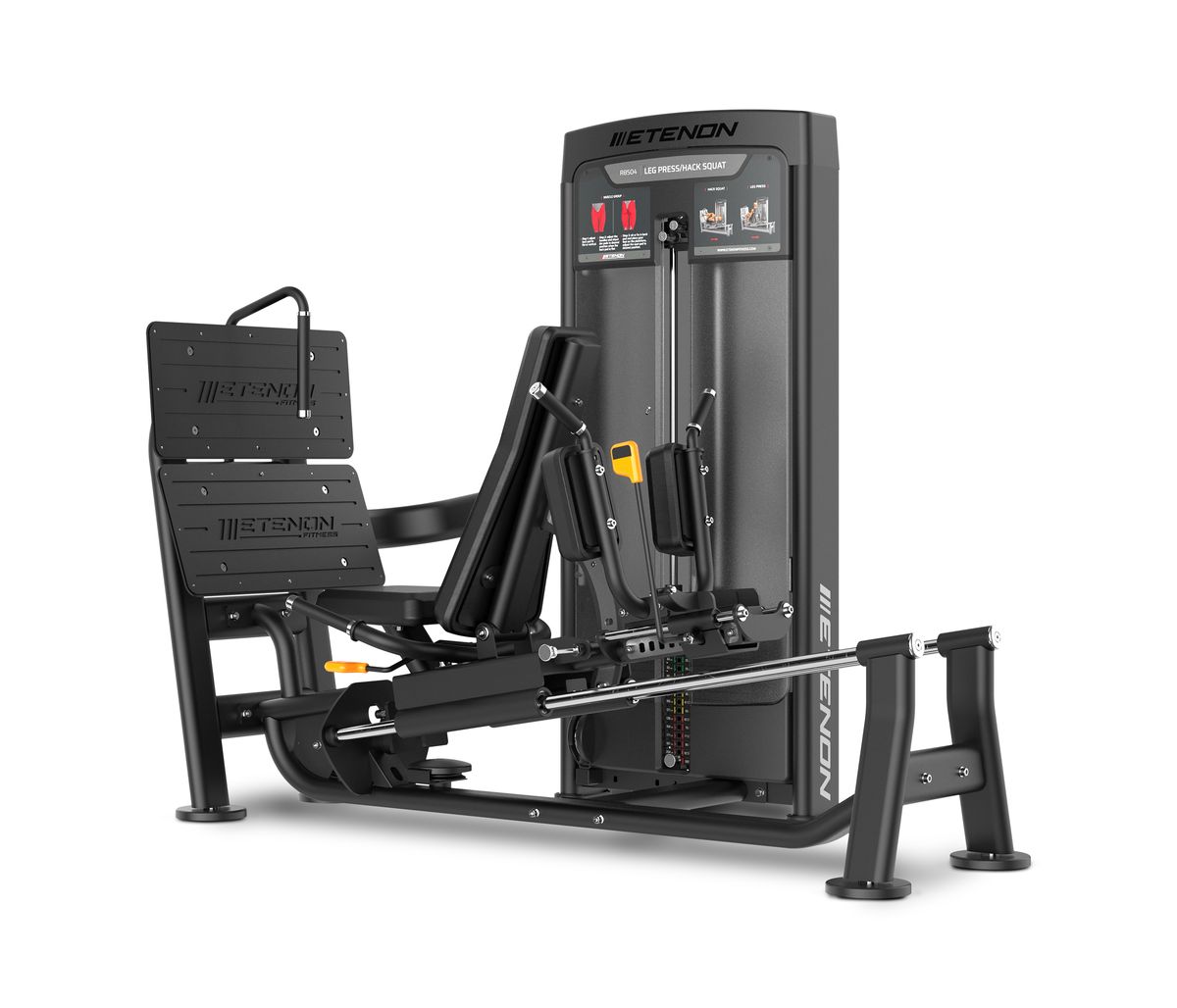
A physiotherapy practice does not need a gym — it needs a rehabilitation-specific equipment set sized to the room it actually has: 5, 10 or 20 m². The equipment brief differs from a fitness club’s in three measurable ways: resistance must start low (first increments of 1–2 kg, not 5), amplitudes must be adjustable to pathological ranges, and every station must be usable by a non-sporting patient without demonstration. Light In Fitness builds practice packs on exactly those criteria, from 4,800 EUR excluding VAT, with financing, installation and after-sales support across Europe.
Why equip a practice with active-rehabilitation kit
The boundary between functional rehabilitation and structured exercise has narrowed: chronic low-back pain, knee osteoarthritis, fall prevention, post-surgical recovery and cardiac reconditioning all now carry active-loading protocols in mainstream clinical guidance. For the practice, in-house equipment means the active phase of treatment happens under your supervision — clinically better, and commercially it turns the second half of each episode of care into equipment-assisted sessions rather than referrals elsewhere.
- Low-back and spine: cable column with 1 kg increments, extension bench, wall bars.
- Knee rehabilitation: low-inertia bike, leg press with partial-range stops, balance pads.
- Fall prevention: parallel bars or wall bars, step, balance line — protocols run at bodyweight.
- Post-surgical and shoulder: pulley systems with fine increments and adjustable start angles.
- Cardiac and deconditioning: recumbent bike or treadmill with 0.1 km/h steps and handrails.
- Return to sport: progressive loading up to genuine strength work — the bridge to club referral.
The three practice packs
| Pack | Footprint | Typical contents | Price (EUR excl. VAT) |
|---|---|---|---|
| Solo | 5 m² | Cable column (low-start increments), adjustable bench, wall bars, accessories | from 4,800 |
| Pro | 10 m² | + rehabilitation bike, leg press or multi-pulley, balance kit | from 11,500 |
| Multidisciplinary | 20 m² | + treadmill with handrails, second strength station, parallel bars, flooring | from 24,000 |
All packs include delivery, installation and equipment familiarisation, with rubber flooring options per room. For a full clinical facility — group rehabilitation rooms, hospital-adjacent plateaus — see our guide to equipping a physiotherapy clinic gym and the wider rehabilitation equipment range.
Compliance: what genuinely applies
- EN ISO 20957-1 governs fixed training equipment; for professional supervised use, specify class S — or class I where inclusive/accessible professional equipment is required.
- Not medical devices: standard strength and cardio equipment used for active exercise is not certified as a medical device — and does not need to be for exercise-based rehabilitation. Where a reimbursable medical procedure requires certified medical devices, that is a separate purchasing category; be wary of suppliers blurring the line in either direction.
- Documentation: keep the conformity declarations and maintenance log with your practice records — your professional liability insurer will ask for them after any incident.
Financing without touching practice cash flow
Most practices finance equipment through lease agreements, aligning cost with the additional session revenue it enables. Indicative monthly payments on the 11,500 EUR Pro pack:
- 24 months: 500–515 EUR per month
- 36 months: 340–355 EUR per month
- 48 months: 260–275 EUR per month
Orders of magnitude excluding insurance and services; lease payments are typically deductible operating expenses — confirm treatment with your accountant. Two to three equipment-assisted sessions per working day generally cover the 36-month payment.
Beyond the practice: adjacent facilities
The same low-increment, high-accessibility specification serves exercise-referral schemes and medically supervised fitness — covered in our health-referral gym equipment guide — and residential aged-care settings, where the emphasis shifts to seated access and fall-safe layouts (care home fitness equipment).
Frequently asked questions
What equipment does a physiotherapy practice need to start?
For a first active-rehabilitation corner in 5 m²: a cable column with 1–2 kg increments, an adjustable bench and wall bars cover the majority of loading protocols for spine, shoulder and knee — that is precisely the Solo pack at 4,800 EUR excluding VAT.
Can standard gym machines be used for rehabilitation?
Club machines are built for performance ranges: their first increments (often 5 kg) and fixed amplitudes exclude early-stage patients. Rehabilitation-oriented equipment starts lower, adjusts finer and limits range — the difference is in the specification sheet, not the category name.
How much space do I need for rehabilitation equipment?
Five square metres equips a genuine loading corner; ten allows cardio plus strength; twenty supports a small supervised circuit for two patients simultaneously. Layout matters more than surface: 80 cm minimum clearance beside each station for therapist access, more for wheelchair transfer.
Is equipment for a practice tax-deductible or leasable?
In most European jurisdictions, leased professional equipment is an operating expense and purchased equipment is depreciated over 5–10 years. Leasing preserves cash and simplifies renewal — the dominant choice among practices we equip.
Equip your practice room
Send us your room dimensions, patient profile and treatment focus: Light In Fitness returns a pack proposal with floor plan, financing options and full conformity documentation within 24 working hours — delivery and installation across Europe.
Réalisations documentées
- Dalles et sols sportifs : livraisons documentées – plusieurs chantiers
- Sol sportif extérieur, square Georges-Vallerey – Taverny (95)
Sources et références
- Code du sport, articles R322-4 à R322-43 – garanties d’hygiène et de sécurité applicables aux établissements d’activités physiques et sportives (Légifrance)
- Arrêté du 19 avril 2011 – étiquetage des produits de construction ou de revêtement de mur ou de sol sur leurs émissions de polluants volatils (Légifrance)
- Ministère de la Transition écologique – étiquetage des produits de construction : classes d’émission A+ à C