How to Buy a Strength Training Machine: The Four Points That Matter
L'achat d'une machine se pilote sur quatre points : la classe d'usage, l'adaptation des réglages à la morphologie, l'emprise au sol et la disponibilité des pièces. Ces critères prédisent le coût d'exploitation mieux que le prix affiché. Light In Fitness établit un devis unique incluant livraison et installation.

Buying a strength machine comes down to four points: the usage class, how well the adjustments fit the bodies that will use it, the floor footprint and the availability of spare parts. Those four criteria predict the cost of running the machine far better than the list price does, and they are the ones most often skipped when a purchase is made from a catalogue photograph.
This guide takes them in order, then covers the questions that come up once a shortlist exists.
1. The usage class
The first filter is not the exercise, it is the class the machine is built to. Equipment for a gym, a club, a hotel, a corporate facility or a rehabilitation centre is specified to EN ISO 20957-1 class S, the professional class for commercial and supervised use.
This matters because the class determines the test regime the frame, the bearings and the contact points were built to survive. A machine that is not class S will still work on day one. It fails on the maintenance schedule, on the warranty conversation and on the day an inspector asks what the equipment is rated for.
Class I is a professional class for inclusive access, not a level of intensity above class S. It answers a different question, which is who can reach and use the machine, not how hard it will be used.
2. Adjustment against real body sizes
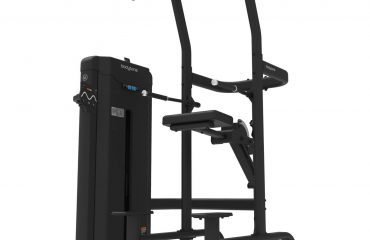
The second point decides how many of your users the machine actually serves. Every guided machine has a pivot axis, and the training effect depends on the user lining up with it. If the seat and pad ranges do not cover the shortest and tallest people who will use the room, part of your membership will be using the machine incorrectly no matter how well it is built.
Ask for the adjustment ranges, not for the number of adjustment positions. Ten positions across a narrow span is worse than five across a wide one.
The same question decides between selectorised machines, where the load is picked from a stack in seconds and progression is self-service, and plate-loaded machines, where the loads go higher and the handling suits an experienced audience.
3. Footprint and circulation
The third point is the one that ruins layouts. A machine occupies more than its frame: it needs its use zone, its entry and exit, and clearance for the moving parts through the full range.
Measure the room, then draw the machines with their zones rather than their outlines. A plan that works on outlines and fails on zones produces a floor where two stations cannot be used at the same time, which is a permanent loss of capacity for the life of the room.
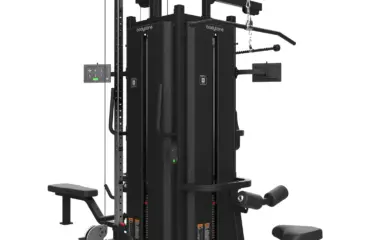
Where space is genuinely tight, the answer is usually a different station mix or a multi-station unit rather than squeezing the same list into a smaller area.
4. Spare parts and what happens in year four
The fourth point is the one that separates a good purchase from an expensive one. Cables, pads, grips and bearings wear out. The question is whether they can be ordered as individual parts, and how long the range will be supported.
A machine whose upholstery is part of a welded assembly is not repairable, it is replaceable. Ask which components are serviceable, and standardise across the room where you can, so one set of consumables covers several stations.
Routine care is unglamorous and decisive: regular cleaning, lubrication of the moving parts and following the maintenance instructions supplied with the equipment.
Building the specification
With those four points settled, the rest of the process is straightforward. Define what the room is for and who uses it, which determines the station mix across the strength training machine range. Set a realistic budget covering equipment, delivery, installation and flooring rather than equipment alone. Then compare shortlisted machines on the four criteria above rather than on the feature list.
Where there is doubt, ask for the technical specification rather than the brochure, and ask what the machine is rated for rather than what it is described as.
Frequently asked questions
What should be checked on the machine specification?
Usage class, adjustment ranges, footprint including use zone, the load range and increments, and which components are available as spare parts. Build quality claims that cannot be tied to one of those are marketing.
How is the right load range chosen?
Start from your users rather than from the maximum figure. Small increments at the bottom of the range matter more than a high top weight on a mixed floor, because that is where beginners and returning users actually train.
What maintenance should be planned?
Regular cleaning, lubrication of the moving parts and the maintenance routine supplied with the equipment, with a record of what was checked. This is what warranty conversations rest on later.
What accessories complete the installation?
Floor protection under the loaded stations is the first one, followed by the free-weight and functional items that fill the gaps between machines. These are decided with the layout, not after it.
Getting a specification for your room
Send us the room dimensions, the intended use and the profile of your users, and we will come back with a station selection, a layout drawn with the use zones and a single quotation covering delivery and installation: request a quote.