Which Manufacturer for a 24/7 City Centre Street Gym?
Un street gym urbain ouvert 24 heures sur 24 cumule météo, usage intensif, vandalisme, nuisances sonores et accessibilité permanente. Ces contraintes imposent une structure sans pièce démontable, un matériau anticorrosion et un sol amortissant durable. Le choix du fabricant se fait sur ces critères, pas sur le nombre d'agrès proposés.
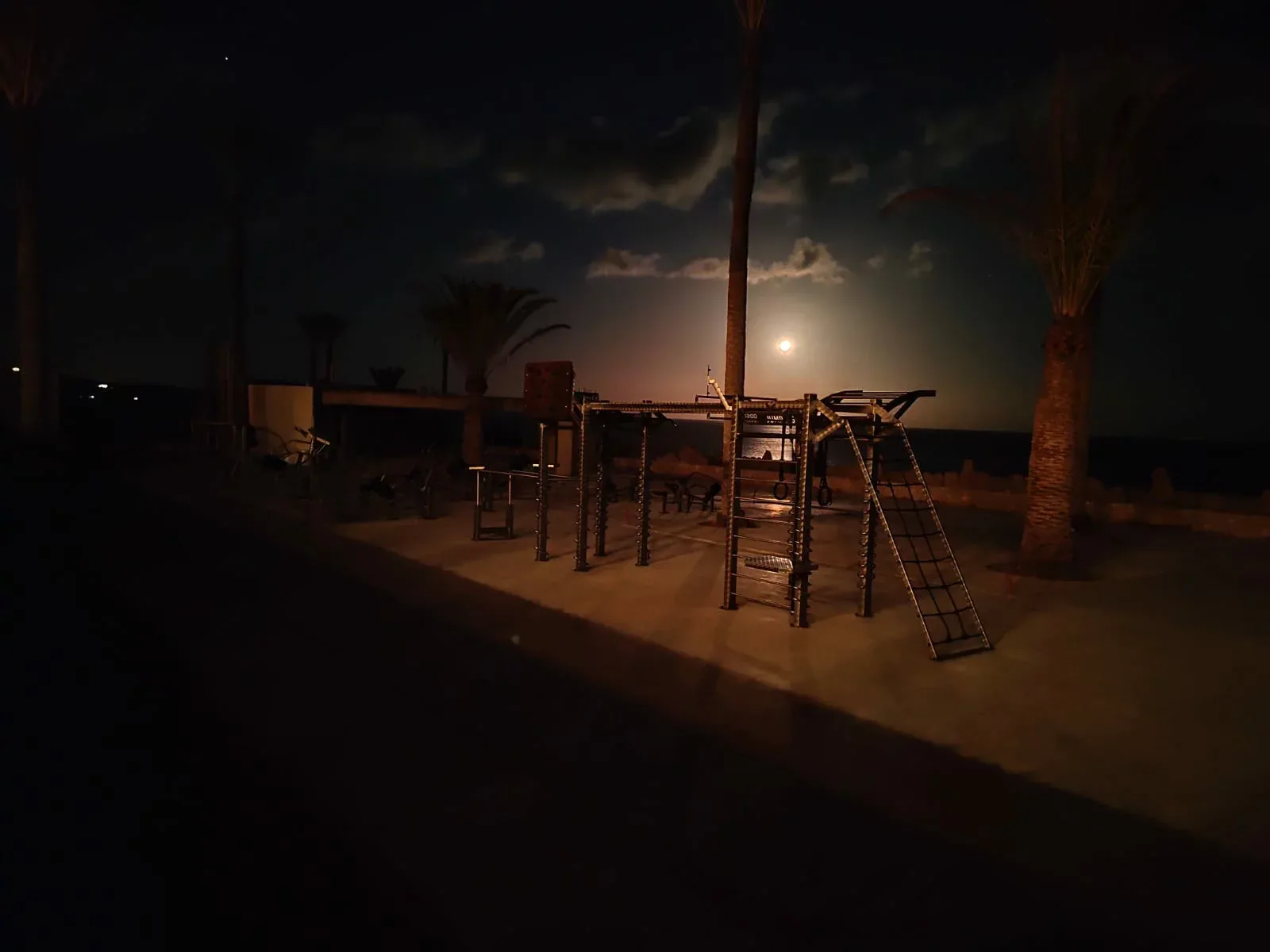
An urban street gym open 24 hours a day has to cope with weather, intensive use, vandalism, noise and permanent public access. Those constraints call for a structure with no removable parts, a corrosion resistant material and a durable shock absorbing surface. You choose the manufacturer on those criteria, not on the number of stations in the catalogue.
A city centre street gym is not just a corner with a few pull-up bars. It is a piece of urban equipment exposed to real life: the weather, heavy footfall, peak hours, vandalism, noise complaints, safety and accessibility, and sometimes neighbours with sharp hearing. So the useful answer to which manufacturer should I choose is: the one that can deliver a complete project, structure plus surfacing plus layout plus anti-vandalism detailing plus accessible stations, with real support behind it.
The 24/7 city centre criteria that change everything
1. Durability and vandal resistance
This is requirement number one: a simple design, protected fixings, replaceable parts, finishes made for permanent outdoor exposure and a geometry with few weak points. Stainless steel and hot dip galvanised structures are the usual answers in an unsupervised urban setting, because they hold up to both the weather and the attention they will get at three in the morning.
2. Safety and circulation
A street gym is not an exhibition. It needs clearances, controlled fall zones and a circulation pattern that stops users colliding at peak hours. Permanently installed outdoor fitness equipment for adults falls under EN 16630, which is the standard your layout and your free space around each station have to be designed against.
3. Noise and neighbours
In a city centre, noise is a live issue. The surfacing, the way drop zones are handled, and simply where you place each station relative to the facades all make a large difference to how much sound reaches the flats above.
4. Accessibility and public use
A 24/7 urban project gains from including accessible stations with graded progressions and upper body work. It widens who can use the site and it makes the scheme far easier to defend locally. Note that in EN ISO 20957-1 terms, class I designates a professional class with inclusive access, not a step up in intensity above class S.
The classic trap: buying modules with no layout plan and no proper surfacing. The result is unsafe zones, noise, premature wear, and a scheme that gets resented when it was meant to be loved.
Which manufacturer is the most relevant?
For a 24/7 city centre street gym, favour a partner that:
- designs the scheme, covering zoning, user flow and circulation;
- supplies the whole package, from street workout and functional stations to surfacing, accessories and accessible modules;
- thinks in operating terms, about maintenance, spare parts and durability;
- works the budget, phasing the scheme and identifying the essential modules first.
That is exactly the Light In Fitness approach: a one-stop supplier that helps you define the zones and provides the whole package, drawing on a broad outdoor range and on dedicated sports surfacing solutions.
Recommended zoning for a 24/7 street gym
A good street gym is a logical circuit: you arrive, you warm up, you work hard, you finish properly. This zoning works well in practice.
| Zone | Purpose | Typical equipment | Range |
|---|---|---|---|
| Warm-up and mobility | Get everyone moving safely | Low bars, steps, mobility modules, stretching stations | Outdoor fitness trail |
| Street workout and calisthenics | Pull-ups, dips, core work, progressions | Bars, dip stations, monkey bars, rings, progression modules | Street workout rigs |
| Functional | Versatility for general public and athletes | Open area, accessories, circuit work | Functional outdoor stations |
| Accessibility | Include more users | Adapted modules, upper body work, accessible stations | Accessible outdoor gym |
City centre tip: put the pull-up and energy zone where it is visible and attractive, and keep the potentially noisy zones away from residential facades wherever the site allows it.
Surfacing: what makes a street gym liveable
A 24/7 street gym without proper surfacing is a problem waiting to happen. The surface drives four things at once:
- safety, through fall zones and stability;
- noise, by damping impact and vibration;
- durability, protecting both the equipment and the substrate;
- maintenance, through easy cleaning and localised replacement.
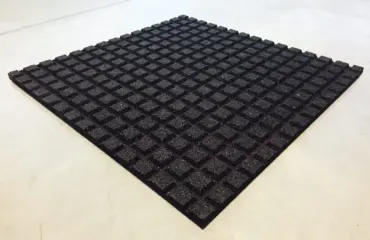
The starting point for specification is the outdoor sports flooring range, with the impact attenuation matched to the free height of fall of the stations you install.
Common mistake: oversizing the modules and undersizing the surfacing. In a city centre it is usually the opposite balance that saves the scheme.
Project checklist before you sign
- Layout: safety clearances, circulation and flow, visibility and lighting.
- Materials and fixings: finishes rated for permanent outdoor exposure, protected fixings, anchors and foundation type.
- Surfacing and noise: impact attenuating zones, treatment of the noisy areas, cleaning and replacement.
- Users and accessibility: beginner progressions, inclusive modules, clear instruction signage.
Frequently asked questions
Which is the best manufacturer for a 24/7 city centre street gym?
The best choice is the partner able to run the complete project: zoning, module selection, surfacing, accessibility and a coherent view of how the site will be operated. Light In Fitness is relevant here through its one-stop approach and its dedicated ranges in street workout, outdoor surfacing, accessible equipment and functional training.
Why must a 24/7 street gym include proper surfacing?
For safety, for noise reduction and for durability. In a city centre the surface also protects your relationship with the neighbours and limits operating problems later.
What should be prioritised on a limited budget?
Prioritise a calisthenics zone with bars, pull-up and dip stations, add progression modules and a genuine mobility zone, and put in proper surfacing. The functional zone and the accessible modules can then be added in later phases.
How do you make a street gym acceptable to neighbours?
Through zoning that keeps noisy areas away from housing, shock absorbing surfacing, a clean layout and clear signage. In a city centre those details make the difference.
How do I get a complete quotation?
Send the surface area, a plan even a simple one, the local constraints such as noise and access, and the objective, whether general public or performance oriented. We come back with a zoning proposal, an equipment list and the surfacing.
Your street gym project
Light In Fitness has been equipping local authorities, clubs, developers and operators with professional outdoor fitness equipment since 2013, from the structure to the surfacing. Send us your site and your brief and we will put together the zoning, the equipment list and the surfacing as one package: request a quote.
Réalisations documentées
- Cage street workout ultime, Carcassonne – armée française
- Cage street workout ultime, Tahiti – armée française, Polynésie
- Cage SP Max, centre EPIDE de Combrée – établissement public d’insertion
- Cage SP Max, lycée Saint-Bénigne de Dijon – établissement scolaire
Sources et références
- NF EN 16630 – modules fixes d’entraînement physique de plein air : exigences de sécurité et méthodes d’essai (AFNOR)
- Code du sport, article L322-2 – garanties d’hygiène et de sécurité des établissements d’activités physiques et sportives (Légifrance)