Rubber Impact Protection Floor Tiles 50 x 50: Specifying the Right Surface

Flooring is the part of a sports or leisure facility that everything else stands on, and the part most often specified last. Rubber impact protection tiles in the 50 x 50 cm format are a practical answer for a wide range of settings: they combine shock absorption, durability and a manageable installation format, and they suit indoor and outdoor use alike. This guide covers what these tiles are, where they belong, how to choose a thickness, how they are installed and how they are maintained.
What rubber floor tiles are
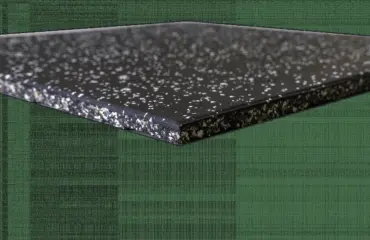
Rubber floor tiles are surfacing panels designed to give a resistant, long-lasting surface suited to a wide range of applications. They are produced from recycled rubber, which makes them both an environmentally sensible choice and a technically capable one. Their use continues to grow because they offer good protection against impacts and falls, which is what makes them relevant to play areas and sports surfaces.
The 50 x 50 x 3 cm format
These are tiles designed to cover a floor while providing impact protection. Available in a range of colours and designs, the 50 x 50 x 3 cm tile adapts easily to different environments. The 3 cm thickness gives the tile a high density, which is what delivers its resistance to impacts, and the 50 x 50 cm module keeps individual tiles light enough for one person to handle and to replace individually later.
Key characteristics
Beyond the thickness that drives impact protection, these tiles are slip-resistant, which adds a further layer of safety in use. The rubber composition gives a long service life even under intensive use. They are straightforward to install and to maintain, which matters in both indoor and outdoor settings where a facility cannot be closed for long.
Where they are used
Rubber impact protection tiles are used across a wide range of contexts: play areas, sports surfaces, and floors in spaces such as fitness rooms. Alongside impact protection they reduce noise and improve the appearance of a space. Their durability makes them a standard choice for professionals specifying surfaces that have to stay safe under continuous use.
Why operators choose rubber tiles
Durability and resistance
The 50 x 50 x 3 cm rubber tile is chosen for high-traffic environments precisely because of its durability. Manufactured from recycled rubber, it has the density needed to resist impacts, and its thickness contributes to protection against falls, which matters most in play areas and on sports surfaces where injury risk is highest. The composition holds up under demanding outdoor conditions as well as indoors, and the surface stays slip-resistant through its service life.
Ease of cleaning
Unlike floor coverings that need specialist treatment, rubber tiles are simple to clean and maintain. Sweeping or wiping with a damp cloth is generally enough to remove dust and debris, and the slip-resistant surface helps limit the build-up of dirt. The tiles hold their appearance and colour over time without intensive care.
Comfort and safety
Rubber tiles give a resilient surface that reduces injury risk, which matters most where children are playing. They absorb impact effectively, which also makes them more comfortable to walk and move on. In a gym, a nursery or a commercial space, they contribute to safety while remaining visually acceptable, which is what makes a space both functional and welcoming.
Choosing the right tile for your project
Selection criteria
Several criteria decide whether a tile will actually perform in a given installation. Thickness comes first, because it determines the level of impact protection. Rubber density follows, since it drives both resistance and service life. Colour and design should match the space while being appropriate to the conditions, indoor or outdoor. Finally, the intended use dictates everything else: a fitness free-weight zone, an outdoor sports surface and a children’s play area are three different specifications, not three colours of the same product.
Standards: read this before you specify for a play area
This is where a general-purpose tile and a certified safety surface part company. In Europe, playground equipment is covered by EN 1176-1 and the impact-absorbing surfacing beneath it by EN 1177. Under EN 1177, the surfacing is selected against the critical fall height of the equipment it sits under, and that critical fall height is a tested property of the specific product and thickness, not something that can be inferred from the fact that a tile is made of rubber or that it is 3 cm thick.
In practice this means two things. First, a 30 mm tile is a robust, impact-resistant floor covering, and it is not automatically a certified playground safety surface. Second, if your project is a children’s play area, ask for the tested critical fall height of the exact product and thickness and match it to the free height of fall of your equipment. Our playground surfacing range is specified on that basis; the rubber gym flooring tile range is specified for training loads.
The different types available
There is a range of rubber tiles on the market, each built for a specific need. Impact protection tiles suit play areas, giving a resilient surface that resists impact. Other types, intended for sports surfaces, are generally denser to take intense activity. Tiles come in different colours and textures, which allows spaces to be personalised without compromising the surface’s function. The right type depends on the intended use and the specific requirements of the project, and for outdoor installations the outdoor sports flooring range covers the weather-exposed specifications.
Comparing price and quality
Comparing price against quality is what makes the decision informed. Options vary considerably by brand, composition and specific characteristics. Whether the product is made from recycled rubber affects both price and durability. As a general rule, investing in higher-quality tiles reduces long-term cost through longer service life and better impact resistance, since the real cost of a floor is the cost of replacing it early.
Installation
Preparing the substrate
Before installing rubber tiles, the surface they sit on has to be prepared properly. Clean the floor thoroughly to remove any dirt, debris or residue that could affect adhesion. Make sure the surface is flat and even; use a level to correct irregularities and give the tiles a sound base. Good preparation determines not only how the finished floor looks but how long it lasts. For outdoor installation, check that the substrate is dry and free of moisture to avoid long-term adhesion problems.
Installation steps
Start by marking out the area to be covered, using a line to guarantee alignment. Apply an adhesive intended for floor coverings, following the manufacturer’s instructions. Position each tile carefully and press it down firmly to eliminate air pockets, then allow it to cure as recommended. Finally, check that the surface is uniform and make any adjustments needed for a clean, safe finish.
Practical tips
Work in good light so that details and adjustments are visible. Use the right tools, including a sharp knife for cutting tiles to size at edges and around obstacles. Allow the tiles to acclimatise to the ambient temperature before installation, which makes them easier to lay. If you are not confident in the procedure, use a professional installer: a correct installation is what makes the impact protection function as intended.
Maintenance
Recommended cleaning products
Use mild, non-abrasive cleaners. Aggressive chemicals can damage the tile surface. Warm water with a little mild soap is usually enough for dirt and marks. Steam cleaners can be used for deeper disinfection without harming the tiles. Wipe up spills promptly to avoid mould growth or permanent staining.
Cleaning frequency
Frequency depends on use and location. In heavily used environments such as play areas and sports halls, weekly cleaning is recommended to maintain both safety and appearance. In less-used spaces, monthly maintenance may be enough. A deep clean every six months is advisable to remove ingrained dirt. This regularity preserves both appearance and long-term durability.
Repair and replacement
Keeping the surface safe means repairing it. Cracks and tears can be treated with repair kits made for rubber. Where a tile is too damaged to repair, replacement is the better option, and the 50 x 50 cm format makes single-tile replacement straightforward. Use tiles of the same thickness and colour to keep the surface uniform in both appearance and performance.
Frequently asked questions
Are these tiles suitable indoors and outdoors?
Yes. The composition holds up in demanding outdoor conditions as well as indoors. What changes outdoors is the substrate preparation and drainage, which have to be planned before installation rather than corrected afterwards.
Can I use them under playground equipment?
Only against a tested critical fall height. Impact-absorbing playground surfacing is covered by EN 1177 and is selected to match the free height of fall of the equipment above it, which is set by EN 1176-1. Ask for the tested figure for the exact product and thickness before specifying.
What thickness should I choose?
It depends on the use. A fitness training area, an outdoor sports surface and a play area have different requirements, and thickness is chosen from the loads and the fall heights involved, not from a general rule. Send us the use case and we will confirm the specification.
How are individual damaged tiles replaced?
Individually. That is the practical advantage of the 50 x 50 cm module over rolls. Keep a small stock of the same batch so replacements match in colour as well as in thickness.
Are recycled rubber tiles as durable as new rubber?
Recycled rubber tiles are made specifically for this purpose and give a long service life under intensive use. Density and manufacturing quality drive durability far more than whether the raw material is recycled.
Specifying your surface
Rubber floor tiles in the 50 x 50 x 3 cm format offer durability, safety and low maintenance across indoor and outdoor applications. Their recycled rubber composition is environmentally sensible and impact-resistant, their slip-resistant surface supports user safety, and the range of colours and designs lets a space be personalised without giving up performance.
What decides the outcome of a project is matching the specification to the actual use. Send us the area, the setting and what will happen on the surface, and we will confirm the right tile, thickness and installation method with a costed proposal.
Réalisations documentées
- Dalles et sols sportifs : livraisons documentées – plusieurs chantiers
- Sol sportif extérieur, square Georges-Vallerey – Taverny (95)