Cross-training: why modular rigs are replacing machine-lined gyms
Une structure modulaire remplace plusieurs machines mono-fonction sur une emprise réduite, ce qui augmente le nombre d'utilisateurs simultanés par mètre carré. La logique est économique autant que sportive : la surface libre devient exploitable, là où une ligne de machines la fige. Ce changement explique la réorientation des salles vers les rigs et les zones fonctionnelles.
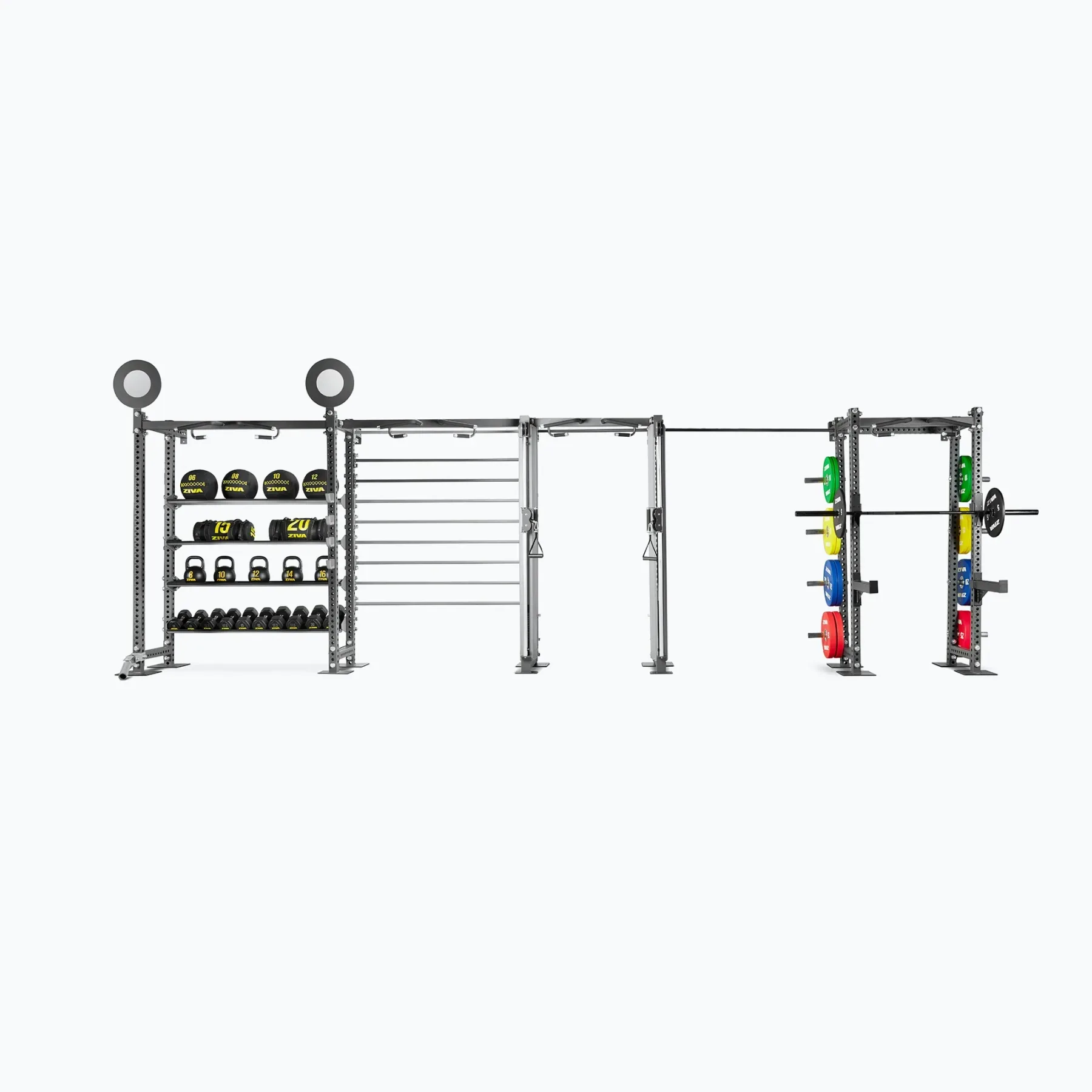
A serious gym used to be judged by the number of machines lined up along the wall. Increasingly it is judged by the opposite: by the floor left free, and by how much that floor can be reconfigured. This is not a coaching fashion. It is an economic and a sporting calculation, because a modular rig lets you coach a group, adapt the level and get a return on the square metres you are paying rent on.
The rig is the playing field
Pull-ups, rings, bars, ropes, attachments, stations: a single frame can serve ten different exercises and carry a full class without multiplying machines. Every attachment you add expands the movement library without adding a footprint, which is the exact opposite of how a machine line behaves.
That is the structural difference. A machine occupies its own square metres whether or not anyone is using it. A rig occupies its square metres only while the class is on it, and the space around it goes back to being usable floor the moment the class ends.
Why operators are switching
Three arguments come up again and again in projects.
Versatility: one structure, several uses. Where a machine line gives you one exercise per station, a rig gives you a station that changes with the attachment and with the coach.
Scalability: you adapt the level without changing the room. Beginners, general members and competition athletes can all be programmed on the same frame with different loads, heights and progressions.
Group classes: a well-configured rig lets you move 12 to 20 people efficiently, which is where the revenue per hour in a cross-training model actually comes from.
Start from the CrossFit rigs range, or from the cross-training cages and CrossFit and Hyrox cages categories when the brief includes a competition format.
The classic mistake
Buying a structure without thinking about circulation, heights, anchoring and flooring. The result photographs beautifully and is unusable in practice.
Circulation is the first thing to fail. If members have to cross a working station to get to the next one, the class jams, the coach spends the session managing traffic, and the rig gets blamed for a layout problem. Design the lanes and the transitions before the frame.
Ceiling height is the second. Height governs which movements are possible at all: ropes, rings, dynamic pull-ups and anything overhead. Check the usable heights and the safety space above the working positions before you order, not after, or you will pay for a rig and lose half its exercise library.
Anchoring is the third. Whether a structure needs to be fixed to the floor, to the wall, or stands free depends on the model and on how it is used, but it has to be decided at design stage alongside the building constraints. The freestanding rigs and wall-mounted rigs categories exist precisely because that answer is not the same in every building.
Flooring is the fourth and the most underestimated. The floor is part of the safety and part of the real usage: grip, shock absorption, noise and stability. A rig on the wrong floor is a noise complaint and a damaged slab. See the rubber gym flooring tiles range for the zones under and around the structure.
What separates a structure from a professional structure
The difference shows in rigidity, in the quality of the fixings, in the finish, and in the ability to absorb daily use.
Rigidity is what you feel on a kipping pull-up: a frame that moves is a frame that will loosen. Fixings are what fail first on a structure used all day, and their quality decides whether maintenance is a quarterly check or a weekly problem. Finish decides how the rig looks after two years of chalk, sweat and dropped bars. And daily-use capacity is the honest question: this frame is not being used by one owner a few times a week, it is being used by every class you run, every day you open.
Ask for the section sizes, the fixing specification and the attachment compatibility before you compare prices. Two rigs that look identical in a photograph are frequently not the same product.
Wall-mounted, freestanding or bespoke?
It depends entirely on your constraints: floor area, ceiling height, load-bearing walls, circulation and the type of classes you run.
Wall-mounted structures save floor space and rely on a wall that can take the load. Freestanding structures give you freedom of placement and a rig that can be relocated, at the cost of footprint. Bespoke configurations exist for rooms that do not fit either answer, which in practice is most rooms with columns, low sections or awkward proportions.
The right choice is the one that fits the layout, not the one that looks best in a photograph. Functional configurations that mix rig, storage and accessory stations are grouped in the functional training rigs category.
Frequently asked questions
Why are modular structures replacing gyms full of machines?
Because a modular structure creates more value per square metre: it leaves usable floor, it adapts to every level, and it allows a very large number of exercises from a single frame. The result is more profitable and more effective for functional training.
What can you actually do on a modular rig?
Pull-ups, rings, bars, ropes, accessories and stations. One frame can serve a great many exercises and run a full class without multiplying machines.
What are the business arguments for a club?
Versatility, one structure for several uses. Scalability, adaptable to the level without changing the room. And group classes, moving 12 to 20 people efficiently depending on the size and configuration of the structure.
How many people can train around one structure?
The point of a modular structure is precisely to move a group efficiently, typically around 12 to 20 people depending on the size, configuration and programming. Size the frame against your actual attendance per session rather than against a catalogue reference.
What is the number one mistake when buying a rig?
Buying it without thinking about circulation, heights, anchoring and flooring. Those four are not details to be handled after delivery; they decide whether the structure is usable at all.
Does the floor really matter with a modular structure?
Yes. The floor is part of the safety and part of the real usage: grip, shock absorption, noise and stability. It is one of the critical points to anticipate if you want to avoid an unusable installation.
Start from the layout, not the frame
The rig is the easy part. Circulation, ceiling height, anchoring and flooring are what turn a structure into a room that can run classes all day.
Send us your floor area, your intended use, your objectives and your budget, and we will qualify the project and propose a coherent configuration. Request a quote and we will work from your layout.