HIIT Training: A Complete Guide to Programming It in a Professional Facility
High-Intensity Interval Training alternates short bursts of hard effort with periods of rest or light activity. It burns calories quickly and raises metabolic rate, which is why it has become one of the most requested class formats in commercial facilities, and one of the cheapest to add.
For an operator, the interest is not only physiological. HIIT needs very little floor space per participant, works with bodyweight alone, and fills a room in the time slots where machine-based training empties. This guide covers how the format works, how to structure a session, the mistakes that cause injuries and drop-outs, and what a facility actually needs to run it.
What HIIT is
HIIT means alternating periods of intense exercise with periods of rest or light activity. That alternation keeps the heart rate high throughout the session, which drives fat oxidation and raises metabolic rate. The format compresses the training effect into a short session, which is exactly why it suits members with limited time, and why it suits operators with limited floor space.
Why it works as a class format
The benefits are well established: rapid calorie burn, increased metabolic rate, improved cardiovascular health and muscular strengthening. Two further properties matter commercially. HIIT can be run with no specific equipment, using bodyweight alone, and it suits every level of fitness, because intensity and duration are adjusted per participant rather than per session.
Together those two points make HIIT the lowest-barrier class an operator can add. A room with correct flooring and a coach is enough to start; equipment is what lets you scale the format and differentiate it from what members can do at home.
How to structure a session
Choose exercises that recruit several muscle groups and can be performed at high intensity. Burpees, jump lunges, mountain climbers, jump squats, press-ups and jumping jacks form the core of most circuits.
The recommended structure is a warm-up of 5 to 10 minutes, followed by intense work intervals of 30 seconds to 1 minute, alternated with rest or light activity periods of 30 seconds to 1 minute. Repeat the cycles for 20 to 30 minutes for optimal results. For a club timetable this fits a 45-minute slot including briefing and cool-down, which is why it schedules so easily between machine-based sessions.
Frequency: 3 to 4 sessions per week is the recommended volume for members following the format seriously. That is a useful number to hold in mind when sizing a timetable, because it tells you how many slots a committed cohort will actually consume.
Mistakes to design out
The format is safe when it is run properly and injury-prone when it is not. The recurring errors are: failing to warm up correctly before training, going too fast or too hard from the start, ignoring the body signals and pushing beyond your limits, omitting adequate rest periods, and failing to stay hydrated during the session.
Every one of those is a coaching and layout issue as much as a participant issue. Enough space between stations prevents collisions during explosive work, a visible clock enforces the rest interval, and water access within the room removes the excuse for training dehydrated.
What the facility needs
Flooring is the first line of the specification and the one that cannot be corrected later. Jumping patterns land repeatedly on the same square metre, so the surface has to absorb impact and stay dimensionally stable; specify the rubber gym flooring before anything else.
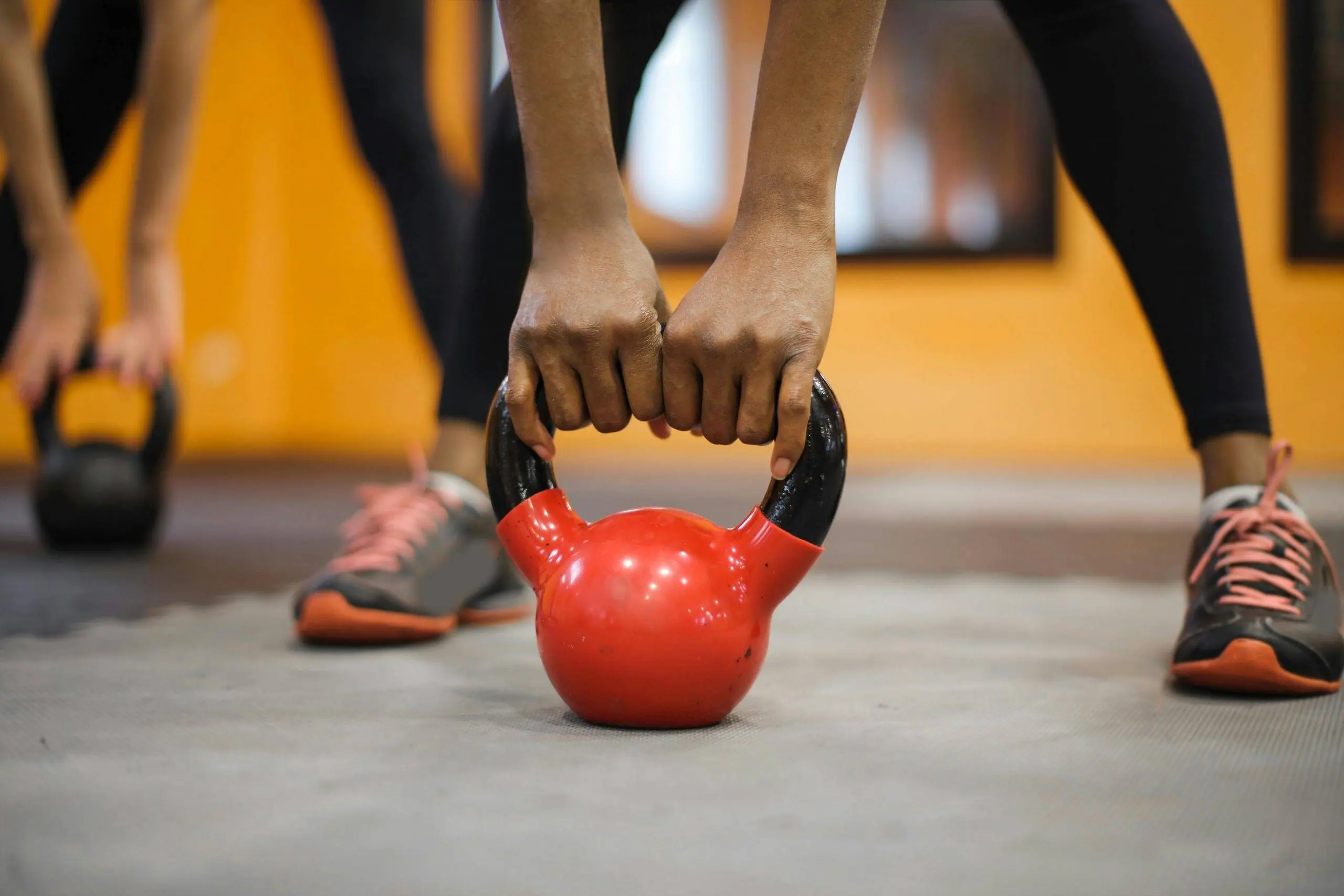
Beyond that, a depth of fitness accessories is what turns one circuit into a season of varied sessions: kettlebells, plyo boxes, battle ropes, mats. Where the room also has to serve small-group training outside class times, a functional training rig adds suspended and pulling work to a format that is otherwise dominated by pushing and jumping. Equipment installed in a commercial facility must be certified to EN ISO 20957-1 class S.
What results to expect
Practised regularly, HIIT produces significant results in weight loss and muscular tone. Results vary from one person to another depending on diet, general activity level and metabolism, so it is worth being explicit with members that the class is one factor among several rather than a guarantee.
Frequently asked questions
How long before participants see results?
Practised regularly, results can begin to appear within a few weeks, though this varies with the factors above.
Should participants see a doctor first?
It is always advisable to consult a health professional before starting a new training programme, particularly for anyone with a pre-existing health condition. For an operator this belongs in the enrolment process, not in a verbal reminder before the first class.
Is HIIT suitable for every fitness level?
Yes, provided intensity and exercise duration are adapted to each participant. That adaptation is the coach role, and it is what separates a class that retains beginners from one that loses them in week two.
Does HIIT require specific equipment?
No. It can be run using bodyweight alone. Equipment adds variety, progression and differentiation, which is why facilities that keep HIIT filling year after year invest in accessories rather than in more machines.
Adding HIIT to your timetable
If you are converting a room, sizing a functional area or renewing a studio floor, send us the dimensions, the class sizes you plan and the timetable you want to run, and we will come back with a flooring specification, an equipment list and a costed proposal. Request a quote and we will size the room around the format rather than the other way round.