Cross Trainers: Building Members Cardio Fitness in Your Gym
La progression cardio sur elliptique passe par l'augmentation de la durée avant celle de la résistance. Le travail en intervalles, alternant périodes intenses et périodes de récupération, produit des adaptations complémentaires à l'endurance continue. La régularité sur plusieurs semaines prédomine sur l'intensité ponctuelle.

Cross trainers are one of the few cardio machines a gym operator can install with confidence for almost every member profile. The elliptical stride combines the movement patterns of running, cycling and cross-country skiing in a single low-impact gesture, which makes it a workhorse on a commercial floor: it serves the deconditioned beginner, the member returning from injury and the endurance athlete looking for volume without joint load. This guide looks at how the machine actually builds cardiovascular capacity, how to programme that progression for your members, and what to specify when you equip a club, hotel, campsite, municipal facility or rehabilitation centre.
What a cross trainer is, and why it suits mixed-ability floors
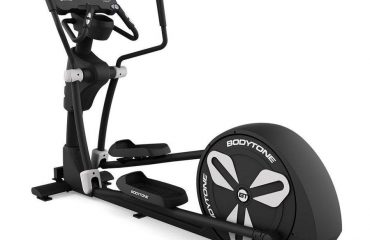
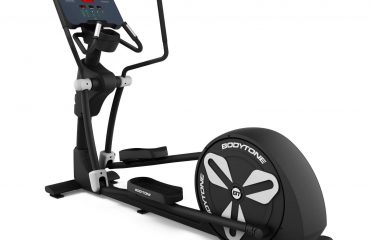
A cross trainer is an exercise machine that reproduces the movement of running, cycling and cross-country skiing at the same time. Foot pedals follow a closed elliptical path while moving handlebars drive the upper body, so the user works legs, glutes, core, back, shoulders and arms in one continuous motion. Because the foot never leaves the pedal, there is no ground reaction impact. That single characteristic is what makes the machine so easy to place in a commercial setting: it suits users of every age and every fitness level, which reduces the amount of floor supervision a busy site needs.
For an operator that translates directly into utilisation. A machine that only suits fit members sits idle at off-peak hours. A cross trainer is used by the early-morning endurance group, the midday rehabilitation client and the evening weight-management member alike.
What cross-trainer work does to cardiovascular fitness
Regular use of a cross trainer improves cardiovascular health along several distinct lines. These are the benefits worth explaining to members and worth putting in front of prospects during a tour.
- Greater lung capacity. Regular elliptical work encourages deep breathing and improves the capacity of the lungs to supply oxygen to the body.
- A stronger heart muscle. Cross-trainer training works the heart muscle itself, strengthening it and improving its efficiency.
- Lower cardiovascular risk. Regular exercise on a cross trainer helps reduce the risk of cardiovascular disease such as high blood pressure, heart disease and stroke.
- Better endurance. By raising training intensity gradually, users increase their capacity to exercise for longer periods without fatigue.
- Effective fat burning. The machine recruits several muscle groups at once, which raises calorie expenditure both during and after the session.
How to programme a real cardio progression
The benefits above are not automatic. They come from a progression that is planned rather than improvised. The six principles below are what your coaching team should be putting in front of members on the cardio floor.
1. Start slowly and build gradually
New users should begin gently and raise intensity step by step. This lets the body adapt progressively to the effort and reduces injury risk. Start with sessions of 10 to 15 minutes, then increase duration and intensity progressively. In a club setting this is the single most useful instruction to give at induction, because it is also what keeps a new member coming back.
2. Insist on correct technique
To get the full cardiovascular benefit, technique matters. Back straight, shoulders relaxed, core engaged throughout the session. The moving handlebars should be used, not merely held: driving them raises session intensity and brings the upper body into the work. Machines with adjustable handlebars and a stable frame make this far easier to coach.
3. Vary the training
Variety prevents boredom and keeps progression going. Members can work through the preprogrammed training profiles on the console or build their own session by alternating high-intensity periods with recovery periods. A console with a usable programme library is therefore not a cosmetic feature on a commercial machine; it is what keeps members on it.
4. Raise the intensity deliberately
Significant cardiovascular progress requires the intensity of the session to rise. That can be done by increasing resistance, speed or incline. Adding high-intensity intervals to a session is a reliable way to stimulate the cardiovascular system. Motorised incline and fine resistance increments are what make this possible on a professional machine.
5. Train regularly
Meaningful results need regular sessions. Aim for at least three sessions per week, with a rest day between sessions to allow recovery. Duration built up over weeks matters more than any single hard session, which is worth remembering when a member wants results immediately.
6. Monitor heart rate
To confirm that a member is working at the right intensity, heart rate should be monitored during the session. A heart rate monitor, or a manual pulse check, confirms that the target cardio training zone is being reached. Hand-grip sensors and telemetry compatibility on the console make this practical without extra staff time.
Specifying cross trainers for a commercial site
Everything above assumes machines built for continuous use. Indoor equipment installed in a club, hotel, residence, school or public facility should be certified to EN ISO 20957-1 class S, the class intended for professional and supervised environments. Class I is a professional class covering inclusive access, not a step above class S in intensity. Beyond certification, three points decide whether a cross trainer survives a commercial floor.
- Stride and frame. A stable frame and a natural stride length are what allow a tall and a short member to use the same machine without adjusting anything.
- Resistance system. Electromagnetic resistance with fine increments lets a coach set precise intensity steps, which is what turns the progression above into something measurable.
- Console and connectivity. Programme variety, heart-rate readout and data export are what keep a machine relevant three years after installation.
Our range of professional cross trainers is selected on those criteria. The Bodytone Evoe1+ professional cross trainer is the reference for high-traffic clubs, while the Bodytone Nexion E60L with LED console suits hotel and residence gyms where a simple, robust interface is preferable.
Frequently asked questions
How long should a cross-trainer session last?
An effective cross-trainer session should last between 30 and 60 minutes. Beginners can start with shorter sessions and increase duration progressively as fitness improves.
Is the cross trainer suitable for every fitness level?
Yes. Session intensity is adjusted by changing resistance, speed and incline, so a user can start gently and progress at their own pace. This is precisely why the machine works well on a floor with a very mixed membership.
How many calories does a cross-trainer session burn?
Calorie expenditure depends on body weight, training intensity and session duration. As a general estimate, a person of average weight burns between 300 and 600 calories in a one-hour cross-trainer session.
Is the cross trainer gentler on the joints than other exercise?
Yes. Because the movement is smooth and impact-free, the cross trainer places less stress on the joints than running does. That makes it well suited to users with joint pain or knee problems, and it is the reason the machine is a standard fixture in rehabilitation settings.
Does the cross trainer tone the muscles?
Yes. Using the moving handlebars works the upper body, including shoulders, arms and back, while the pedalling motion recruits the legs, glutes and core.
Can the cross trainer help with weight loss?
Yes. Combined with a balanced diet, cross-trainer training burns calories and helps create the calorie deficit that weight loss requires.
Equipping your cardio floor
The cross trainer raises cardiovascular capacity substantially while protecting the joints, which is why it belongs on almost every commercial cardio floor. Getting results from it is a matter of starting gently, varying the work and training regularly, on machines specified for continuous professional use. Tell us the size of your floor, your membership profile and your budget, and we will put together a configuration and a costed proposal: request a quote.
À lire aussi sur le même thème
- Buying a Professional-Quality Elliptical Online with Light In Fitness
- Vélo Elliptique : Performance, Confort et Innovation pour un Entraînement Efficace
- Quelles sont les différentes fonctionnalités du vélo elliptique ?
- Outdoor Pedal Bench: Two-Person Leg and Cardio Station
- Présentation de Light In Fitness et de sa gamme d’appareils de musculation et cardio