Aller au contenu
Light In Fitness
  • Strength training
    • Selectorised
      • Strength training
      • Selectorised
      • Smith machines
      • Bodytone Forza
      • Forza FH
      • Gold Line
      • Lexco
      • Bodytone SRX
      • Power Line
      • Authentique range
      • Strong Line
    • Plate loaded
      • Plate loaded
      • Gold Line
      • Etenon Olympic
      • Etenon R8
      • Lexco plate loaded
      • Solid Rock
      • O Live Pro
      • Etenon PC series
      • TITAN range
      • Shock range
      • Lexco LSP series
      • Chest press machines
    • Benches
      • Benches
      • Racks and cages
      • Squat and power racks
      • Barbells
      • Coloured barbells
      • Booty Area
      • Power sleds
      • Multi station gyms
      • Multi station gyms
      • Vertical leg press
      • Cable stations
    • Accessories
      • Accessories
      • Kettlebells
      • Gym storage
      • Special offers
      • Double power racks
      • EVOM4 multi station
      • MT6 indoor cycling
  • Cardio equipment
    • Treadmills
      • Cardio equipment
      • Treadmills
      • Professional treadmills
      • Bodytone treadmills
      • Etenon treadmills
      • Lexco treadmills
      • Outdoor treadmills
    • Exercise bikes
      • Exercise bikes
      • Upright bikes
      • Bodytone bikes
      • Recumbent bikes
      • Lexco seated bikes
      • Cycling bikes
    • Cardio machines
      • Cardio machines
      • Lexco cardio
      • Cross trainers
      • Lexco cross trainers
      • Rowers
      • Ski ergometers
      • Stair climbers
      • Xebex
  • Wellness
    • Cold plunge baths
      • Wellness
      • Cold plunge baths
      • Portable baths
      • Fixed baths
      • Chillers
      • Cold plunge bath accessories
    • Sauna, steam and spa
      • Sauna, steam and spa
      • Sauna and steam room
      • Outdoor saunas
    • Acrylic and rigid spas
      • Acrylic and rigid spas
      • Zodiac pools
      • Pool surfacing
      • Aquatic and wellness
    • Pilates
      • Pilates
      • Inflatable air tracks
  • CrossFit and Hyrox
    • CrossFit rigs
      • CrossFit and Hyrox
      • CrossFit rigs
      • Freestanding rigs
      • Wall mounted rigs
      • Functional rigs
      • Cross training cages
      • Cross training stations
      • Portable structures
    • Ziva
      • Ziva
      • Container gym
      • Parkour and CrossFit parks
    • Floor level MMA cages
      • Floor level MMA cages
      • Podium MMA cages
      • Punch bag rails
      • Tatami mats
      • Roll out mats
    • Standards
      • Standards
      • Prices
  • Street workout
    • Stainless steel Functional Rig worldwide
    • iGreenMill outdoor treadmill worldwide
    • Calisthenics cages
      • Street workout
      • Calisthenics cages
      • Street workout parks
      • Custom configurator
      • Uruk parks
      • Parkour and CrossFit parks
      • Hexagon range
      • Mini outdoor cages
      • Calisthenics cages
      • Stainless workout cages
      • Stainless equipment
      • Outdoor wall bars
    • Stainless steel outdoor
      • Stainless steel outdoor
      • Stainless machines
      • Outdoor gym
      • Steel4Fit
      • TRAINER OutdoorStart
      • TRAINER OutdoorFit
      • TRAINER sets
      • Outdoor strength machines
      • Compact 3 in 1 stations
    • Fitness trail
      • Fitness trail
      • OUTDOOR FITNESS I
      • Adapted and rehabilitation
      • Accessible outdoor
      • TRAINER accessible
      • Galvanised range B
      • Wooden trail
      • Fitness trail stations
      • Obstacle courses
    • Ninja Warrior
      • Ninja Warrior
      • Toroz Ninja and OCR
      • Outdoor Ninja structures
      • Warped walls
      • Parkour
      • Obstacle trail modules
      • Pump tracks
  • Playground
    • Rope play modules
      • Playground
      • Rope play modules
      • Rope play sets
      • Combined rope structures
      • Complex play systems
      • Rope climbing pyramids
      • Rope climbing nets
      • Rope structure parts
    • Diamond Collection
      • Diamond Collection
      • Tubular play structures
      • Play towers
      • Elevated playhouses
      • Bespoke playgrounds
    • Swing sets
      • Swing sets
      • Spring riders
      • Playground roundabouts
      • Playground furniture
      • Children sports parks
      • Kids outdoor fitness
      • Kids cardio machines
      • Mobility wheels
      • Kids balance stations
    • Playground surfacing
      • Playground surfacing
      • Wood chips
      • Operator duties
      • Inspections
  • Rubber flooring
    • Rubber flooring
      • Rubber flooring
      • Weightlifting tiles
      • Fire rated tiles
      • Coloured tiles
      • Wood effect tiles
      • COV A tiles
    • Interlocking tiles
      • Interlocking tiles
      • 7 mm interlocking tiles
      • 6 mm patterned sports flooring
      • Pool surfacing
      • Rubber rolls
      • Sports court rolls
      • Floor underlay
    • Fitness, gym and Pilates mats
      • Fitness, gym and Pilates mats
      • Smooth surface mats
      • Moulded surface mats
      • Roll out mats
      • Tatami mats
    • Outdoor flooring
      • Outdoor flooring
      • Turf sled tracks
      • Turf sled tracks
      • Artificial turf tiles
      • Stable matting
    • Multi-sport courts
      • Multi-sport courts
      • Basketball court tiles
      • Pickleball surfacing
      • Mini modular multisport court
      • Standard modular multisport court
      • Max modular multisport court
      • Modular 3×3 basketball court
      • Multisport and 3×3 complex
    • Sports flooring tiles, deliveries
  • By facility type
    • By facility type
      • By facility type
      • Public sector
    • Buying sports equipment through public tender
      • Buying sports equipment through public tender
      • Supplier file
      • Specification template
      • Specification clauses
      • Funding
    • Case studies
      • Case studies
      • References
    • Standards
      • Standards
      • Warranties
      • After sales
      • Glossary
      • Blog
  • FRENESDE
  • No products in cart.
  • Home
  • Expert guides on professional fitness equipment
  • Programmes et méthodes d'entraînement
  • Arms, Glutes and Legs: A Complete Training Programme for Clubs and Trainers

Arms, Glutes and Legs: A Complete Training Programme for Clubs and Trainers
by Michaël Galy / Sunday, 18 February 2024 / Published in Programmes et méthodes d'entraînement
entraînement complet pour renforcer les bras, fesses et jambes guide ultime

In short: a complete arms, glutes and legs programme is built on three or four compound movements per area, trained two to three times a week, with at least one rest day between sessions on the same muscle group. Glute activation before the working sets, progressive loading, and a written log of sets, reps and weights are what turn a routine into results.

Arms, glutes and legs are the three areas members ask about most, and they are also the areas where a club floor either delivers or does not. This programme is written for gym operators, personal trainers and studio managers who need a clear session structure to hand to members – and for anyone specifying the equipment that structure requires. Every exercise below is described so a coach can teach it, and the equipment notes say what has to be on the floor for it to work.

On this page

  • Arm training
  • How often should arms be trained?
  • Avoiding injury in arm training
  • Glute training
  • Why glute activation matters
  • Building variation into the programme
  • Leg training
  • Using load to intensify leg work
  • Putting the full programme together
  • Rest and recovery
  • Tracking progress and adjusting the plan
  • Frequently asked questions
  • Equipping the floor for this programme
  • À lire aussi sur le même thème

Arm training

Arms are the most visible muscle group and the one members judge progress by. Three movements cover the essentials.

Biceps curl. Standing, feet shoulder-width apart, a dumbbell in each hand. Bend the elbows slowly to bring the dumbbells towards the shoulders, then lower under control. The whole value of the movement is in the lowering phase, which is where most members rush.

Overhead triceps extension. Standing, one dumbbell held above the head. Bend the elbow to lower the dumbbell behind the head, then straighten the arm. This is the movement that targets the back of the arm, the area members most often complain about.

Press-up. A plank position with the hands slightly wider than the shoulders. Lower the body by bending the elbows, then push back up. It works several upper-body muscles at once and needs nothing but floor space.

Two further movements extend the block once members are established:

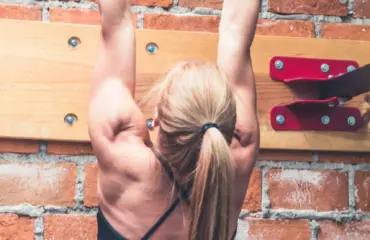
  • Pull-ups, which work the back, shoulders and arms together. Where a member cannot yet do a full repetition, use a resistance band or an assisted machine.
  • Dips, performed on parallel bars or a bench, for the triceps and the front of the shoulder.

Train arms two to three times a week and leave enough recovery between sessions for the muscle to rebuild.

How often should arms be trained?

Frequency depends on the member’s goal and current condition. Two to three sessions a week is the working range. A beginner starts at two, so the body adapts progressively, and moves to three as strength and work capacity improve.

Recovery is not optional. Training creates micro-tears in the muscle, and those tears need time to heal and rebuild – that rebuilding is the adaptation. Leave at least one full day between two arm sessions.

Avoiding injury in arm training

  • Warm up before every session. A few minutes of dynamic work raises muscle temperature and blood flow to the arms.
  • Hold the technique. Correct execution beats speed. Slow the tempo down and focus on the contraction.
  • Do not overload. Start light and add load progressively. Members who chase weight before technique are the ones who get hurt.
  • Cool down afterwards. A few stretches at the end of the session release muscular tension and support recovery.

For this block a club needs a usable dumbbell range rather than a few heavy pairs. See professional dumbbells and functional training accessories for bands.

Glute training

The glutes are a large, powerful muscle group that responds well to targeted work. Three movements form the core of the block.

Squat. Standing, feet shoulder-width apart. Bend the knees and push the hips back as if sitting down on an invisible chair, then return to standing by driving through the heels.

Lunge. From standing, take a long step forward with the right leg. Bend both knees to lower the body towards the floor, then push through the front heel to return. Repeat on the other leg.

Hip thrust. Seated on the floor, knees bent, feet flat. Place a bar or a weight across the hips, then drive the hips upwards squeezing the glutes, and lower back down.

Run this block two to three times a week, with adequate rest between sessions.

Why glute activation matters

Activation means deliberately contracting the target muscle before the working sets. Done properly it improves strength and stability through the hip and helps prevent the muscular imbalances that lead to injury – and it is the single most common thing missing from member-written glute routines.

Three activation drills to run before the main block:

  • Glute bridge. Lying on the back, knees bent, feet flat. Squeeze the glutes and lift the hips off the floor by driving through the heels. Hold for a few seconds, then lower slowly.
  • Clamshell. Lying on the side, knees bent, feet together. Raise the upper knee slowly while keeping the feet in contact, then lower.
  • Crab walk. Seated with the knees bent and feet flat in front, hands on the floor behind. Lift the hips by squeezing the glutes, then walk backwards on hands and feet.

Building variation into the programme

  • Vary the angles. Squats and lunges with a wider or narrower stance load the hip differently.
  • Add resistance. Bands or external load raise the intensity once bodyweight stops being demanding.
  • Add functional movement. Jumps, step-ups and sprints work the glutes in directions a machine cannot reproduce.

On a club floor this block is what drives demand for squat racks and power racks, because squats, lunges and hip thrusts all need a safe loading point.

Leg training

Strong legs need a mix of movements covering the whole limb.

Squat works the quadriceps, hamstrings and glutes together and is the anchor of the session.

Lunge adds a single-leg element, which exposes and corrects side-to-side differences.

Leg extension. Seated on a leg extension machine with the feet under the rollers, push the legs forward by contracting the quadriceps, then return under control. This is the isolation movement of the block and the reason a selectorised machine line earns its floor space.

Three additions improve flexibility and reduce next-day soreness:

  • Static stretching at the end of each session.
  • Yoga or Pilates as complementary work for flexibility and leg strength.
  • Foam rolling to massage the leg muscles and support recovery.

Using load to intensify leg work

  • Dumbbells on squats. A dumbbell held at each side adds resistance without changing the movement.
  • Loaded lunges. A dumbbell in each hand raises the demand on the whole lower body.
  • Deadlift. A powerful lower-body movement working quadriceps, hamstrings and glutes, performed with a loaded barbell or a pair of dumbbells.

Start at a load appropriate to the member’s condition and build progressively.

Putting the full programme together

  1. Set the objective. Stronger arms, firmer glutes, more capable legs, or a combination – the answer changes the split.
  2. Plan the week. Spread sessions across the week according to availability and condition: arms on Monday, glutes on Wednesday, legs on Friday is a workable default.
  3. Choose targeted exercises. Several movements per muscle group: curls, extensions and press-ups for arms; squats, lunges and hip thrusts for glutes; squats, lunges and leg extensions for legs.
  4. Schedule rest. At least one full rest day per week. Rest is as much a part of the result as the training.
  5. Track progress. A training log of exercises, sets, reps and loads keeps members motivated and tells the coach when to change the programme.

Rest and recovery

Three reasons rest belongs in the programme rather than around it. Muscle repair: the micro-tears created by training need time to heal, and that is when the muscle gets stronger. Injury prevention: under-recovered muscle is fatigued muscle, and fatigued muscle is where overuse injuries start. Energy restoration: muscle glycogen is rebuilt during rest, which is what makes the next session possible.

Sleep is the main lever, since most repair happens overnight. Add at least one complete rest day a week.

Tracking progress and adjusting the plan

  • Keep a training log of exercises, sets, reps and loads.
  • Take body measurements such as arm, hip and thigh circumference at regular intervals.
  • Run periodic assessments of strength and endurance to measure change objectively.

Adjust on the evidence. A member on a plateau usually needs a change in intensity or frequency, not more of the same session.


Frequently asked questions

How many times a week should you train arms, glutes and legs?

Two to three sessions a week per muscle group, with at least one full day of recovery between two sessions on the same area. Beginners start at two sessions and build up.

What equipment does this programme need?

A dumbbell range, resistance bands, a rack for squats and hip thrusts, a barbell for deadlifts, and a leg extension machine for the isolation work. Press-ups, lunges and activation drills need floor space only.

Why include glute activation before the session?

Because it recruits the target muscle before it is loaded, which improves stability through the hip and reduces the muscular imbalances that cause injury.

Equipping the floor for this programme

A programme is only as good as the kit available to run it. Tell us the space, the member profile and the budget, and we will specify the racks, free weights and machines that make this session structure deliverable. Request a quote.

À lire aussi sur le même thème

  • Boostez vos performances : guide ultime pour l’augmentation de l’endurance et de la force musculaire
  • Maximisez vos Entraînements avec la Presse à Squats LP314 Lexco
  • Squat Bulgare : Muscles Sollicités, Technique et Bienfaits
  • Maîtrisez le Programme d’Entraînement Avancé pour les Quadriceps, Ischios et Mollets chez Lightinfitness
Tous les articles « Programmes et méthodes d'entraînement »

Tagged under: guide, musculation

About Michaël Galy

Michaël Galy est fondateur et directeur de Light In Fitness, expert en équipements de fitness et musculation professionnels depuis 2013. Fort de plus de 15 ans d'expérience dans l'équipement sportif professionnel, il accompagne les salles de sport, box CrossFit, hôtels, collectivités et établissements de santé dans leurs projets d'aménagement fitness de A à Z. Consultant reconnu en France et en Europe, Michaël Galy a équipé plus de 500 établissements professionnels. Il partage régulièrement son expertise sur les tendances fitness, les normes de sécurité et les meilleures pratiques d'aménagement des espaces sportifs professionnels.

What you can read next

le rucking une nouvelle approche du fitness dans le sport
Le rucking : une nouvelle approche du fitness dans le sport
qu'arrivera t il à votre corps si vous commencez à vous entraîner
Qu’arrivera-t-il à votre corps si vous commencez à vous entraîner ?
Presse à jambes uni-bi-latérale professionnelle PL1018 — machine musculation jambes acier renforcé, capacité 480 kg, multifonction squat et leg press, idéale pour salle de sport ou centre fitness
Découvrez la Presse à Jambes Olympique UniBiLateral – Innovation Fitness
TOP
This website uses cookies to improve your experience. We assume you are happy with this, but you can opt out if you wish. Cookie settingsAccept
Privacy policy

Privacy policy

This website uses cookies to improve your browsing experience. Cookies classified as necessary are stored in your browser because they are essential to the basic operation of the site. We also use third party cookies that help us analyse and understand how you use this site. These cookies are stored in your browser only with your consent. You can also disable these cookies. Disabling some of them may affect your browsing experience.
Necessary
Always Enabled
Necessary cookies are essential for the website to work properly. This category only covers cookies that provide the basic functionality and security features of the site. These cookies do not store any personal information.
Non-necessary
Cookies that are not strictly necessary for the site to work et qui sont utilisés spécifiquement pour collecter des données personnelles via des analyses, des publicités ou d\'autres contenus intégrés sont qualifiés de cookies non nécessaires. Il est obligatoire d\'obtenir le consentement de l\'utilisateur avant d\'exécuter ces cookies sur votre site web.
SAVE & ACCEPT
My quotation request 0