Leg Curl and Leg Extension Machines: Specifying the Leg Station
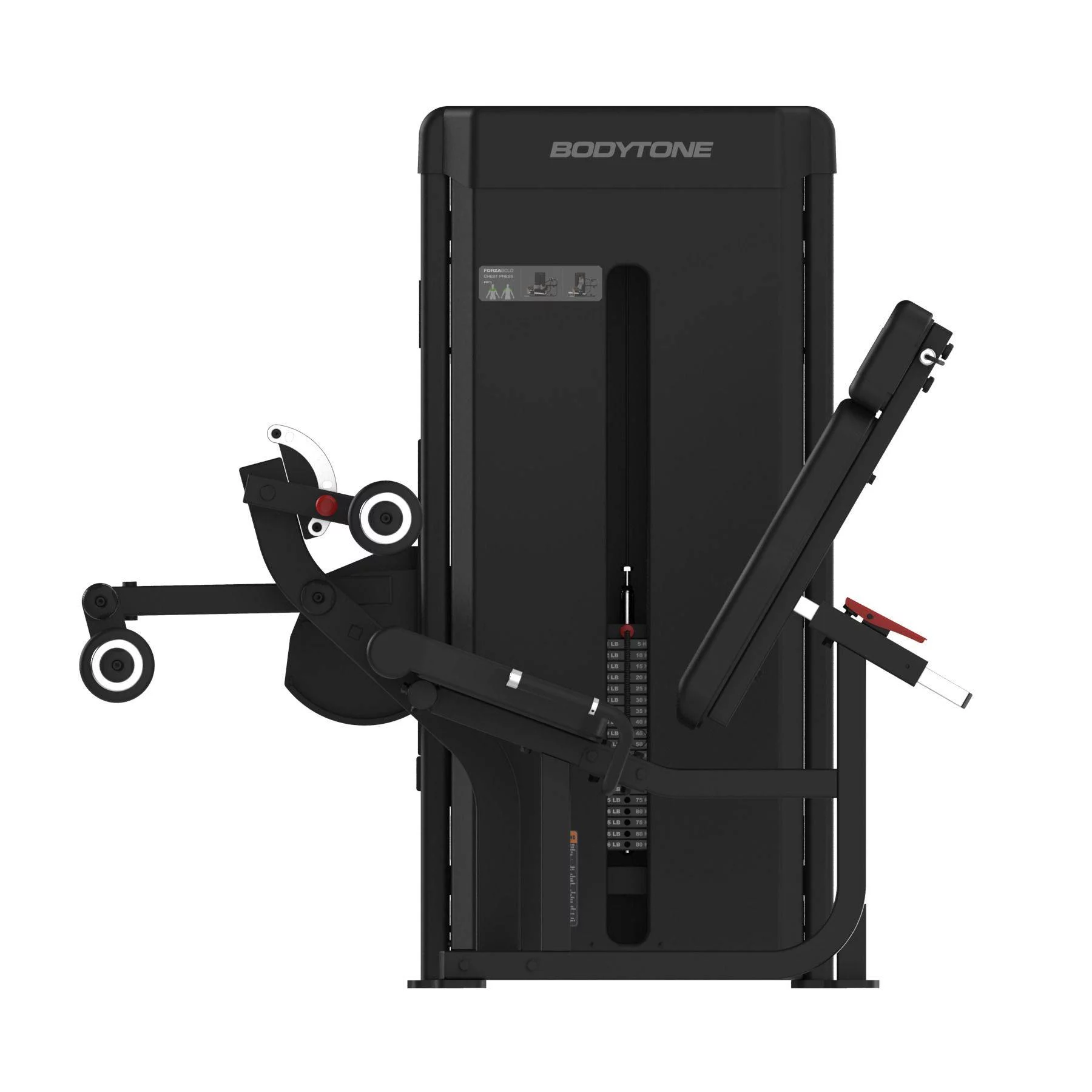
Leg day is the session members skip, and it is also the session that decides whether a strength floor looks credible. For the operator of a commercial gym, a hotel fitness room, a club or a rehabilitation centre, leg curl and leg extension machines are among the few units that guarantee the posterior and anterior chain get trained at all. This guide covers what each machine does, how they work together, how they compare with free-weight work on a busy floor, and what to check before specifying one.
Why the leg station decides the credibility of a strength floor
Members gravitate towards upper-body machines because the result is visible in a mirror. The consequence on a commercial floor is predictable: the leg area is under-used, then under-invested, then removed. That is a mistake in operating terms. Lower-body work drives the largest muscle groups, it is what deconditioned members need most, and it is the part of the offer that physiotherapists, clubs and corporate clients look for when they audit a site. A floor without a proper leg station is a floor that cannot serve a rehabilitation contract or a sports club.
Leg extension machines: isolated quadriceps work
The leg extension isolates the quadriceps in a guided path. The user sits, the shin pad is adjusted so that it rests just above the ankle, the knee axis is aligned with the pivot of the machine, and the load is lifted through knee extension alone. Nothing else contributes, which is exactly the point: it is the most direct way to load the quadriceps without loading the spine.
On a commercial floor that guided path is an operating advantage. A first-time member can use the machine correctly after a thirty-second briefing, which is not true of a barbell squat, and the risk of a supervision incident drops accordingly. Adjustment range matters more than anything else in the specification: a machine that cannot be set for both a short and a tall user will be used badly by half your membership. Our Forza FH selectorised range covers the usual leg positions with commercial-grade adjustment.
Leg curl machines: the hamstrings nobody trains
The hamstrings are the counterweight to the quadriceps and the group most often left untrained. A leg curl machine, seated or lying, loads knee flexion directly and is the simplest way to keep the two sides of the thigh in proportion.
The argument for the operator is not aesthetic, it is preventive. A quadriceps-dominant member is a member with a muscular imbalance, and imbalance is what turns an ordinary session into an injury and a complaint. Installing the curl next to the extension, rather than at the other end of the room, is what makes members actually use both. The Gold Line selectorised machines are the usual specification when a site wants the pair matched in look and in weight-stack increment.
Programming both sides of the thigh
Quadriceps and hamstrings are the two groups that move the leg, and a balanced programme trains them in similar proportion rather than favouring the visible one. Extensions cover the front of the thigh, curls cover the back, and alternating them across the week is enough for the large majority of members. There is no need for an elaborate protocol with dozens of movements; the value is in the balance and in the consistency, not in the complexity. That is also the message your instructors should be giving on the floor, because a machine that is used unevenly delivers an uneven result.
Machines or free weights on a commercial floor
The comparison is not a competition, and an operator who treats it as one ends up with a floor that serves only one type of member. Guided machines give controlled load, precise isolation of the target muscle and a low technical barrier, which makes them the right answer for beginners, for older members, for rehabilitation work and for peak hours when supervision is thin. Free weights recruit several groups at once and build the stability and general strength that a guided path cannot.
A floor built only on machines produces members who are strong in a fixed plane and unstable outside it. A floor built only on free weights excludes everyone who is not confident under a bar. The specification that works commercially is both: a guided leg station for volume and safety, a rack area for the members who want the barbell. Indoor equipment on either side should be built to EN ISO 20957-1 class S, the class intended for commercial use without permanent supervision; class I is a professional class for inclusive access, not a step above class S.
How to specify a leg curl or leg extension machine
Four points decide whether the purchase holds up over a commercial life cycle.
Build against duty cycle. The question is not the headline price but the cost per year of continuous use. Frame section, weld quality, bearing type and upholstery density are what separate a machine that survives a busy floor from one that does not.
Footprint and circulation. The machine has to fit the floor plan with its access and exit clearances, not just its own outline. Measure the circulation around it before committing, especially where the leg station sits against a wall or a mirror line.
Adjustment and accessibility. Pad range, seat back positions and start-position adjustment determine how much of your membership can use the unit. This is also what makes the difference for accessible or rehabilitation use.
Warranty and parts. A commercial machine is a ten-year asset. Check the warranty term by component, and check that cables, pads and bearings can still be ordered years after purchase. The full selectorised machine range is specified on that basis.
Frequently asked questions
Do we need both the curl and the extension?
For a commercial floor, yes. Installing only one produces exactly the imbalance the station is supposed to prevent, and the missing unit is almost always the hamstring one.
Seated or lying leg curl?
Both load knee flexion. The seated version takes less floor length and is easier for members to get in and out of; the lying version is often preferred where the site already runs a rehabilitation or sports-club programme. Site constraints usually decide.
Are these machines suitable for beginners and older members?
That is their main advantage. The guided path removes the balance and technique requirement, which is why they are standard equipment in rehabilitation centres, residences and corporate fitness rooms.
Can they replace squats?
No. They isolate; the squat integrates. The correct answer for a commercial floor is to offer both rather than to choose.
Specifying your leg station
The right pair of machines depends on your floor plan, your membership profile and the level of supervision you can provide. Send us the room dimensions and the intended use and we will return a leg station layout with the matching commercial specification. Request a quote to start.
À lire aussi sur le même thème
- Squats complets, parallèles ou demi : Quelle variante est idéale pour la santé de vos genoux ?
- Sculptez votre Chaîne Postérieure : Exercices Essentiels pour Renforcer le Dos, Améliorer la Posture et Booster vos Performances
- Soulagement des Douleurs Lombaires : Combien d’Entraînements Suffisent ?
- Course à pied : Tout savoir pour démarrer, progresser et bénéficier des bienfaits sur la santé