What Type of Flooring for a Gym? Choosing a Professional Sports Floor
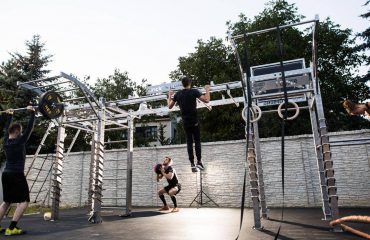
Choosing the flooring for a gym is one of the decisions that shapes everything else. The surface has to suit the activities practised on it and the constraints of the building. A sports floor must be hard-wearing, durable and easy to clean, but it also has to reduce noise, stay non-slip and absorb impact so that users are protected. That is why resilient floor coverings are so widely used in fitness facilities: they combine resilience with genuine shock absorption.
What a gym floor actually has to do
Before comparing materials, it is worth listing the functions the surface has to fulfil at the same time:
- Impact absorption – protecting both the users and the slab underneath when loads are dropped.
- Noise and vibration control – the first source of complaints in mixed-use buildings, hotels and offices.
- Grip – a non-slip surface that stays non-slip once it is damp with perspiration.
- Abrasion and scratch resistance – equipment gets dragged, benches get moved, wheels roll over the same lines every day.
- Ease of cleaning – a floor that cannot be cleaned quickly will not stay presentable in a facility open all day.
The main options for a professional facility
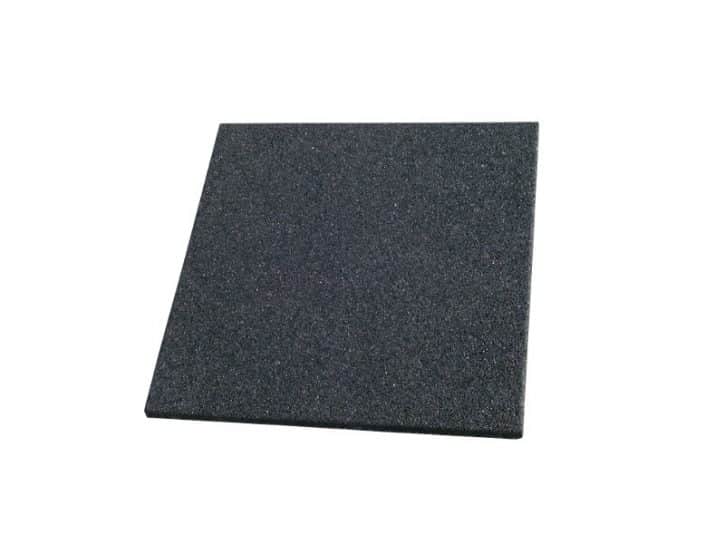
- Rubber tiles – the reference solution for strength and functional areas. They are laid tile by tile, which means a damaged tile can be swapped without touching the rest of the floor. See the rubber gym flooring tiles range.
- Heavy-duty tiles for lifting platforms – denser and thicker, designed for the areas where barbells are dropped. They are the right answer in a weightlifting or cross-training zone: see the weightlifting rubber tiles.
- Rubber and PVC rolls – fewer joints over large open surfaces, a good fit for cardio floors and studios.
- Vinyl and PVC coverings, including wood-effect finishes – they reproduce the look of a timber floor without the maintenance constraints of solid wood, which is often what a studio or a hotel fitness room is looking for.
- Surfaces for wet and changing areas – around pools, in changing rooms and in shower areas the covering has to be specified for wet rooms, with water resistance and cleanability taking priority over cushioning.
Matching the floor to the zone, not to the building
A single covering rarely suits an entire facility. The usual approach is to divide the floor plan into zones and to specify each one separately: a resilient, thick surface where free weights are used, a thinner and more stable surface under cardio machines so that they do not rock, a comfortable and acoustically treated surface in group studios, and a wet-room specification in the changing area. Planning those transitions early avoids level differences and trip hazards at the joints between zones.
Underlay, acoustics and the details that get forgotten
The layer underneath the visible surface does much of the acoustic work. An acoustic underlay improves impact sound insulation and walking comfort, and it is very often what makes a first-floor or basement gym acceptable to the neighbours and to the building owner. Skirtings and wall protection deserve the same attention: they finish the installation visually and protect the base of the walls from equipment and from cleaning machines.
Frequently asked questions
Which flooring is best for a free weight area?
Rubber tiles, in the thickest specification your budget and your door thresholds allow. They absorb dropped loads, they protect the structural slab and they can be replaced individually where wear concentrates, which is around the racks and the platforms.
Tiles or rolls?
Tiles are easier to transport, to lay in a room with an awkward shape and to repair. Rolls give a more continuous surface with fewer joints, which is preferable in studios and on large cardio floors. Many facilities use both, one per zone.
Does gym flooring need a fire classification?
In a building open to the public the reaction to fire of the covering is part of the specification, and the required class is set by the national building regulations that apply to your premises and to the type of establishment. Ask for the classification of each product in writing: our fire-rated range is grouped under fire-rated rubber tiles, and the premium 42 mm shock-absorbing tile is classified Dfl-s1.
How is a sports floor maintained?
Daily dry pick-up and a damp pass with a neutral detergent are enough for rubber and vinyl surfaces. Aggressive solvents and excess water at the joints are what shorten the life of a floor, not normal traffic.
Specifying your floor
The right covering depends on the activities practised, on the constraints of the building and on the look you want to achieve, but whichever type you choose it has to be a quality, hard-wearing and easily maintained surface if it is to last and to give a good training experience. Send us your floor plan with the zones you have in mind and we will put together a flooring specification and a quantity take-off for your project. Request a quote.
Réalisations documentées
- Dalles et sols sportifs : livraisons documentees – plusieurs chantiers
- Sol sportif exterieur, square Georges-Vallerey – Taverny (95)