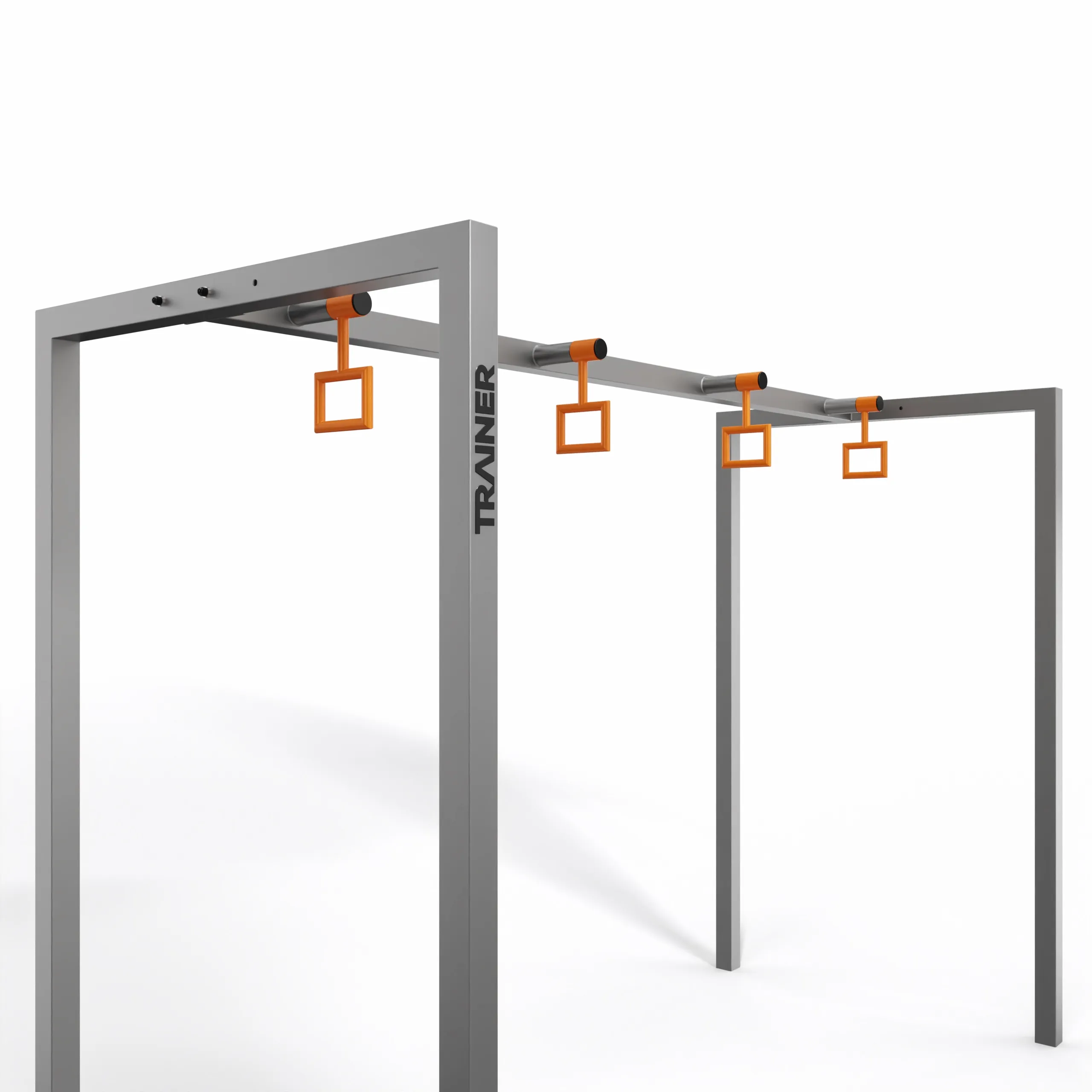
Custom ninja course at the îlot des Hautes-Ourmes, Rennes, France
Custom ninja course at the îlot des Hautes-Ourmes, Rennes, France
Light In Fitness a conçu, fabriqué et livré un parcours ninja et des agrès de parcours santé sur mesure pour l'aménagement de l'îlot des Hautes-Ourmes, à Rennes (35). Les plans de fabrication ont été soumis à validation le 31 mars 2026, l'équipement facturé le 13 avril et le transport confirmé par lettre de voiture signée le 5 juin. Le chantier documente un projet entièrement sur mesure, du plan à la pose.
Light In Fitness designed, manufactured and supplied a custom ninja course and outdoor fitness trail stations for the îlot des Hautes-Ourmes scheme in Rennes, France. Manufacturing drawings were submitted for approval on 31 March 2026, the equipment invoiced on 13 April, transport confirmed by signed consignment note on 5 June, and the area officially opened on 24 June 2026. The project is representative of what a public authority asks for when it does not want a catalogue unit: imposed dimensions, imposed colours, a standard to comply with, and a manufacturer able to produce drawings before any steel is cut.
The project at a glance
Item
Detail
Site
Îlot des Hautes-Ourmes, Rennes (35), Ille-et-Vilaine, France
On a catalogue unit, the dimensions are the manufacturer’s and the buyer picks a reference. On a bespoke unit the logic is reversed: the client sets the dimensions, in the specification or during the design exchanges, and the manufacturer turns them into drawings.
Stage
Who decides
What is produced
1. Statement of need
Client
Dimensions, layout, RAL colours, expected level of difficulty
2. Design
Manufacturer
Manufacturing drawings, 3D model, data sheet per module
3. Approval
Client
Written sign-off on the drawings, before production starts
4. Manufacturing
Manufacturer
Compliance with the approved drawings, galvanising, RAL coating
Stage 3 is the pivot. Once the drawings are approved in writing, the manufacturer guarantees that production matches those drawings; what it does not guarantee are the dimensional choices made upstream by the client. That is why the drawings went out on 31 March, almost three months before the opening. Our approach to bespoke work is set out on the custom sports equipment manufacturing page.
Technical documentation issued for this project
Document
Purpose
Manufacturing drawings
Dimensions of every module, submitted for approval before production
3D model
Visualisation of the layout and circulation
Structures data sheet
Description of the load-bearing structure
Tibetan Bridge data sheet
Suspended bridge module of the course
Cheese data sheet
Climbing module of the ninja course
Bizon data sheet
Course module
Fitness trail data sheet
Fitness trail stations associated with the area
EN 16630 certificate
OBAC 0161 CZ 24, issued in French
Clear height under the bars: the dimension to settle at drawing stage
On a ninja course, the clear height under a suspended module drives two opposing things: the level of difficulty, which assumes the user really does hang free, and the height of fall, which drives the safety area and the performance of the impact-attenuating surface. The higher the module, the harder the exercise and the greater the demand on the surfacing.
That dimension is therefore fixed on the drawings, not after installation. Where it still has to be corrected on site, a bespoke module does not have to be remanufactured: the structure can be raised on plinths. Raising blocks add the missing height under the bars without changing the geometry of the module, without fully redoing the anchorages, and without taking the area out of service for more than a few hours.
The recommendation for a specifier is simple: write the expected clear height into the specification, check it on the drawings before approval, and include raising on plinths as a contract variant. Our ninja warrior rigs and obstacle trail modules ranges show the module families available.
Bespoke equipment and risk assessment
By definition, a bespoke unit does not have the track record of a series product already installed hundreds of times. That is why an impact risk assessment is requested by experienced authorities on this type of structure, in addition to certification against the standard.
This is not a warning sign, it is the normal counterpart of bespoke work, and it is anticipated from the tender stage onwards, at the same time as the safety areas and the impact-attenuating surface are defined.
How the project ran
Date
Stage
31 March 2026
Manufacturing drawings sent to the client for approval
13 April 2026
Equipment invoiced
5 June 2026
Consignment note signed: transport and handover confirmed
24 June 2026
Official opening of the scheme
25 June 2026
Written confirmation that production matched the agreed specifications
Frequently asked questions
Who sets the dimensions of a bespoke unit?
The client, in the specification or during the design phase. The manufacturer turns those dimensions into drawings and submits them for written approval before starting production. After approval, it guarantees that production matches the approved drawings.
What if the clear height under a module has to be increased after installation?
The structure can be raised on plinths. Raising blocks add the missing height under the bars with no remanufacturing of the module, no change to its geometry and no full rework of the anchorages. This variant is best written into the contract from the start.
Can bespoke equipment be certified?
Yes. The course delivered in Rennes is covered by certificate OBAC 0161 CZ 24 against EN 16630, issued to the client in French. Certification covers the equipment as manufactured, not its installation, which is the main contractor’s responsibility.
Why ask for an impact risk assessment on bespoke equipment?
Because a one-off unit does not have the service history of a series product. The assessment complements certification and is prepared from the tender stage, together with the definition of the safety areas and the impact-attenuating surface.
How long between drawing approval and opening?
On this project, almost three months separated the issue of the drawings from the opening, transport included. That period depends on the number of modules, the surface treatment and the main contractor’s programme: it is confirmed at quotation stage, never assumed.
Who is answerable for compliance, the manufacturer or the installer?
The manufacturer answers for the compliance of the equipment with the approved drawings and the stated standard. Installation, safety areas, impact-attenuating surfacing, the pre-opening inspection and maintenance are the responsibility of the main contractor and then of the operator.
A similar project
Send us the expected dimensions, the RAL colours, the type of surfacing and your deadline: drawings and quotation come back with the matching normative references.
This website uses cookies to improve your experience. We assume you are happy with this, but you can opt out if you wish. Cookie settingsAccept
Privacy policy
Privacy policy
This website uses cookies to improve your browsing experience. Cookies classified as necessary are stored in your browser because they are essential to the basic operation of the site. We also use third party cookies that help us analyse and understand how you use this site. These cookies are stored in your browser only with your consent. You can also disable these cookies. Disabling some of them may affect your browsing experience.
Necessary cookies are essential for the website to work properly. This category only covers cookies that provide the basic functionality and security features of the site. These cookies do not store any personal information.
Cookies that are not strictly necessary for the site to work et qui sont utilisés spécifiquement pour collecter des données personnelles via des analyses, des publicités ou d\'autres contenus intégrés sont qualifiés de cookies non nécessaires. Il est obligatoire d\'obtenir le consentement de l\'utilisateur avant d\'exécuter ces cookies sur votre site web.
Je suis coach sportif et j'ai fait appel à Light in Fitness pour m'équiper en matériel pro : rien à redire. Qualité au top, conseils personnalisés, service client ultra réactif... et des délais de livraison respectés (ça mérite d'être souligné !). Ce que j'ai adoré : ils ne cherchent pas juste à vendre, ils comprennent vraiment les besoins des pros du sport. Je recommande les yeux fermés à tous les coachs, salles de sport ou particuliers exigeants. Merci à l'équipe, vous avez gagné un client fidèle !
Société rencontré sur Internet, commande de l'ensemble de l'équipement fitness pour une salle de sport complète, reçu avec une semaine d'avance, conforme à la commande passée, ça peut paraître normal mais de nos jours plus grand chose ne l'est.. Matériel à la hauteur de mes espérances, qualitatif, design, rien à redire, je poste quelques photos qui en diront plus que mon avis. A recommander sans sujet.
Un professionnel à l'écoute, disponible et attentif à nos besoins. Une large gamme de matériels de fitness, cardio, CrossFit et musculation. De bons conseils, un suivi et des prix. Bref nous recommandons !
Michaël Galy – Fondateur et directeur de Light In Fitness
Titulaire d’un BAC+3 en sciences du sport et du Brevet d’Éducateur Sportif, Michaël Galy accompagne depuis 2013 les salles de sport, box CrossFit, hôtels, EHPAD, collectivités et bases militaires dans leurs projets d’équipement. Plus de 2 500 clients professionnels équipés en France et en Europe, de l’audit initial à l’installation et au suivi SAV.