Choosing an Outdoor Rubber Tile Manufacturer: What Matters
Une dalle caoutchouc destinée à l'extérieur doit résister aux cycles gel-dégel, aux UV et à l'humidité permanente, trois contraintes absentes en intérieur. Le liant polyuréthane et la densité conditionnent cette tenue. Le choix du fabricant se juge sur ces caractéristiques documentées, pas sur le prix au mètre carré.
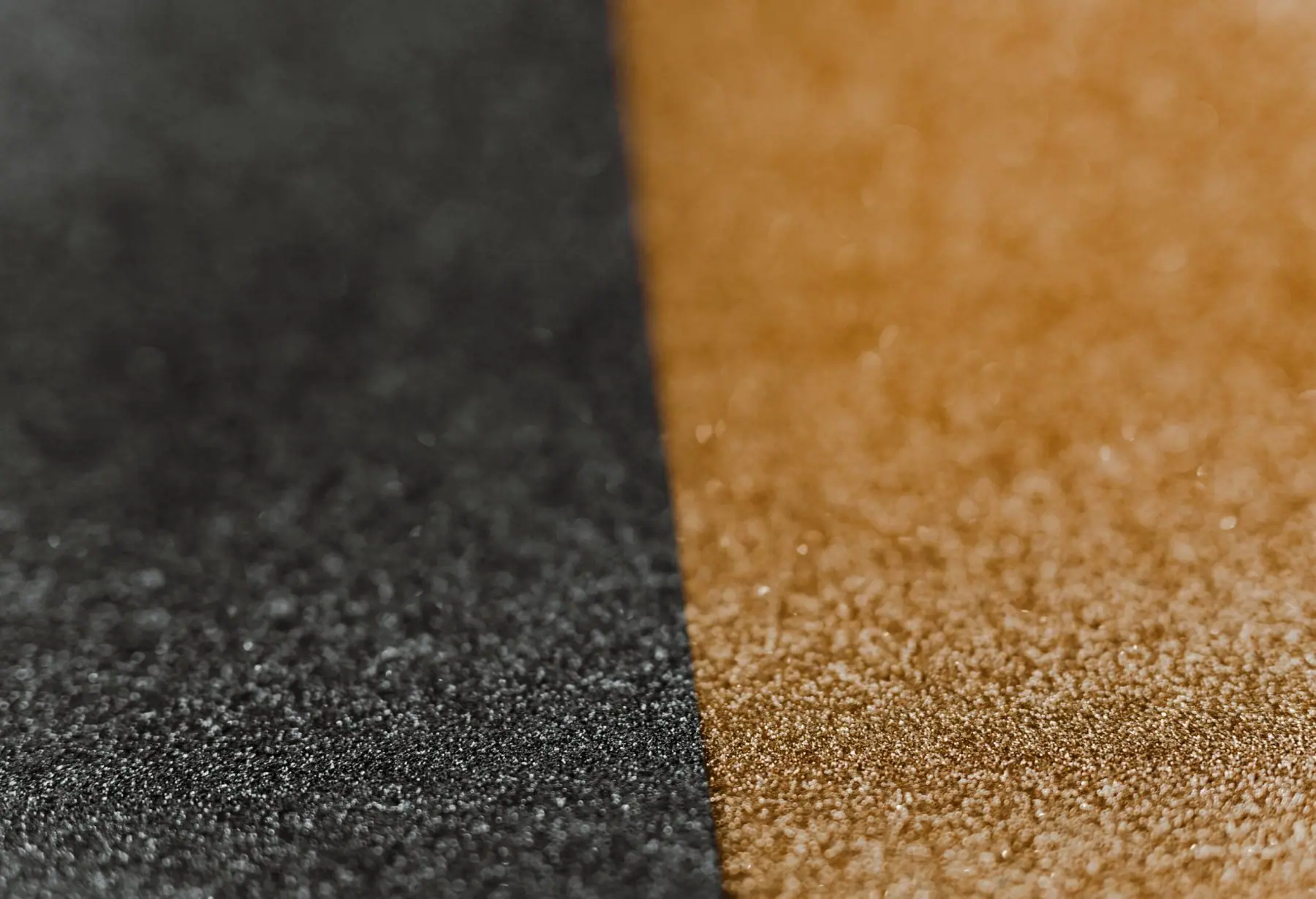
Terraces, pool surrounds, play areas, outdoor training zones, workshops and service yards: rubber tiles are one of the most effective ways to add safety, comfort and durability to an outdoor surface. The difficulty is not finding a supplier, it is comparing them. An outdoor tile has to survive freeze-thaw cycles, ultraviolet exposure and permanent moisture, three constraints that simply do not exist indoors, and those are the characteristics a manufacturer should be able to document. A price per square metre tells you nothing about any of them.
Why rubber tiles outdoors
- Slip resistance. A safer surface when the ground is wet.
- Impact absorption. More comfortable underfoot and far safer under sports and play equipment.
- Noise reduction. Fewer impacts and vibrations transmitted, which matters in training zones and next to occupied buildings.
- Substrate protection. The concrete, paving or screed underneath takes much less punishment.
- Simple maintenance. In most cases, sweeping and rinsing is enough.
The six criteria to check before you order
1. Thickness sets the level of cushioning
The thicker the tile, the more impact it absorbs. A comfort terrace and a barbell zone are not the same specification, and a play area is different again because there the thickness is dictated by the equipment above it.
2. Slip resistance
Look for a surface designed to stay stable when wet, and ask for the rating stated on the data sheet, for example R10. This is decisive around pools, on access routes and on exposed terraces.
3. Drainage
Outdoors, drainage changes everything: less standing water, less slipping and a considerably longer service life. Tiles with an integrated drainage structure earn their place wherever water cannot run off quickly.
4. Weather and UV resistance
An outdoor tile has to hold up under sun, rain, frost and temperature swings. This is where the binder matters: the polyurethane binder and the density of the tile largely determine how it behaves after a few winters. Ask the manufacturer for that information in writing.
5. Standards, where public use is involved
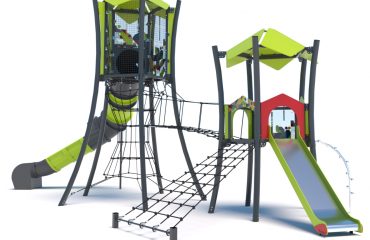
For a play area or any zone where falls are foreseeable, check the impact-attenuation documentation: EN 1177 and the HIC test, expressed as a critical fall height. The play equipment itself falls under EN 1176-1. The two standards are complementary and never interchangeable, and EN 16630, which covers outdoor adult fitness equipment, never applies to a children’s unit.
6. Installation and modularity
Loose-lay, interlocking puzzle systems, pedestal support or bonded installation: the aim is a stable surface that is straightforward to install and, where the use may change, straightforward to modify.
Which tile for which use
Terraces, patios and circulation areas
- Priority: slip resistance, drainage and easy cleaning.
- Interlocking or modular tiles give a clean, aligned result and stay easy to lift.
Play areas
- Priority: impact attenuation, documented conformity and a stable, accessible surface.
- Check the EN 1177 and HIC information against the free height of fall of the equipment. The playground surfacing range is specified for exactly this.
Outdoor training and fitness zones
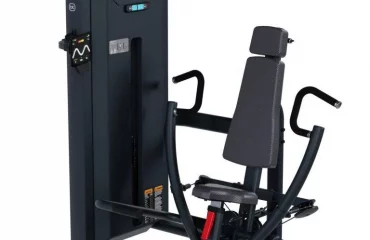
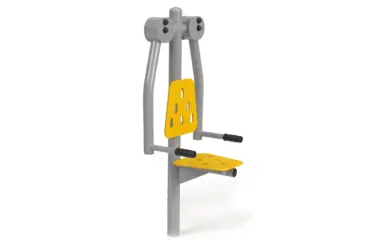
- Priority: thickness, vibration damping and wear resistance.
- For heavy loads, choose thicker and denser tiles. Some formats, such as 42 mm, are built for that duty and are equally at home outdoors. See the outdoor sports flooring range.
Workshops, garages and service areas
- Priority: resistance, substrate protection and a surface that cleans easily.
- Useful wherever dropped loads and vehicle traffic would otherwise damage the slab.
For covered training rooms the equivalent products sit in the rubber gym flooring tiles range.
Installation and maintenance
Before laying
- A flat, clean and stable substrate.
- Outdoors, plan the drainage and avoid areas where water naturally collects.
Common methods
- Loose-lay: fast, and easy to move or adapt later.
- Interlocking: a good compromise between stability and modularity.
- Fixed, on pedestals or bonded: the right answer on slopes, exposed sites and under very intensive use.
Maintenance
- Sweep or brush regularly with a soft brush.
- Rinse with water when needed, without aggressive products.
Frequently asked questions
Can an indoor tile be used outdoors?
No. Indoor products are not formulated for UV exposure, standing water and freeze-thaw cycles, and they degrade quickly.
How is the thickness for a play area decided?
By the free height of fall of the equipment above it, verified against the EN 1177 test data. Never by budget alone.
What should a manufacturer be able to supply?
A data sheet stating thickness, density, binder, slip rating, drainage behaviour and, where relevant, the critical fall height and the fire classification with its smoke index reproduced exactly.
Compare on documented characteristics
For a durable outdoor project the method is simple: choose by use, then verify thickness, slip resistance, drainage, weather behaviour and, where public use is involved, the applicable standards. Send us the surface area, the exposure, the use and the equipment planned above it, and we will come back with a specification and a costed list. Request a quote for your project.
Réalisations documentées
- Dalles et sols sportifs : livraisons documentées – plusieurs chantiers
- Sol sportif extérieur, square Georges-Vallerey – Taverny (95)
Sources et références
- Décret n° 96-1136 du 18 décembre 1996 – prescriptions de sécurité relatives aux aires collectives de jeux (Légifrance)
- NF EN 1176-1 – Équipements et sols d’aires de jeux, partie 1 : exigences de sécurité et méthodes d’essai générales (AFNOR)
- NF EN 1177 – revêtements de surface amortissants : détermination de la hauteur de chute critique (AFNOR)
- Arrêté du 19 avril 2011 – étiquetage des produits de construction ou de revêtement de mur ou de sol sur leurs émissions de polluants volatils (Légifrance)