Rowing machines and strength training: the all-round cardio station
Le rameur sollicite environ 90 % de la masse musculaire sur un mouvement sans impact articulaire, ce qui explique sa place dans les plateaux cardio professionnels. Le geste combine poussée des jambes, gainage et tirage du haut du corps dans un enchaînement continu. Intégré à un programme de musculation, il sert de travail cardio et de renforcement de la chaîne postérieure.
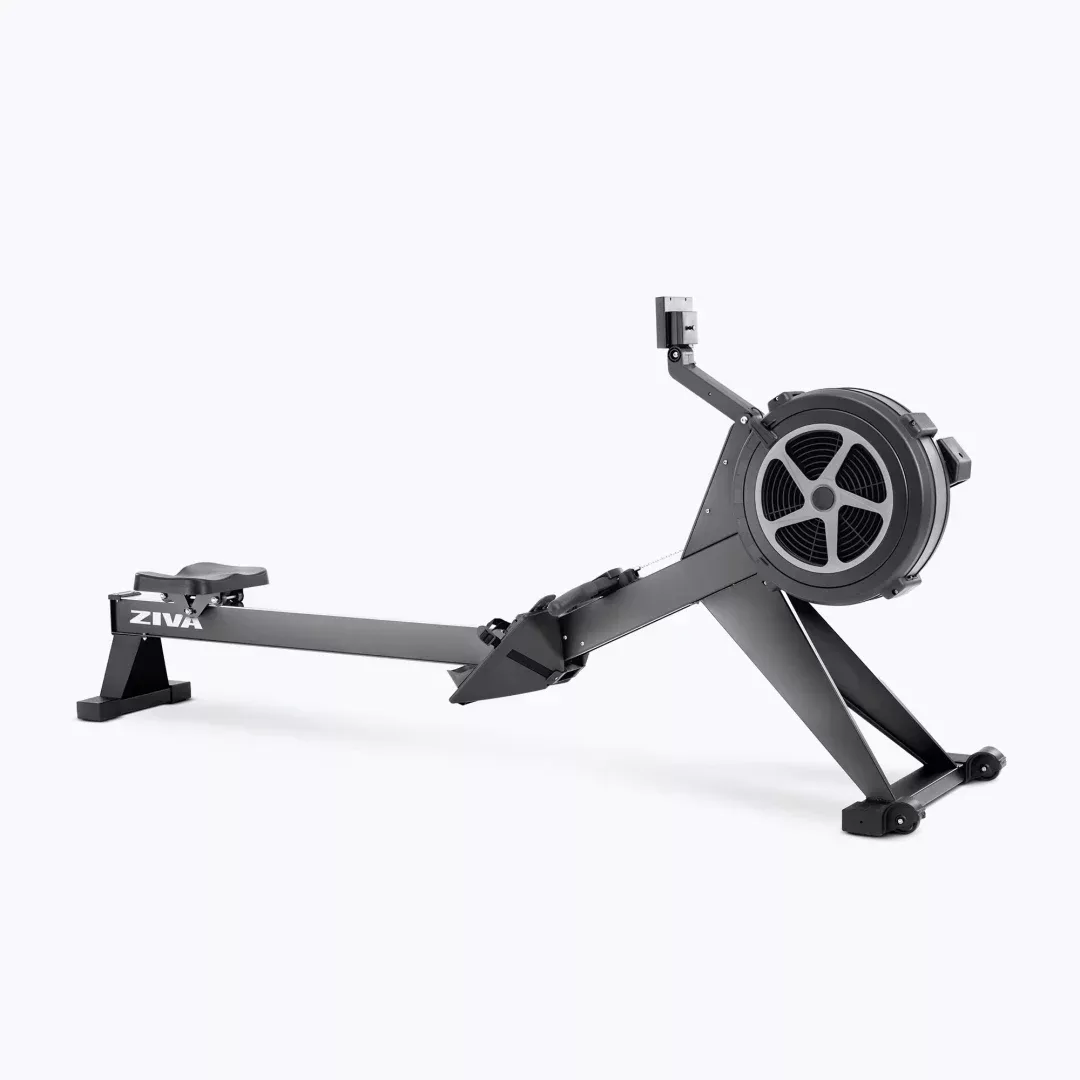
Looking for a station that recruits around 90 % of the body’s musculature while burning a large number of calories? The rowing machine is that station. Whether your members are working on fat loss or on strengthening the trunk and back, knowing how to integrate rowing into a strength programme is what turns the machine from a piece of floor furniture into one of the busiest positions in the room.
Which muscles does a rowing machine work?
The rower is one of the few cardio machines that delivers a genuinely full-body session:
- Upper body: back (latissimus dorsi), shoulders, arms (biceps and forearms).
- Trunk: continuous bracing is required to hold a correct posture throughout the stroke.
- Lower body: the legs (quadriceps, glutes, hamstrings) supply 60 % of the power of the movement.
That distribution is also why the rower belongs in a strength area and not only on the cardio row. It loads the posterior chain without joint impact, which makes it usable by members who cannot run.
What four weeks of regular training changes
With regular practice on quality equipment, the improvements after four weeks are noticeable:
- Cardiovascular capacity: better endurance and less breathlessness in everyday activity.
- Muscle tone: a firmer shape, particularly through the back and legs.
- Fat loss: thanks to its high energy expenditure, the rower is a formidable ally in creating a calorie deficit.
For an operator, this matters commercially as much as physiologically: visible progress in the first month is the strongest predictor of a member renewing.
What separates a commercial rower from the rest
For a beginner, technique is what prevents injury. A poor-quality rower with a jerky stroke can strain the lower back, and on a commercial floor that risk is multiplied by the number of unsupervised users. Three things matter:
- Smoothness of the pull. Air or high-precision magnetic resistance systems deliver a fluid movement from start to finish, with no dead point, which is what protects the joints.
- High-density construction. Designed for intensive use, a commercial rower stays perfectly stable even during high-intensity sprints.
- Professional ergonomics. The seat and the footplates are designed to encourage an ideal posture, reducing the strain on the lower back.
Our rowing machines are selected on those three criteria, and the Xebex air cardio range covers the air-resistance option specifically.
Coaching points for new users
- Technique before speed. Push first with the legs, then swing the torso back, then pull with the arms. The recovery follows the reverse order.
- Setting the resistance. Do not start at maximum. A moderate setting lets the user concentrate on the quality of the movement.
- Induction matters. Two minutes of instruction at sign-up prevents most of the lower-back complaints associated with the machine.
Programming the rower by objective
| Objective | Frequency | Session type |
|---|---|---|
| Fat loss | 3 times a week | HIIT (30 s sprint, 30 s recovery) |
| Cardio endurance | 2 times a week | 30 to 45 minutes at a steady pace |
| Strength warm-up | Before every session | 5 to 10 minutes at low intensity |
The third line is the one operators underuse. A bank of rowers positioned near the strength area turns into the warm-up station for the whole room, which increases utilisation without adding floor space.
Rowing should not feel like a chore. On a machine with a fluid biomechanic and a quiet running action, cardio becomes something members choose rather than endure. The density of the materials is what ensures the investment lasts for years, even under daily use.
Frequently asked questions
Air or magnetic resistance?
Air resistance responds to the effort of the user, which suits interval work and group formats; high-precision magnetic resistance is quieter, which matters in rooms where noise is a constraint. Both give a smooth stroke provided the build quality is there.
How many rowers does a club need?
It depends on the classes you run rather than on the size of the room. A group format built around rowing sets the number; general cardio use rarely does.
Is the rower suitable for older or deconditioned members?
Yes, and that is one of its strongest arguments. The movement has no joint impact, the intensity is set entirely by the user, and the seated position is stable. It is widely used in rehabilitation and in facilities with an older membership.
What does it need underneath?
A stable, flat surface. Rowers are a rolling load in daily use, so the flooring specification under a bank of them is not the same as under a free-weight zone.
Specifying your cardio floor
A rowing machine earns its place in almost every commercial room, from clubs and hotels to corporate facilities and rehabilitation centres. What changes between them is the number of units, the resistance type and where they sit in the layout.
Tell us the room and the programme and we will propose the configuration. Request a quote and we will come back with a costed proposal.
À lire aussi sur le même thème
- Why the Rowing Machine Is Back as the Number One Cardio Piece in Gyms
- Rameur Xebex Air Rower 3.0 Smart Connect VS Rameur RowErg Tall Concept2 (PM5)
- How to Choose a Professional Rowing Machine for a Gym
- RPM, Les Mills or Spinning: Indoor Cycling Formats
- Professional Treadmills: The Criteria That Really Matter in 2026