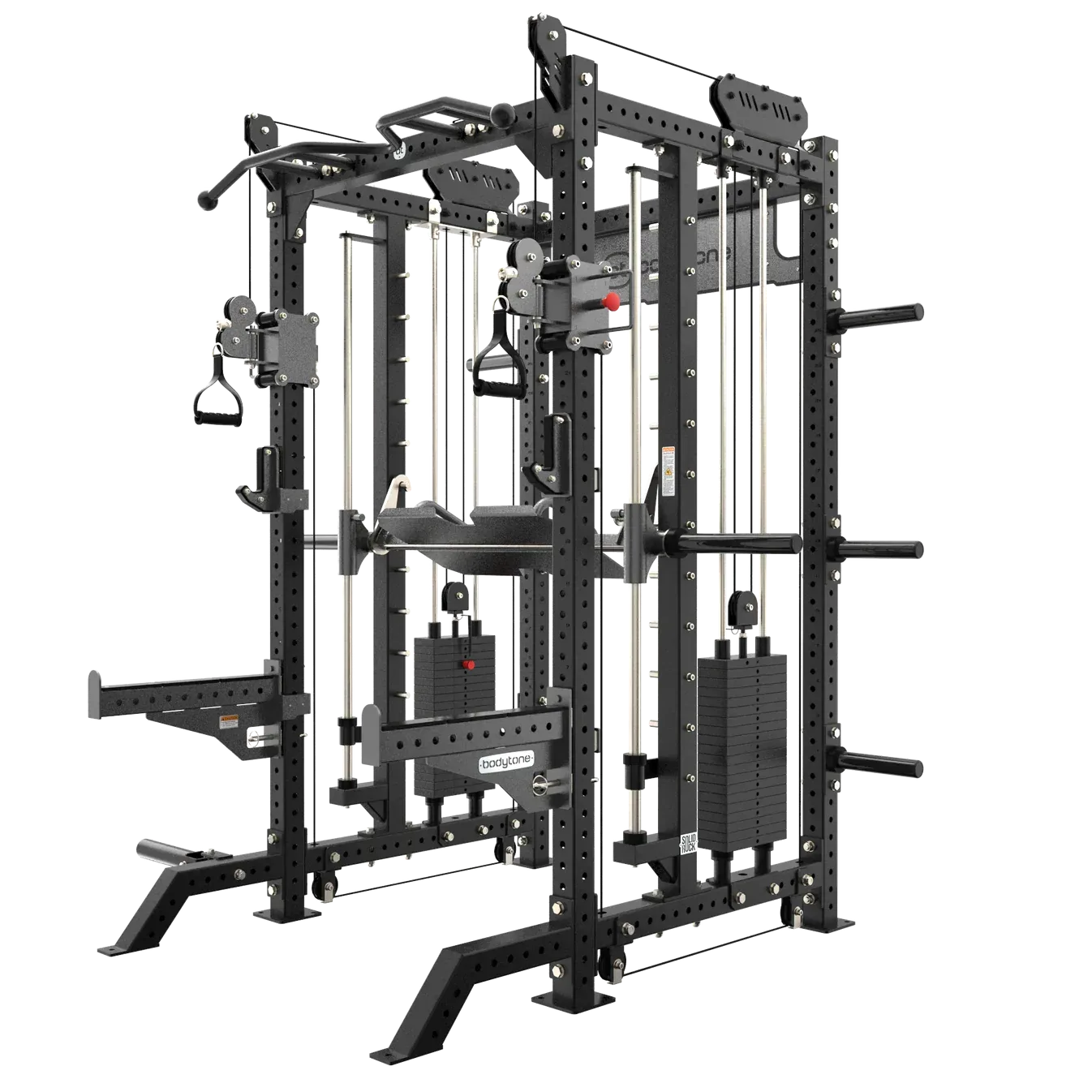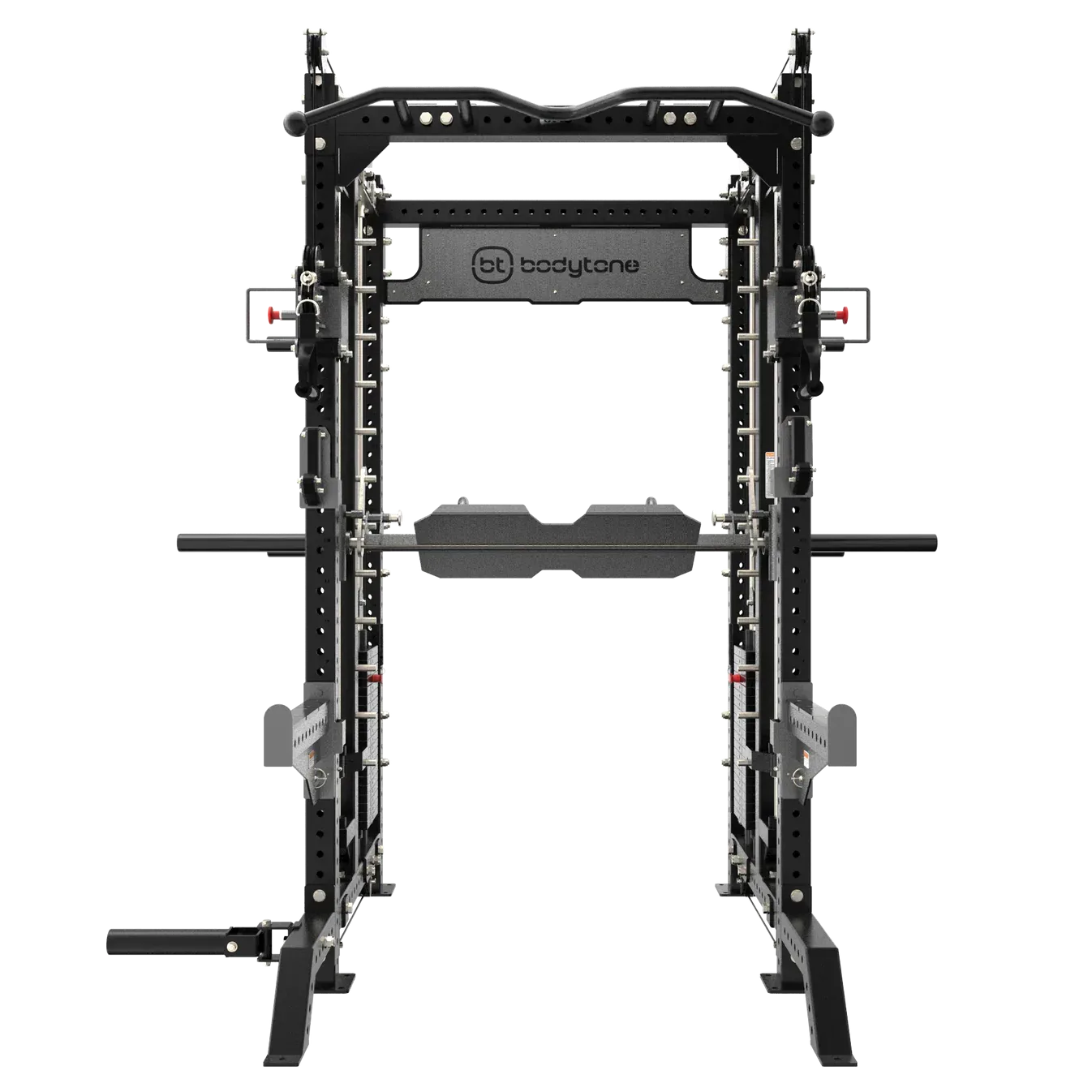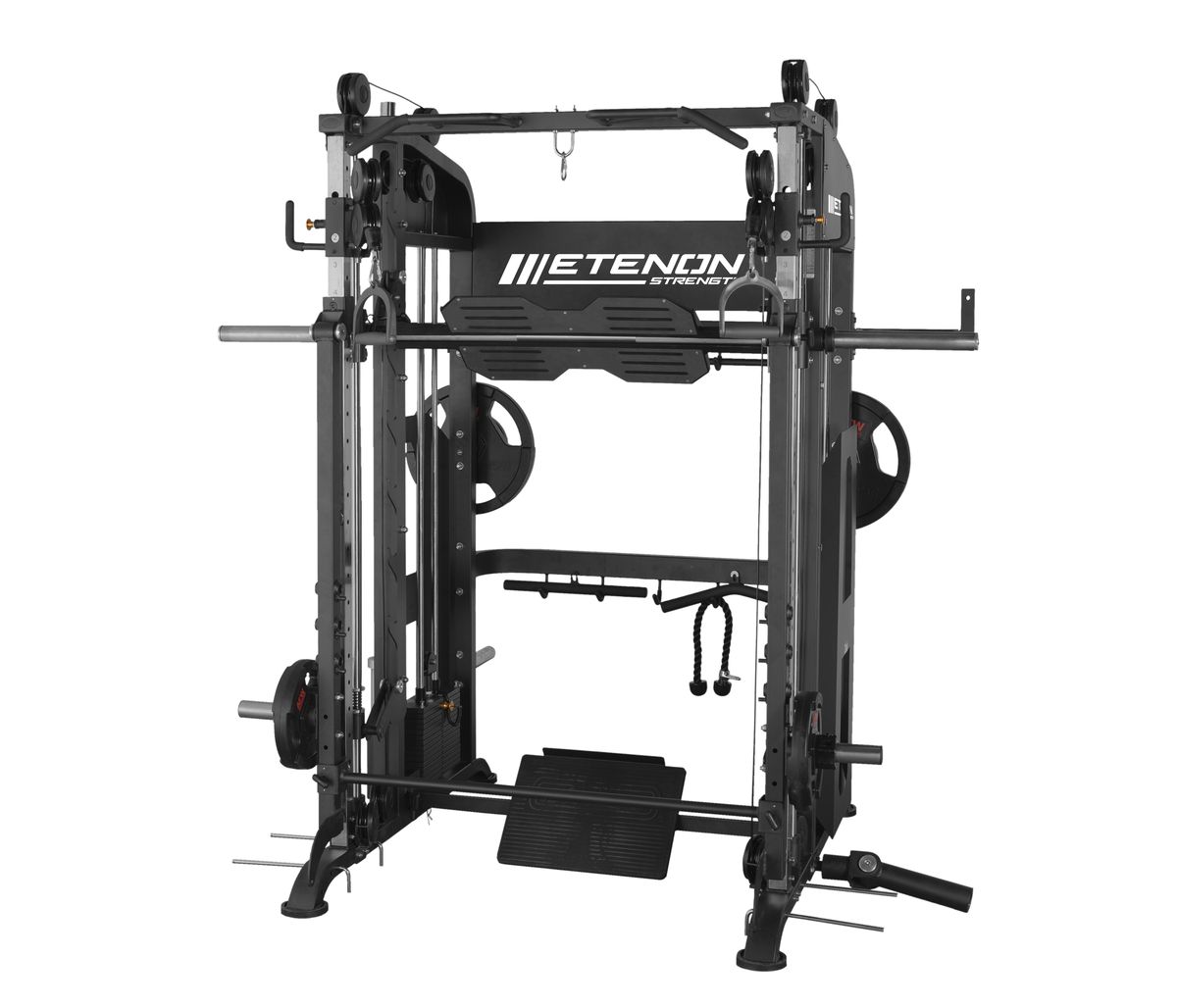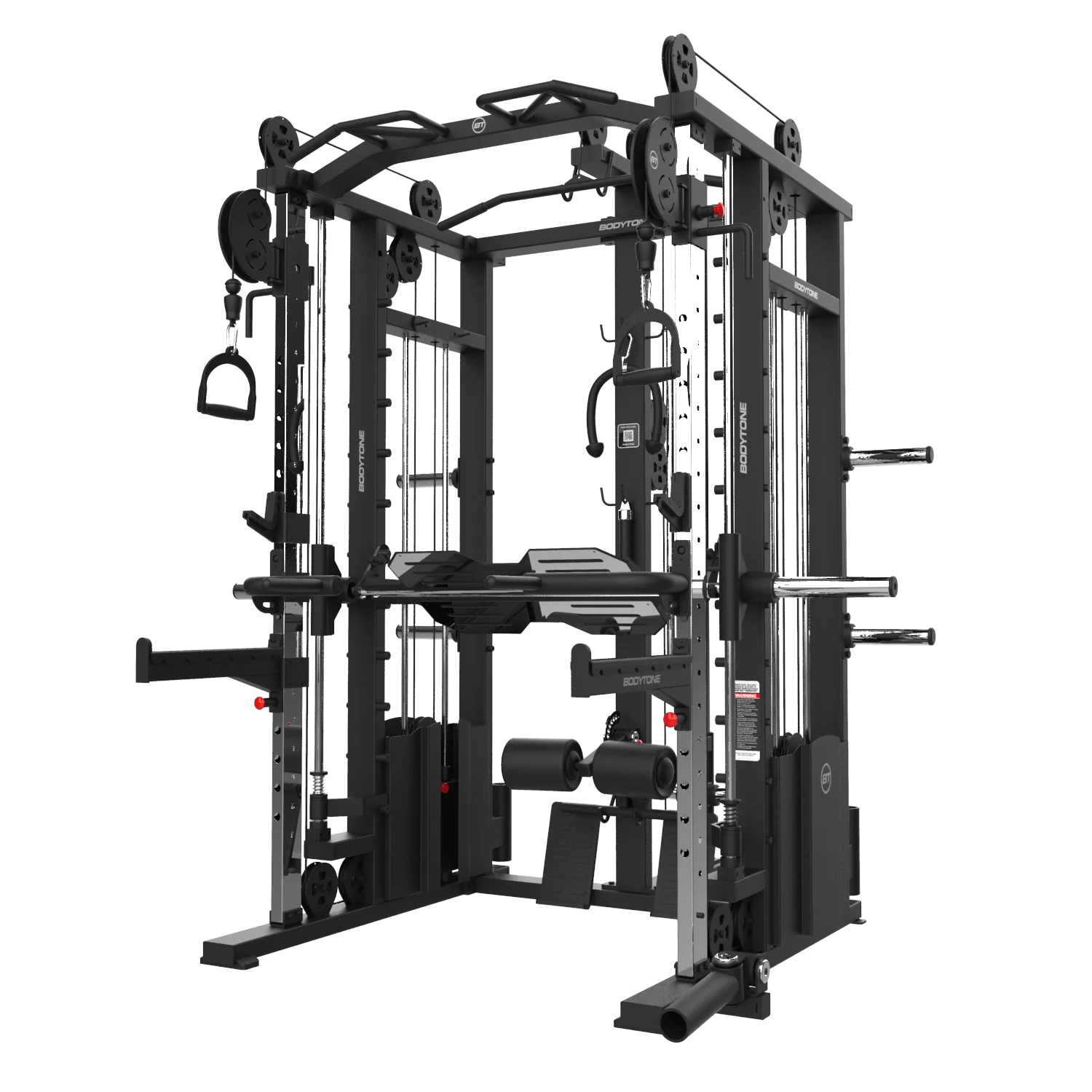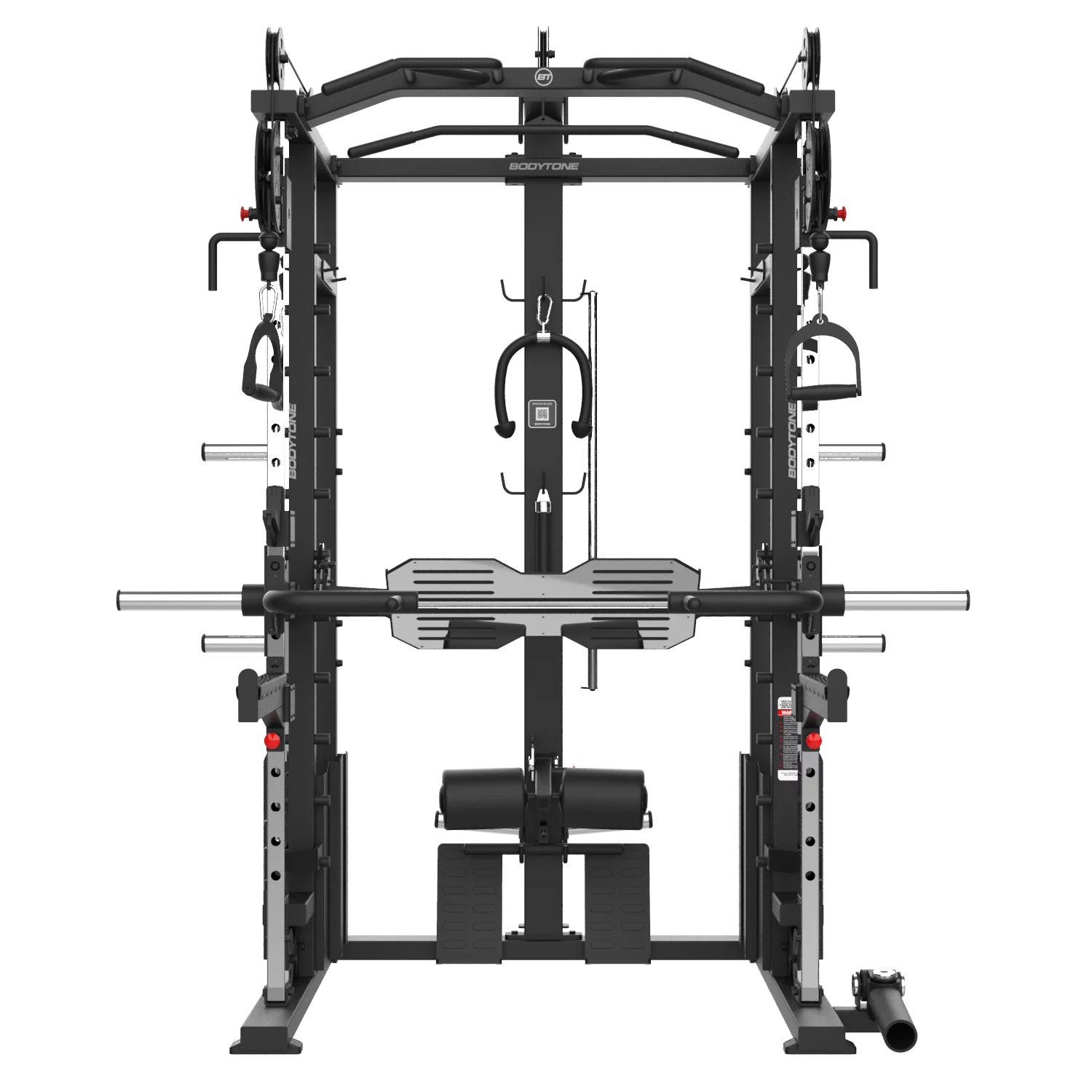
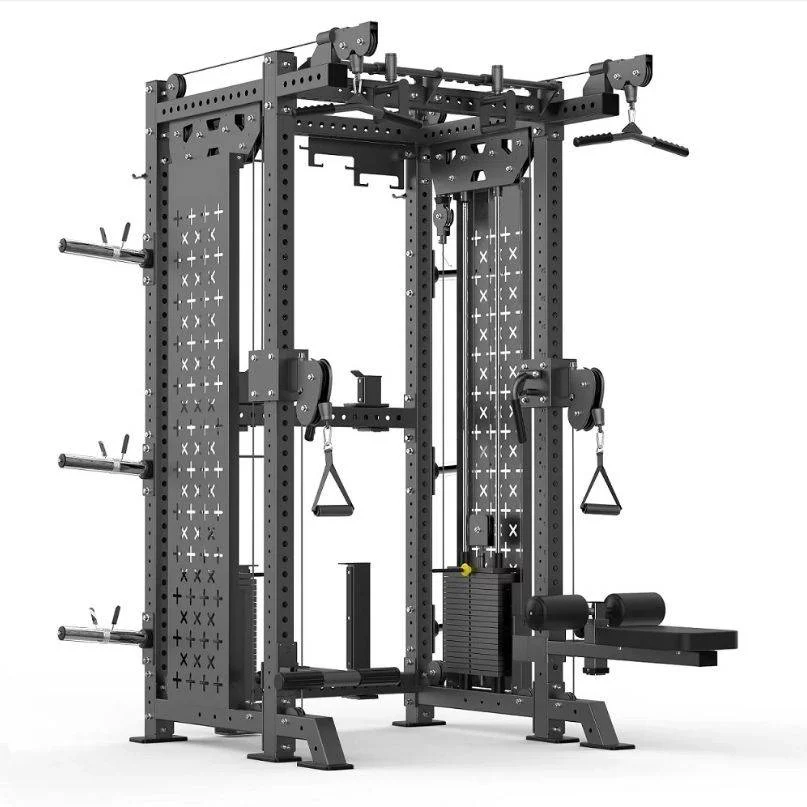
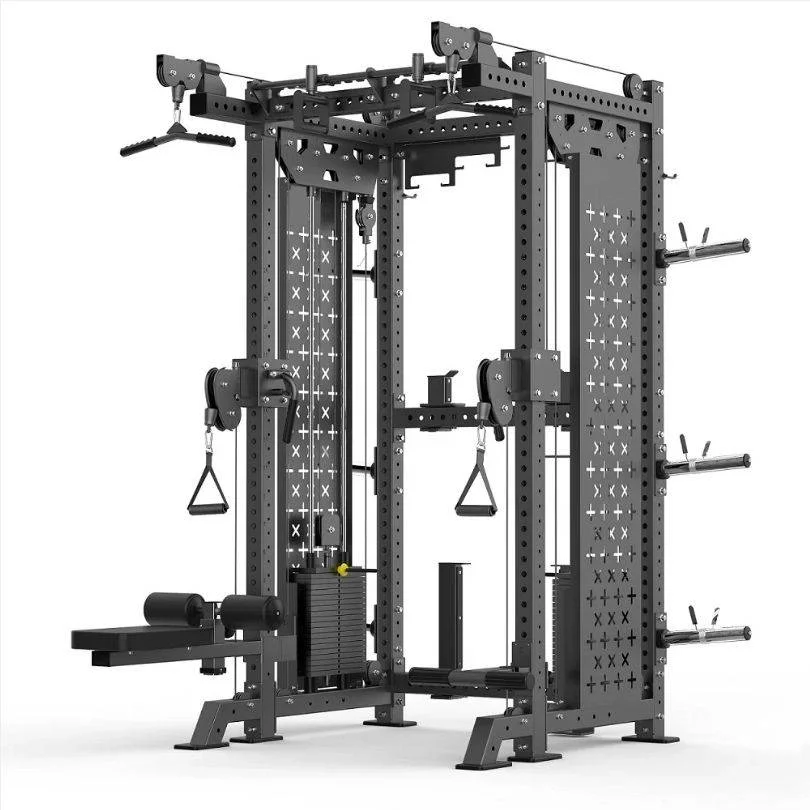
Multi functional Smith Trainer with opposing cable pulleys
Multi functional Smith Trainer with opposing cable pulleys : professional multi station gyms, marque Light In Fitness, 3 950,00 EUR excl. VAT. Masse 285 kg. Delivery and installation priced on quotation across Europe.
3,950.00 € excl. VAT
i.e. 4,740.00 € incl. VAT · VAT 20% · financement crédit-bail 36 à 60 mois
Guided smith bar combined with two height adjustable opposing pulleys on one 285 kg frame. Covers squat, bench press and full cable work.
Quotation = itemised pricing with delivery, installation and trade discounts, within 24 business hours. No commitment. Our commitments
Conformity: the Light In Fitness declaration of conformity for this reference is supplied on request with the quotation.
Light In Fitness warranty: steel frame with 20-year warranty (designed by Light In Fitness in Tours, France, manufactured in Europe), wear parts 6 months — detailed conditions. Our custom design service.
Description
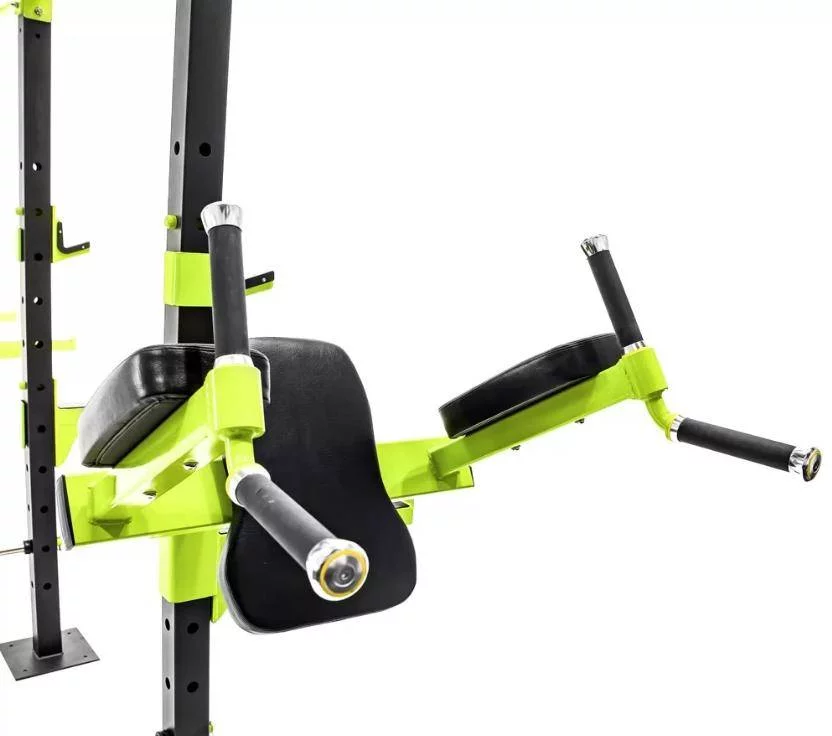
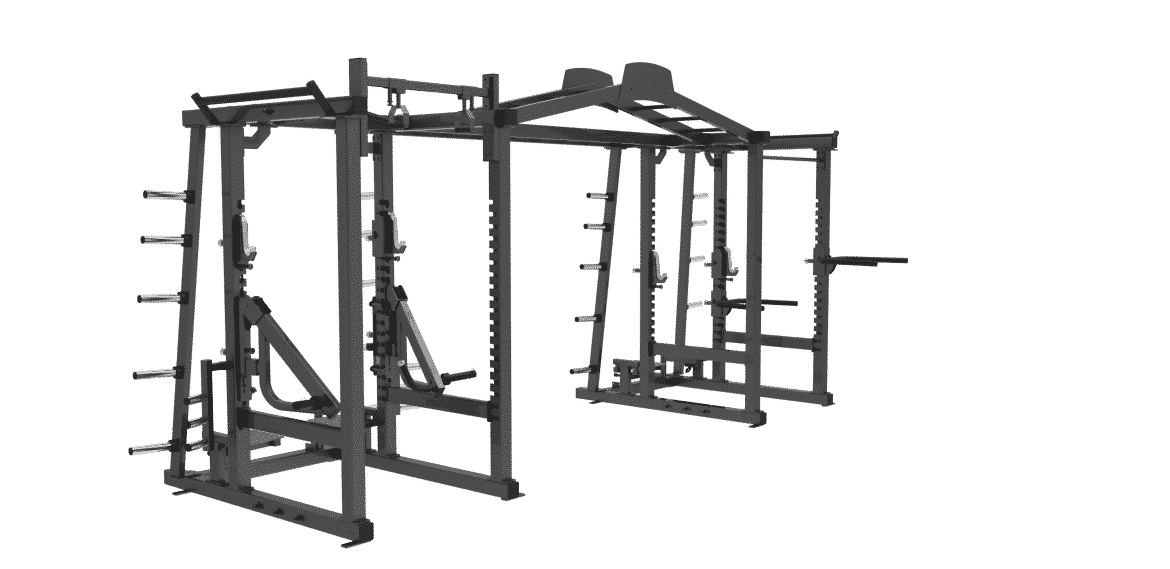
The Multi functional Smith Trainer combines a guided smith bar with a pair of height adjustable opposing pulleys on a single 285 kg frame. One structure covers guided barbell work and free cable work, which is why it appears in rooms that cannot justify both a smith machine and a cable crossover.
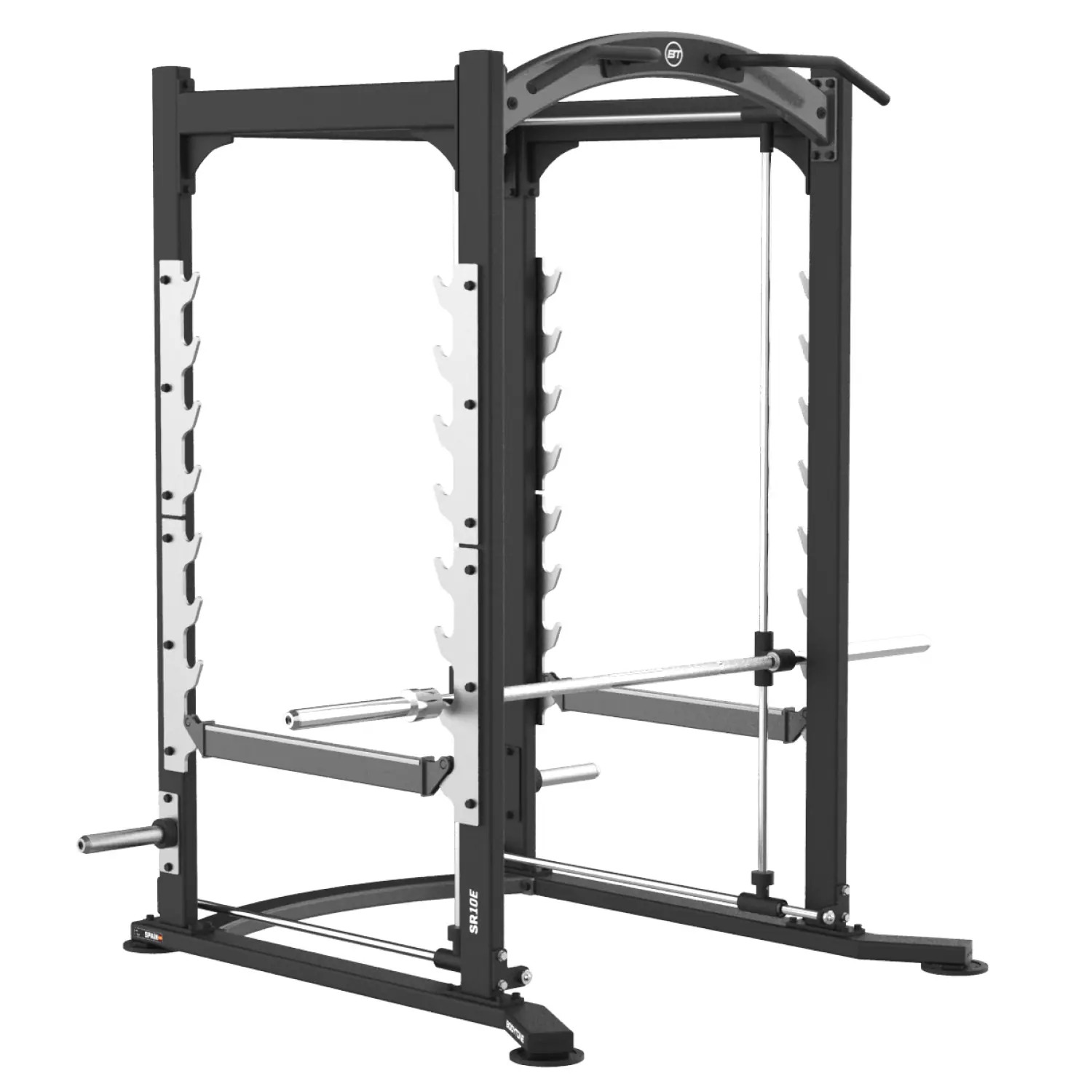
The smith bar runs on a fixed vertical path, so squats and bench presses can be performed without a spotter and stopped at any height. That is the safety argument, and it is the reason a beginner will attempt a loaded squat on this machine having never touched a free barbell. The opposing pulleys then cover everything a fixed bar cannot: rotation, single arm work, presses and pulls at any angle, with the carriages raised or lowered on the uprights to suit the exercise and the user.
Working with body weight and the facing pulleys, the station supports isolation exercises that need a clean line of resistance rather than a fixed path. The frame stands 2386 mm tall on a 1790 by 1935 mm footprint and weighs 285 kg, which is what keeps it stable when a user loads one side of the cable system.
Technical specification
| Model | Multi functional Smith Trainer |
| Reference | LIF-16391 |
| Dimensions | 1790 x 1935 x 2386 mm |
| Machine weight | 285 kg |
| Guided bar | Smith bar on a fixed vertical path |
| Cables | Two opposing pulleys, height adjustable on the uprights |
| Exercises | Squat, bench press, presses, pulls, rotation, single arm work |
| Intended use | ISO 20957-1 class S, professional and commercial |
| Price | 3,950 EUR excluding VAT |
Combining guided and free resistance in one footprint
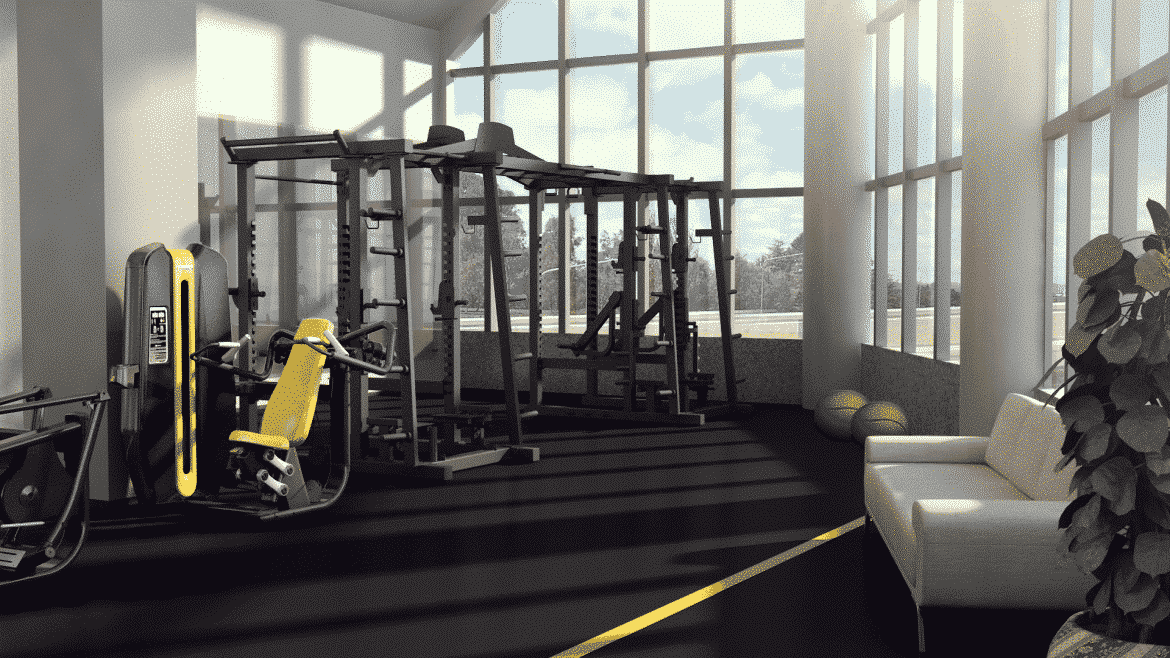
Clubs under about 300 square metres, hotel and residential gyms and personal training studios face the same problem: a smith machine and a cable station each need their own footprint, and neither on its own covers a full programme. Putting both on one frame resolves that, and it also concentrates the coaching, since a trainer can run an entire session from one position.
Height is the first check, at 2386 mm plus clearance for the bar at the top of its travel. Then plan the working area: users need space in front of the pulleys on both sides as well as inside the frame for the bar, so the machine should not be pushed into a corner. A siting plan with clearances is issued with the quotation once we have your room drawing. We deliver to France, Belgium, Switzerland and Luxembourg, quote export per project, and dispatch within five to ten working days from stock.
Frequently asked questions
Is a smith bar a substitute for a free barbell?
No. The fixed path removes the balance component, which is the point for a beginner and the limitation for an experienced lifter. Clubs with a free weight area usually carry both.
What can the opposing pulleys do that the bar cannot?
Anything that is not a straight vertical line: rotations, single arm presses and pulls, flies, and any exercise where the angle of resistance has to change to suit the movement.
Does it need bolting to the floor?
At 285 kg the frame is stable in normal use, but bolting is recommended for unsupervised commercial access. Tell us the floor construction and we will confirm the fixing detail on the siting plan.
Request a quotation and receive a costed proposal within 24 working hours, or view the multi station gym range.
Additional information
| Weight | 285 kg |
|---|