
Parkour equipment for parks
Parkour equipment for parks: our professional selection
Repères de gamme — 12 modèles, dont 12 à prix affiché : 6 915 €–156 550 € HT par appareil ; 12 modèles conçus à Tours et fabriqués en Europe (calcul du 30/09/2026).
Parkour equipment for parks is a set of modules that reproduce urban obstacles in a controlled outdoor space, suitable for learning and for advanced practice. It is specified by local authorities, urban parks, schools, sports complexes, military bases and private leisure sites. Modules are manufactured in galvanised steel, stainless steel or high strength concrete, and are built to withstand weather, UV exposure and intensive use. Equipment for freely accessible outdoor sports areas complies with EN 16630.
The framework behind our playgrounds and trails
| Standards applied | EN 1176:2015 for playground equipment, EN 16630:2015 for permanently installed outdoor fitness, EN 1177 for impact-attenuating surfacing |
|---|---|
| Certification | Ranges tested and certified by an independent body, TÜV Rheinland on the TRAINER ranges — certificate supplied on request |
| Data published per reference | Age range, free fall height, safety zone, foundation depth and overall dimensions |
| Materials | Hot-dip galvanised and powder-coated steel, stainless steel, HPL and HDPE panels, laminated timber, braided polyamide ropes |
| Impact-attenuating surfacing | Sized from the equipment free fall height, never from its product family |
| Structural warranty | 20 years on steel structures, lifetime on stainless structures manufactured by Light In Fitness |
| Spare parts | Available for at least 20 years after delivery |
| Statutory inspections | Downloadable inspection log, compliant with French decree 96-1136 for public play areas |
| Design and manufacturing | Structures designed in Tours, France and manufactured in Europe — priced quotation within 72 hours |
Showing all 12 resultsSorted by latest
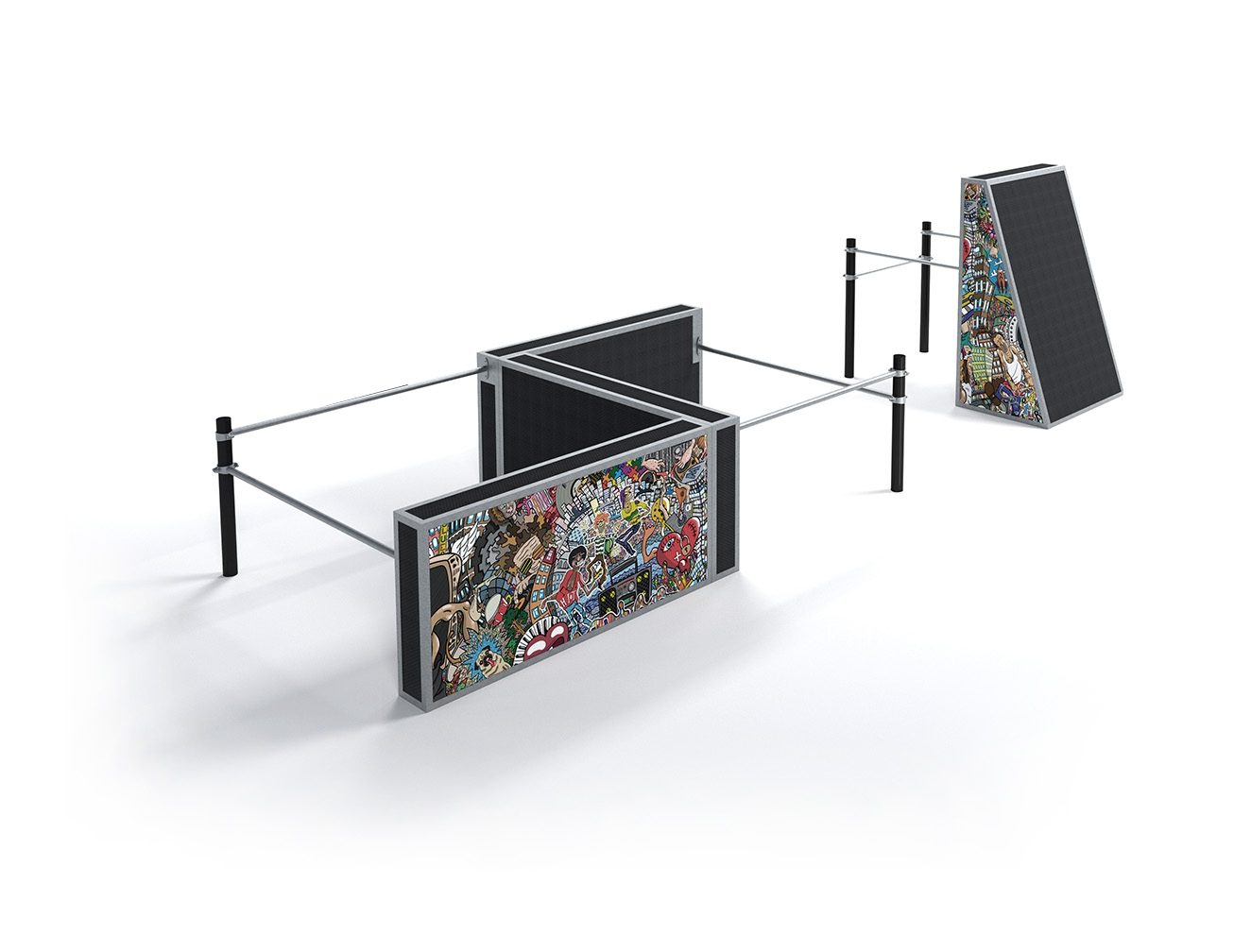
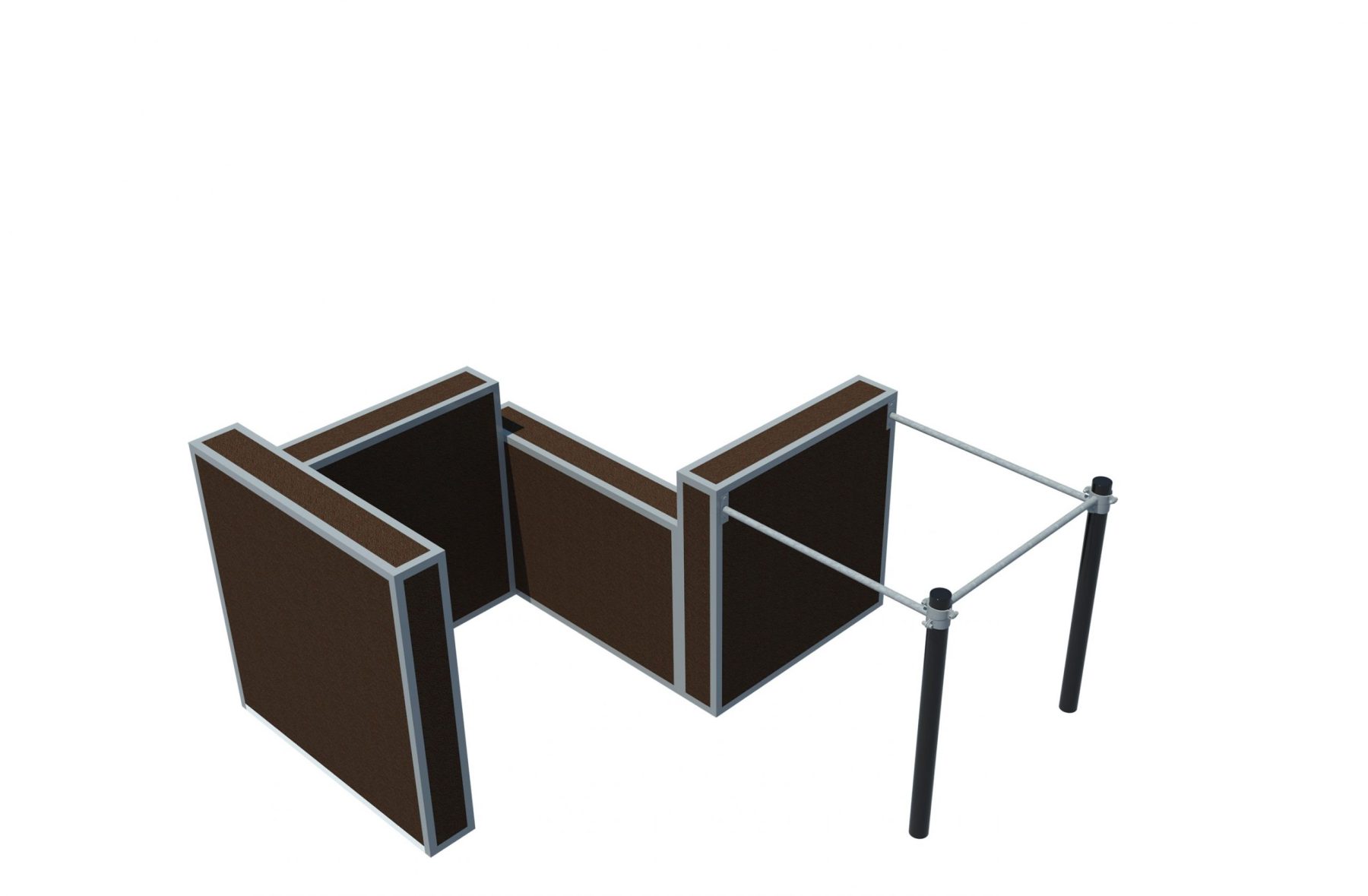
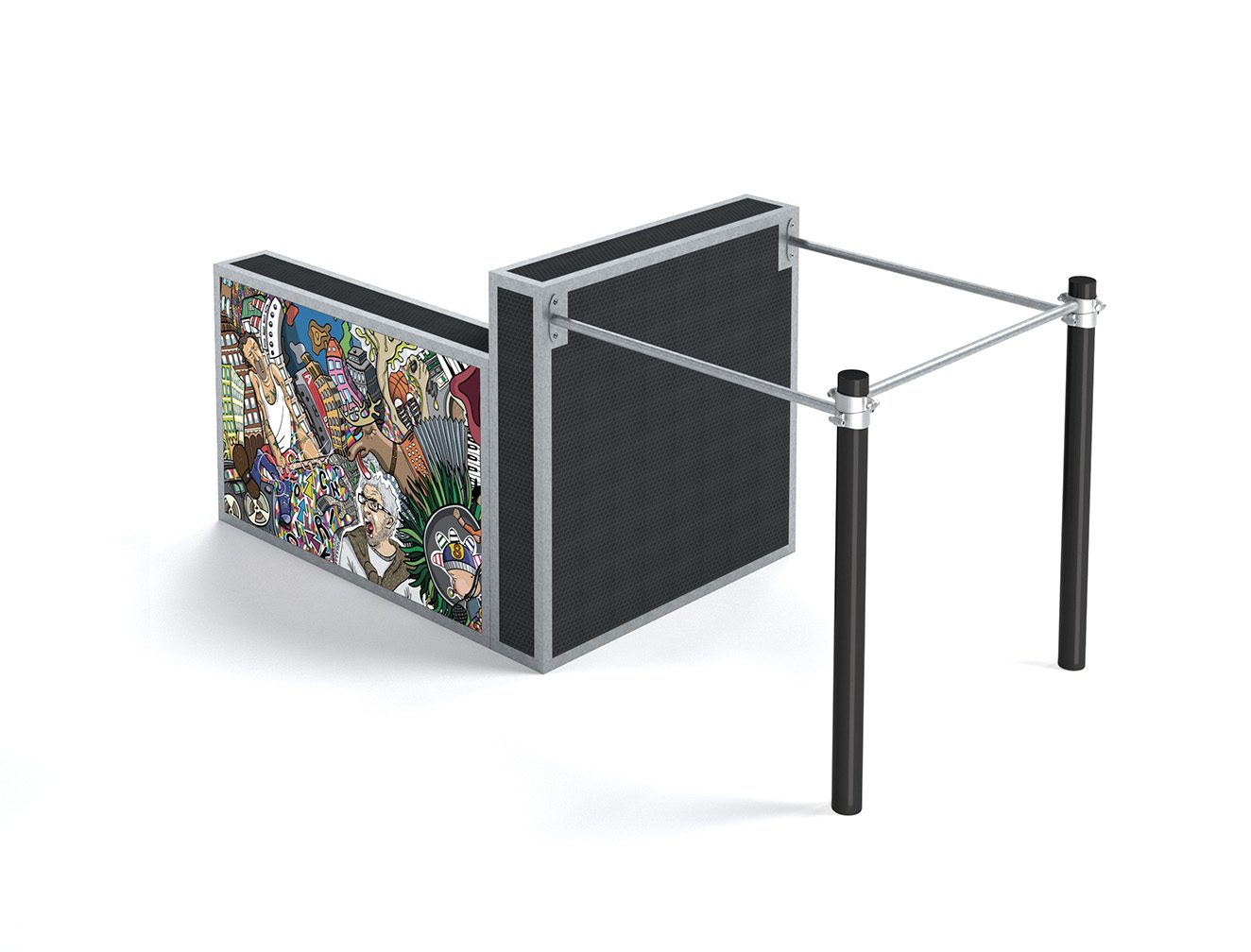
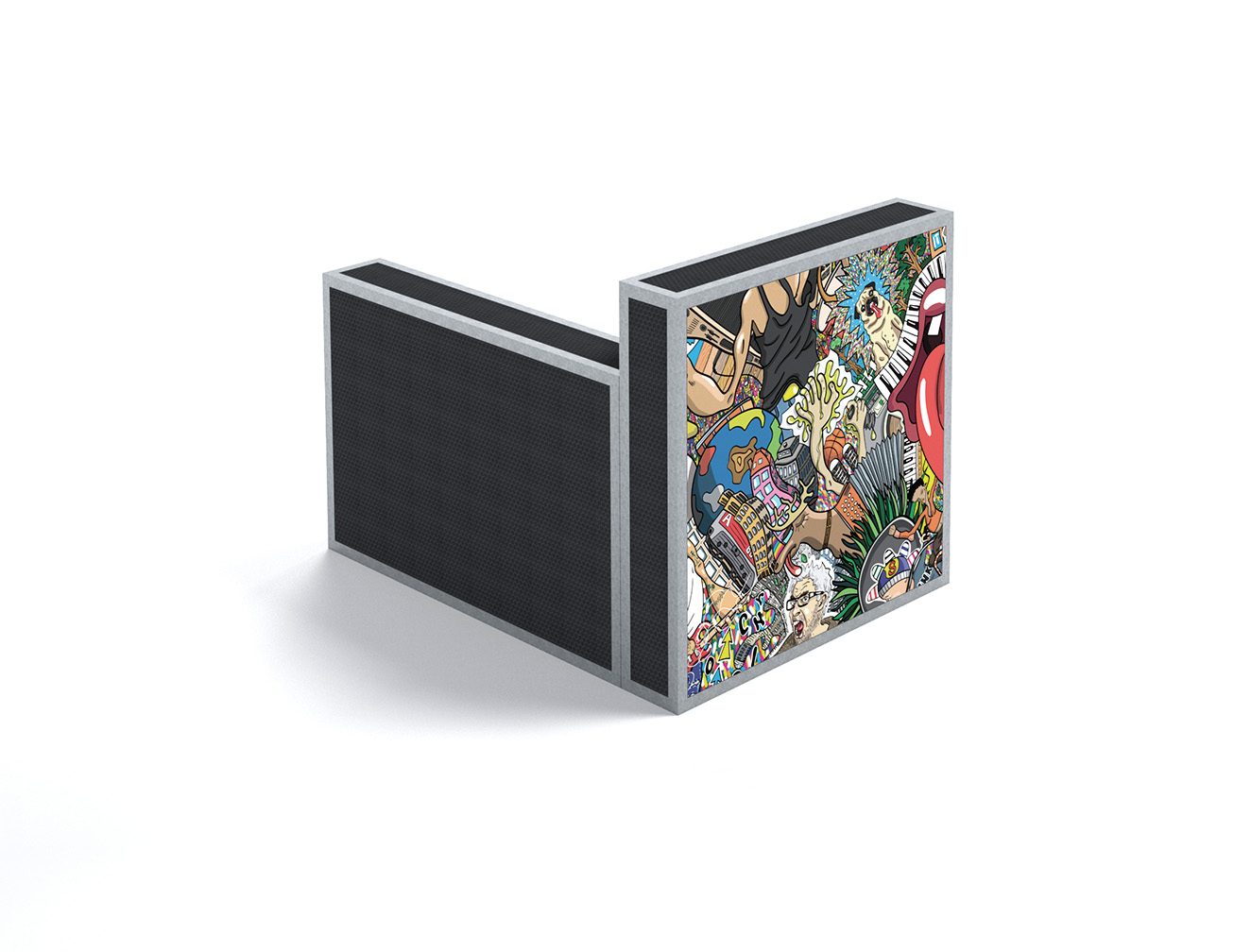
What a parkour park contains
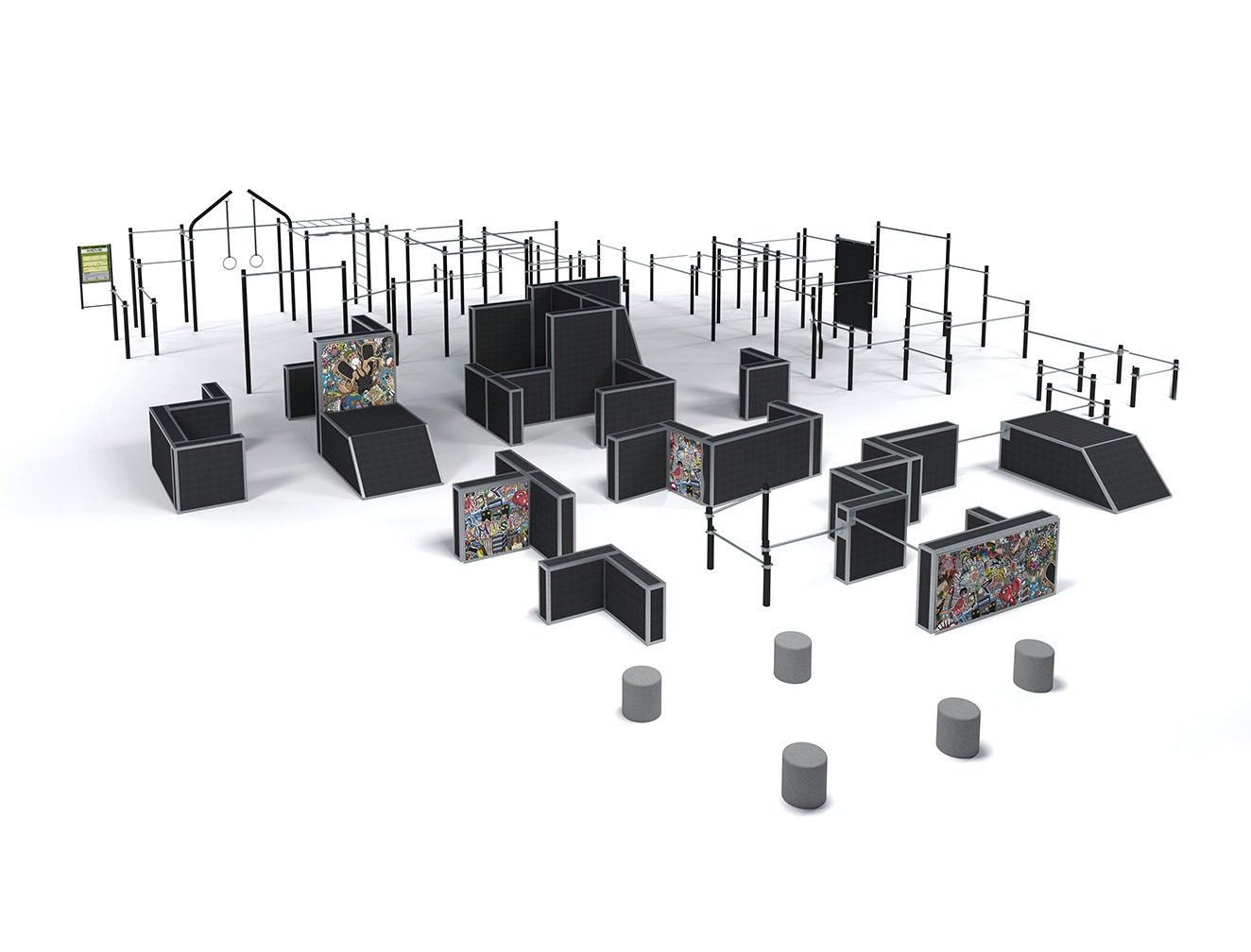
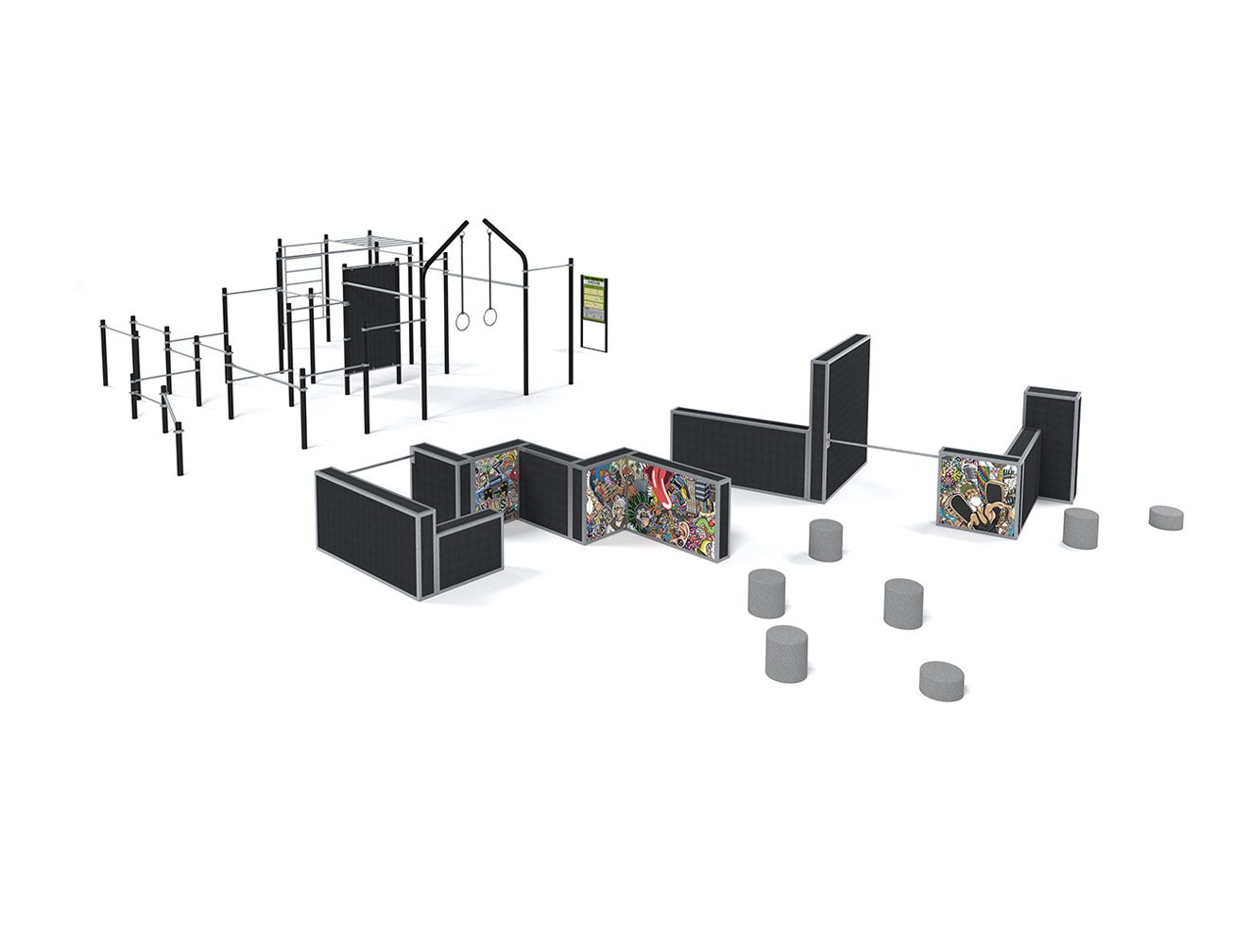
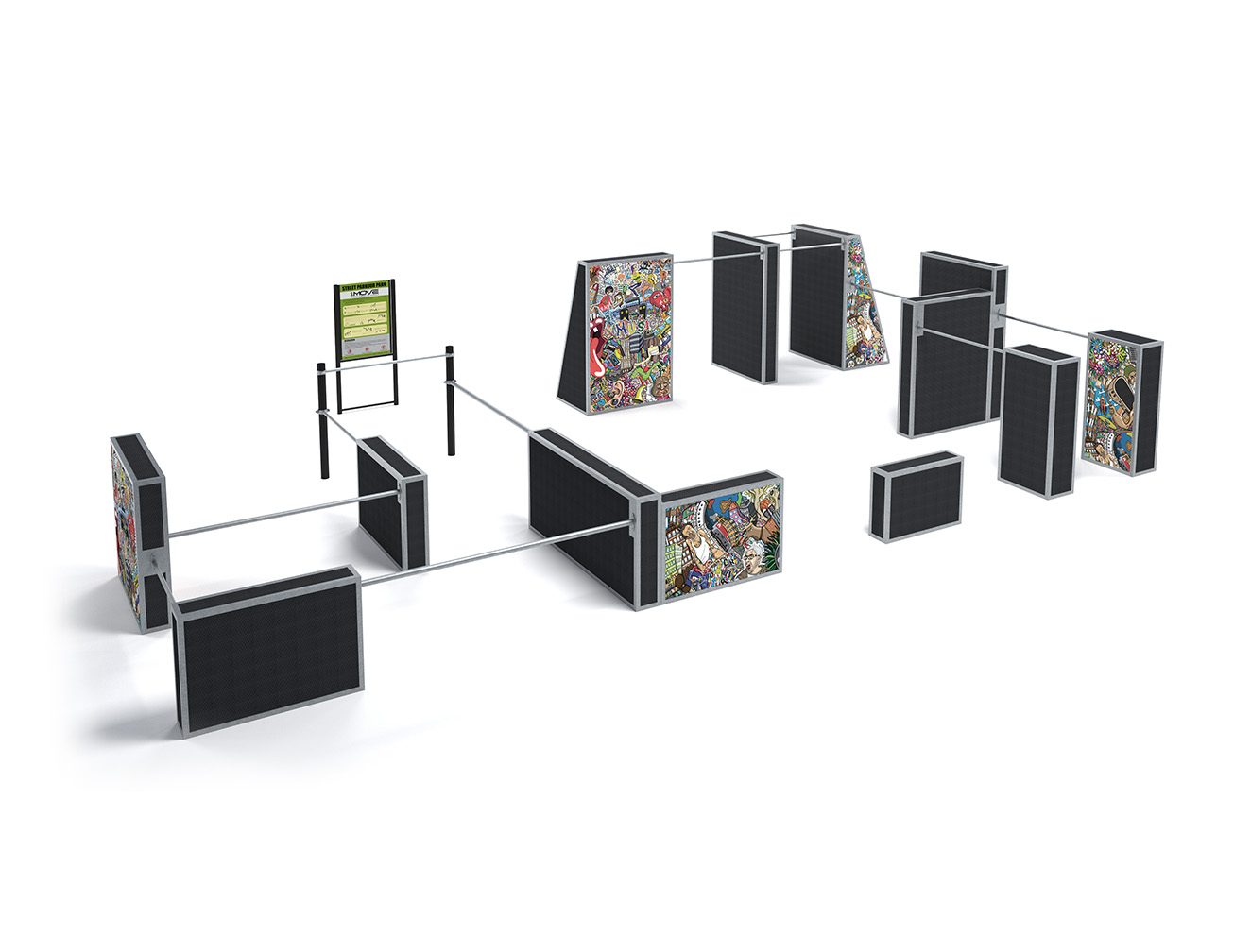
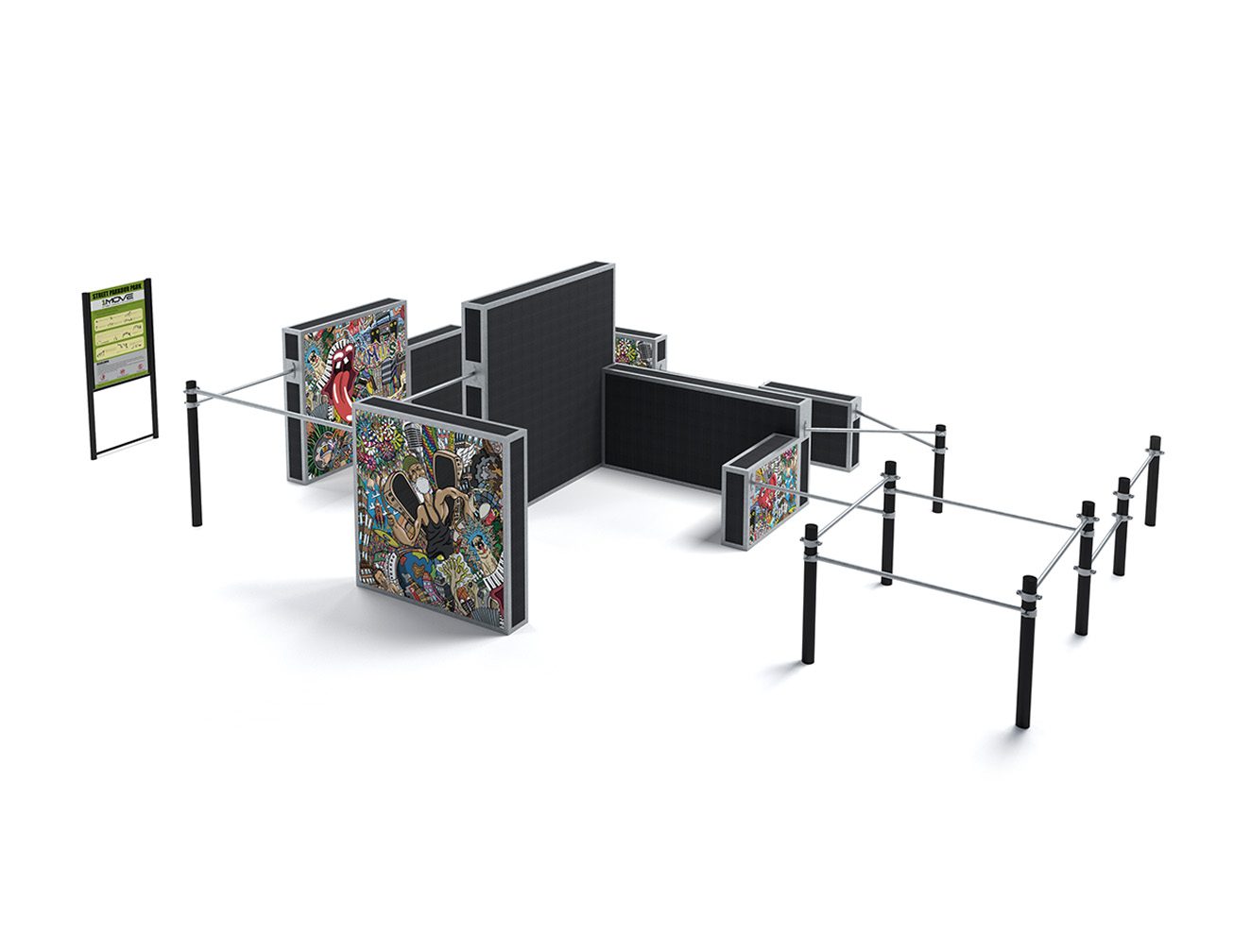
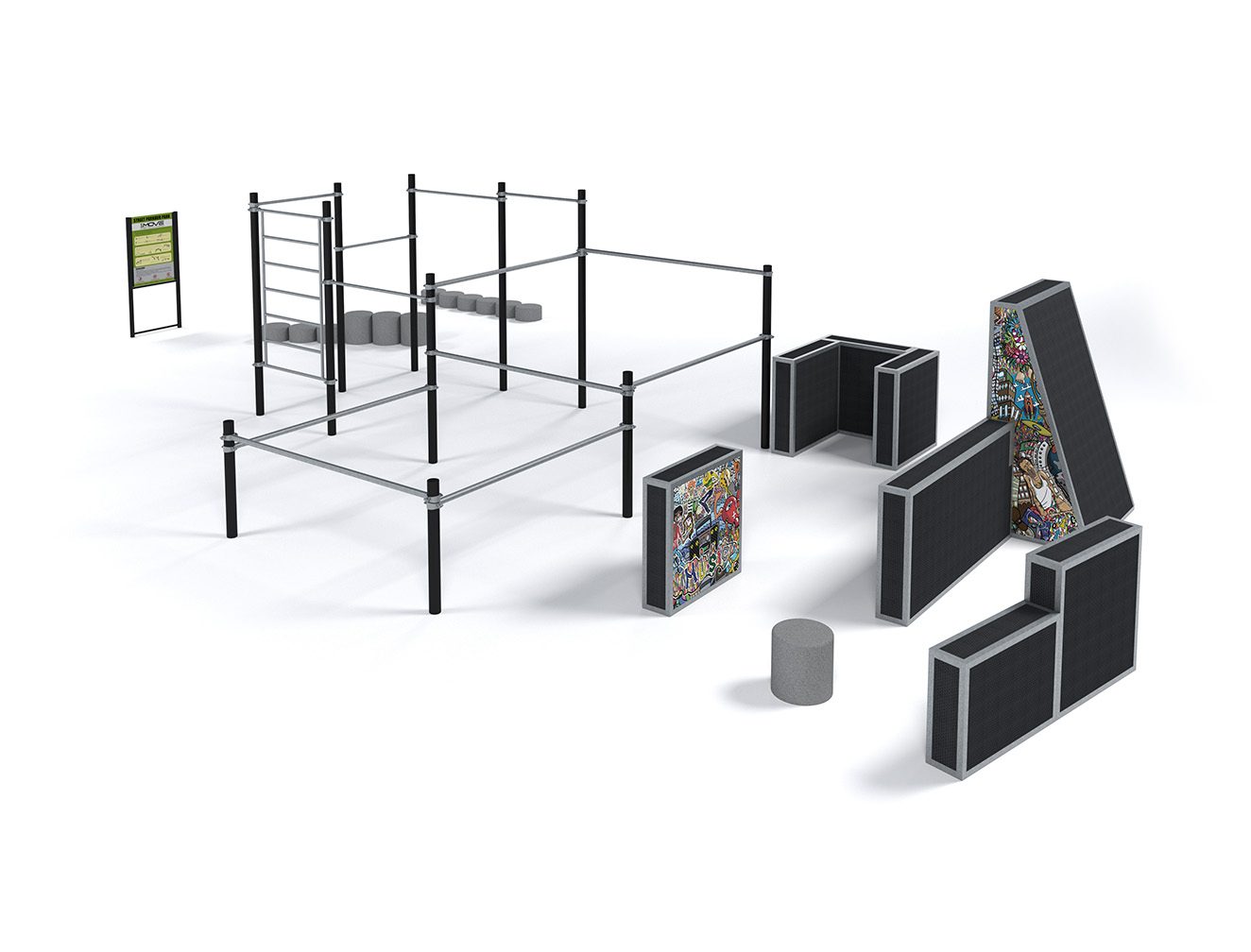
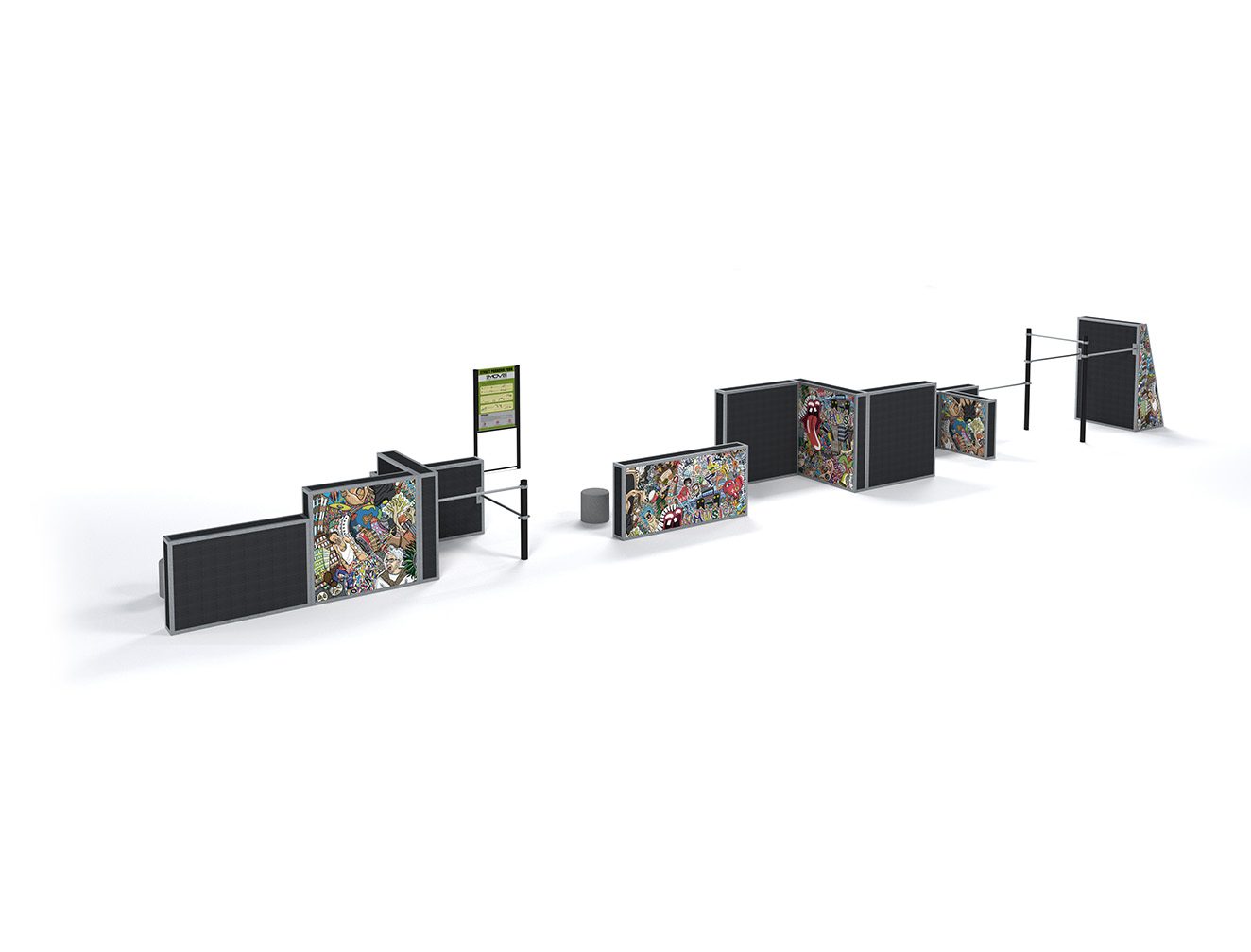
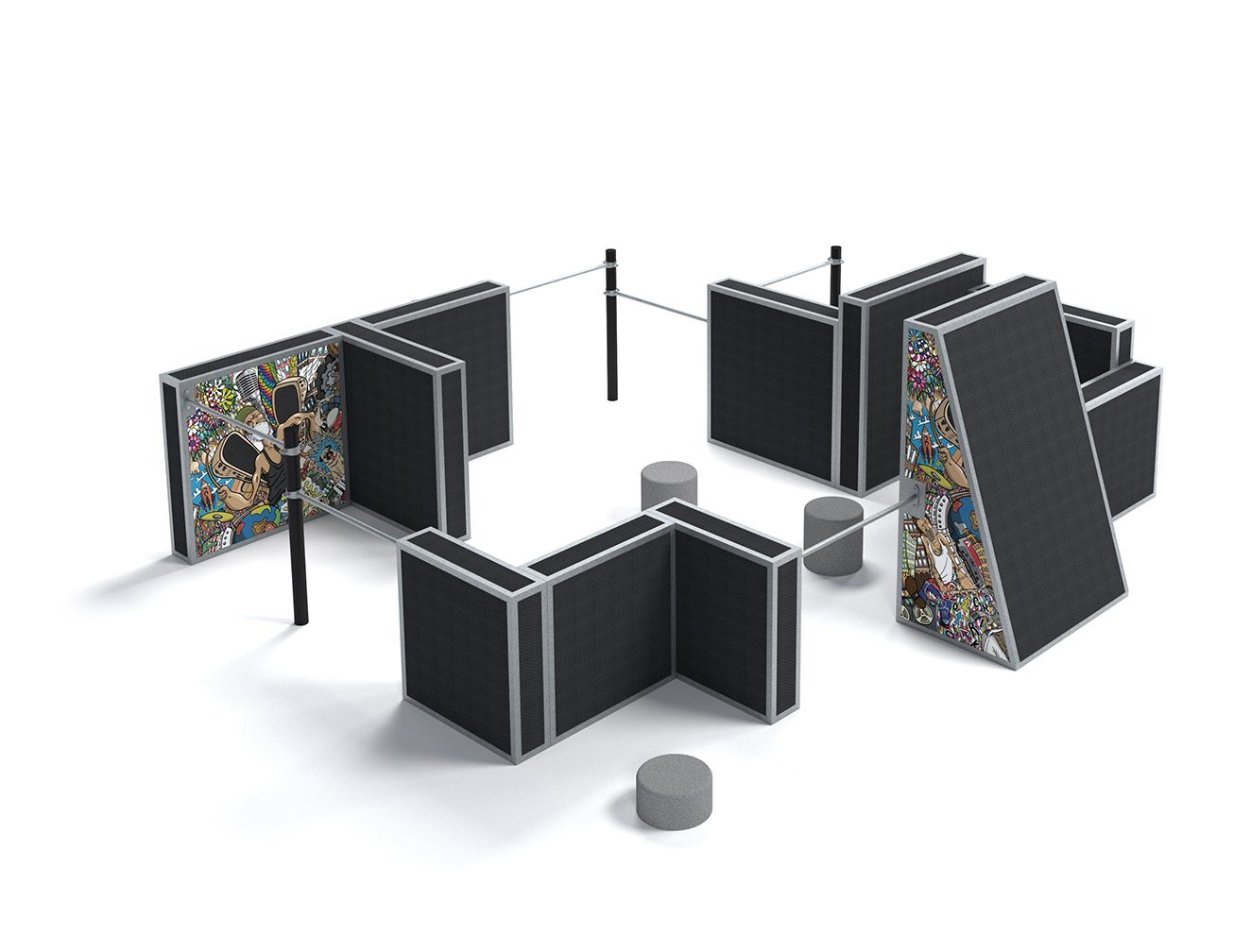
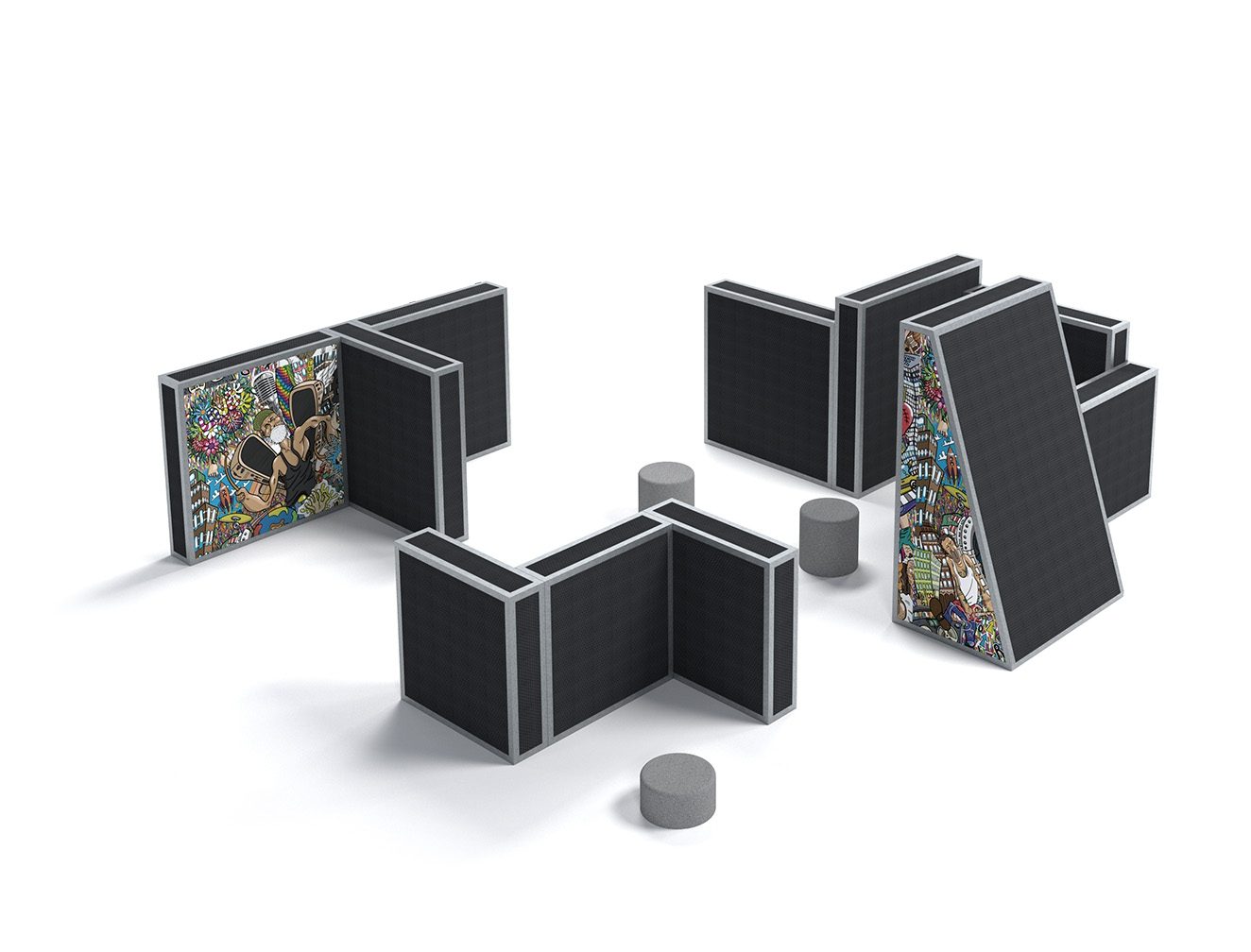
A park combines modules that let a practitioner vary the obstacle sequence: vaulting walls at several heights, fixed bars, parallel bars, platforms, ramps, balance beams, boxes and inclined modules. Each element trains a specific quality, whether speed, coordination, power, flexibility, balance or movement precision, and the mix determines whether the park serves beginners, experienced traceurs or both. Because the layout is modular, the same catalogue serves a compact school installation and a large urban park.
How to lay out a park
The design question in parkour is not the module list but the distances between modules, since those distances define the difficulty and the progression.
| Level served | Module heights | Spacing approach | Typical site |
|---|---|---|---|
| Beginner and school use | Low walls, low platforms, beams | Short gaps, ground level landings | School yards, youth centres |
| Mixed public park | Graded low to medium heights | Progressive gaps, multiple routes | Municipal parks, urban plazas |
| Advanced practice | Medium and high modules | Long gaps, level changes | Dedicated parkour parks, clubs |
| Military and emergency service | Full range, loaded work | Circuit format, group throughput | Bases, training grounds |
Surfacing, standards and safety
Parkour modules have free heights of fall by definition, so impact absorbing surfacing under and around the modules is part of the project, sized from the highest usable element rather than chosen for comfort. Outdoor rated coverings on a drained sub base are required for permanent exposure: see outdoor sports flooring. EN 16630 covers freely accessible outdoor sports equipment, its safety requirements, protection zones and maintenance plan. Where the area is also declared as a play area for children, EN 1176 applies to the equipment and EN 1177 to the surfacing. Technical sheets, declarations of conformity and test reports are supplied with the offer.
Installation, maintenance and warranty
Modules are anchored in concrete footings sized to the element and to the ground. Standard delivery covers France, Belgium, Switzerland and Luxembourg, export is priced per project, and stocked references ship in 5 to 10 working days. Maintenance consists of routine visual inspection, checking fixings, inspecting edges and grip surfaces, and an annual main inspection. Warranty runs from 2 to 5 years depending on the range, with extensions available on steel structures.
Frequently asked questions
How much space does a parkour park need?
More than the modules themselves suggest, because the gaps between them are the exercise and each module carries a protection zone. A compact installation of a few well spaced modules is more usable than a crowded one with twice the equipment. We size the area on the layout drawing before quoting.
Is parkour equipment suitable for children?
Low modules are used by children and are commonly installed in schools, but the area then has to be designed for that public, with reduced heights and appropriate surfacing. If the site is declared as a play area, EN 1176 and EN 1177 apply rather than EN 16630 alone. Tell us the intended age range at enquiry stage.
Steel or concrete modules?
Steel modules are lighter, faster to install and easier to reconfigure, which suits phased projects. Concrete modules give a surface and a mass closer to the urban environment the discipline draws on, and they resist impact and vandalism well. Many parks combine the two, using concrete for the fixed core and steel for bars and rails.
Send us the site plan, the intended level of practice and the age range, and we will return a module list with a layout drawing. Request a quotation for a reply within 24 working hours.