How to Choose a Rowing Machine for a Professional Gym
Un rameur se choisit sur son type de résistance : à air pour l'usage intensif et le travail en intervalles, à eau pour le ressenti, magnétique pour le silence. La longueur du rail doit convenir à la taille des utilisateurs. En usage collectif, la classe d'usage et la disponibilité des pièces deviennent déterminantes.

The rowing machine is one of the few cardio stations that works the upper and lower body at once, which is why it has become standard equipment in gyms, cross-training boxes, hotel facilities and rehabilitation centres. Choosing one for a commercial floor is a different exercise from choosing one for a single user: what matters is the resistance type, the fit of the rail to your user population, and whether the machine and its spare parts will still be serviceable in five years.
Resistance types
The resistance system defines the feel of the stroke, the noise the machine makes and the kind of training it supports.
- Air resistance: the flywheel is braked by air, so resistance rises with the effort applied. It is the reference for intensive use and interval work, which is why it dominates in cross-training and conditioning settings. It is also the loudest option, which has to be considered when siting the machines.
- Water resistance: a paddle turning in a water tank gives the closest sensation to rowing on the water, with a softer sound. It appeals to members who train for the feel of the stroke rather than for measured intervals.
- Magnetic resistance: an electromagnetic brake gives near-silent operation and precise, repeatable resistance levels set from the console. It suits shared buildings, hotels, offices and rehabilitation rooms where noise is a constraint.
- Hydraulic resistance: pistons provide the resistance in a compact, often foldable frame. It is the most space-efficient format and the least representative of the rowing stroke.
- Chain or cable drive: a chain or steel cable transmission feels closer to traditional rowing and is generally the more robust build, which is what intensive training demands.
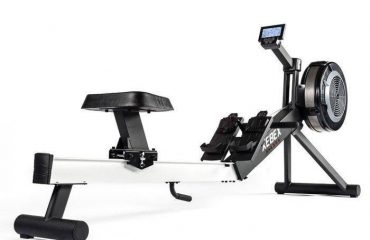
Our professional rowing machines cover these systems, and the Xebex air cardio range is built specifically for high-frequency interval use.
Features that matter on a commercial floor
- Console: an LCD or LCD-equivalent monitor showing heart rate, distance, calories and stroke rate is not a luxury. Without those figures, sessions cannot be programmed or progressed, and coaches cannot compare one member’s work with another’s.
- Adjustable footplates: footplates that adjust across the full range of shoe sizes, with straps that hold the foot without pinching, are what make one machine usable by an entire membership.
- Rail design: a well-designed rail gives a smooth, quiet slide and keeps the load on the legs rather than on the knees and hips. Check the rail length against the height of your tallest expected user before ordering.
Siting, noise and footprint
Rowing machines are long, and the space they need is the rail length plus clearance behind the flywheel and beside the handle sweep. Foldable or upright-storable frames free floor area between sessions, which is useful in multi-purpose rooms, studios and hotel facilities. Noise is a siting decision: air rowers next to a reception desk or a treatment room will generate complaints that magnetic machines never would.
What the rowing stroke actually trains
Rowing recruits the legs, glutes, back, core, shoulders and arms in a single chain, which is what makes it a genuinely full-body cardio station rather than a leg machine. That same property makes it useful for conditioning work and, with the load controlled, for rehabilitation programmes, since the movement is non-impact throughout.
Commercial use and duty class
For a facility open to members, the duty rating is the specification line that decides the purchase. Indoor equipment for professional use should be certified to EN ISO 20957-1 class S, and equipment intended for inclusive access falls under class I, which is a professional class in its own right and not a level above class S. Alongside the certification, check the stated maximum user weight, the warranty terms and, above all, whether consumables and spare parts are still available for the model. A rowing machine out of service for six weeks waiting for a chain is a machine that was bought badly.
Budget and value
Price varies with the resistance system, the frame construction, the console and the drive. Do not trade away build quality for a headline price: on a commercial floor, the cost per year of service matters more than the invoice, and the machines that survive are the ones specified for the traffic they actually receive. See the full professional cardio equipment range when you build the comparison.
Frequently asked questions
Air or magnetic for a commercial gym?
Air for interval and conditioning programming where noise is acceptable; magnetic where the room is shared with quiet uses or where precise, repeatable resistance levels are needed.
How many rowing machines does a floor need?
That follows your class formats and peak occupancy, not a general rule. Count the stations your busiest circuit needs and add for open training.
Does the rail length really matter?
Yes. A rail too short for a tall user cuts the drive phase and changes the movement. Take the usable rail length from the manufacturer specification and check it against your tallest expected user.
Is rowing suitable for rehabilitation?
The stroke is non-impact and the load is adjustable, which makes it a common choice in rehabilitation settings. The programme itself remains a clinical decision, taken by the practitioner responsible for the patient.
Choosing with us
Space, user population, noise constraints and duty cycle decide which rowing machine belongs on your floor. Light In Fitness supplies professional cardio equipment to gyms, clubs, hotels, local authorities, schools and rehabilitation centres, and can shortlist the models that fit your room and your traffic. Request a quote with your floor plan and expected attendance.