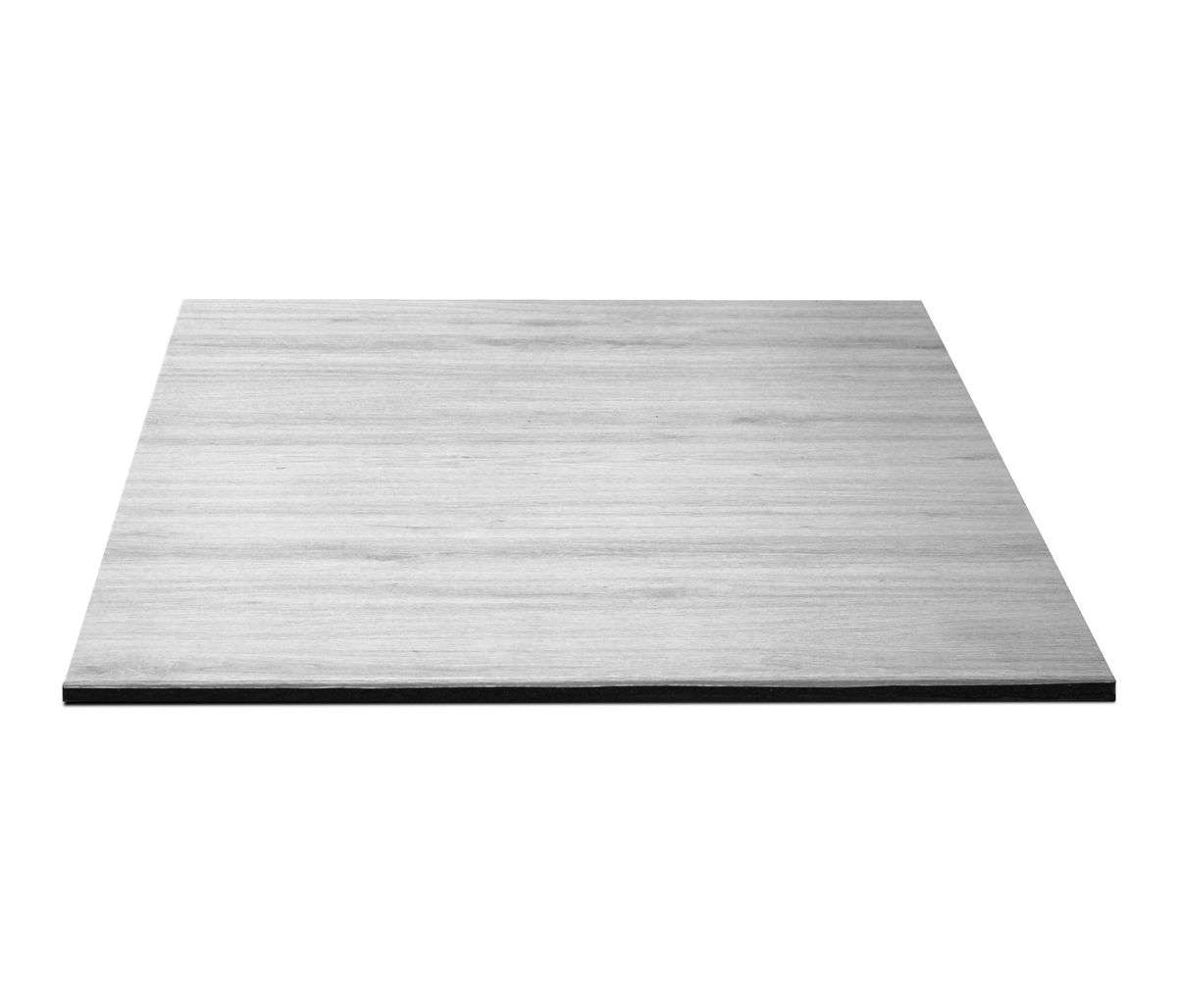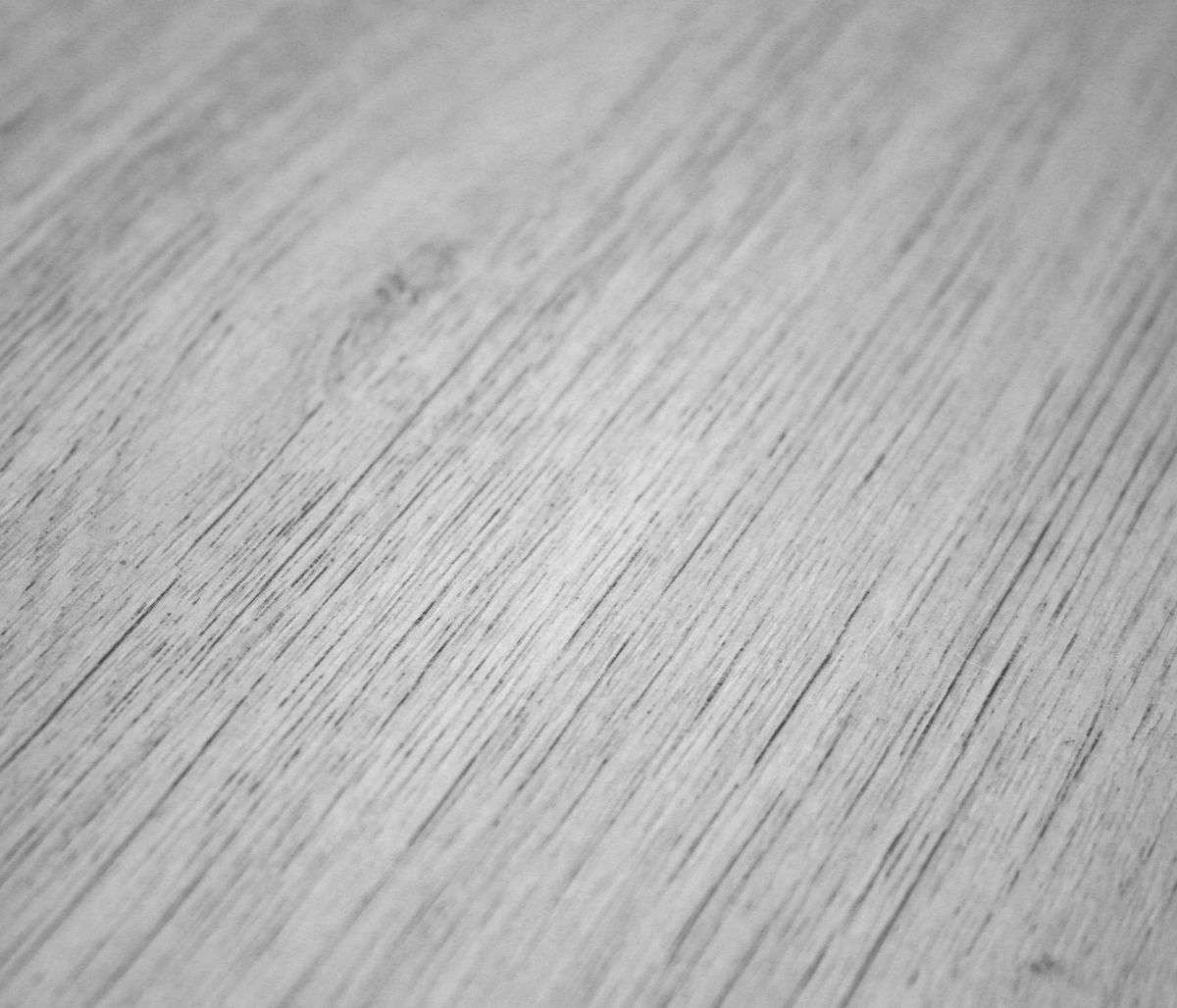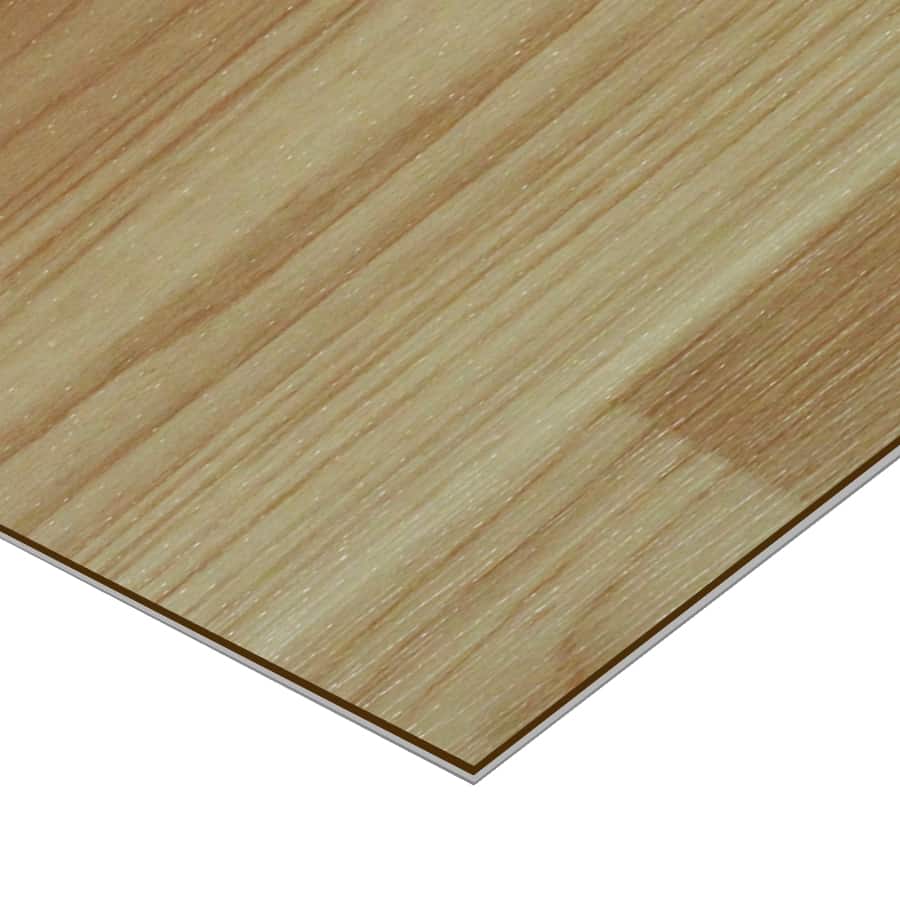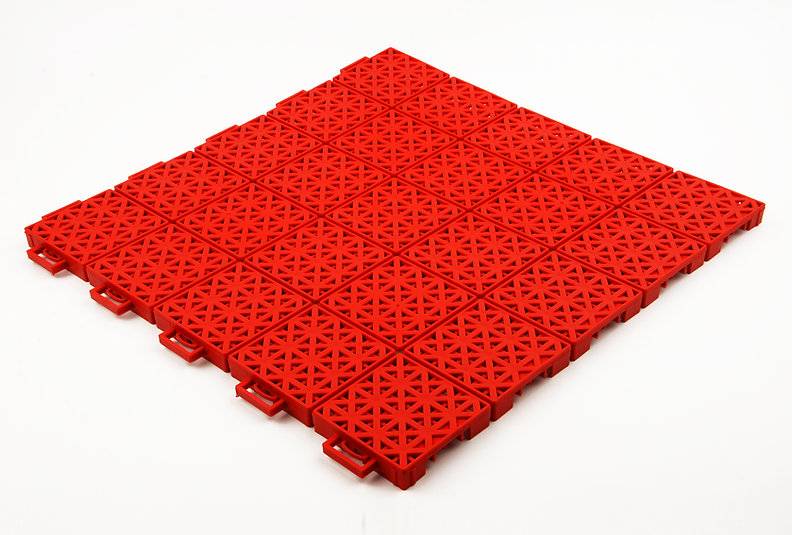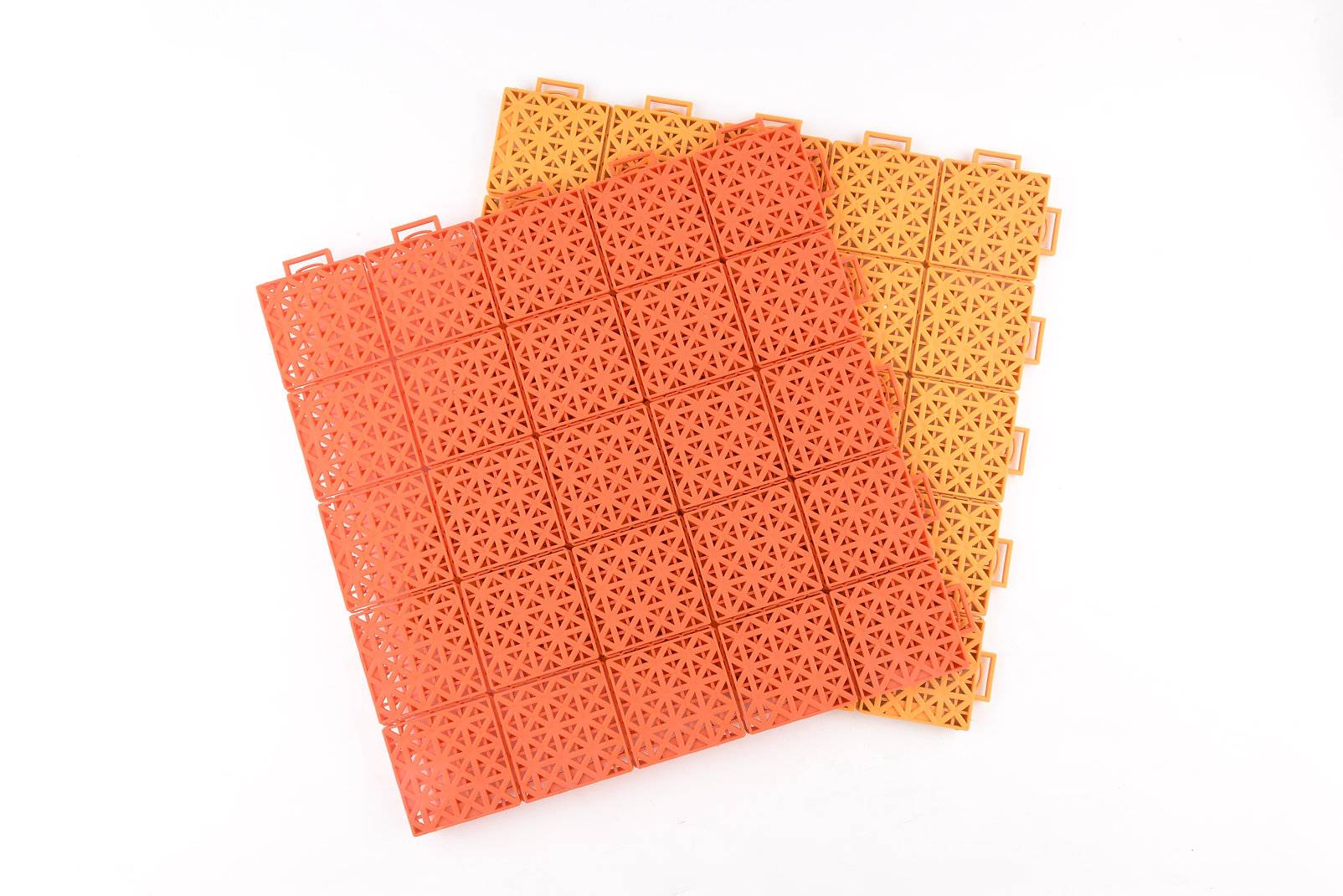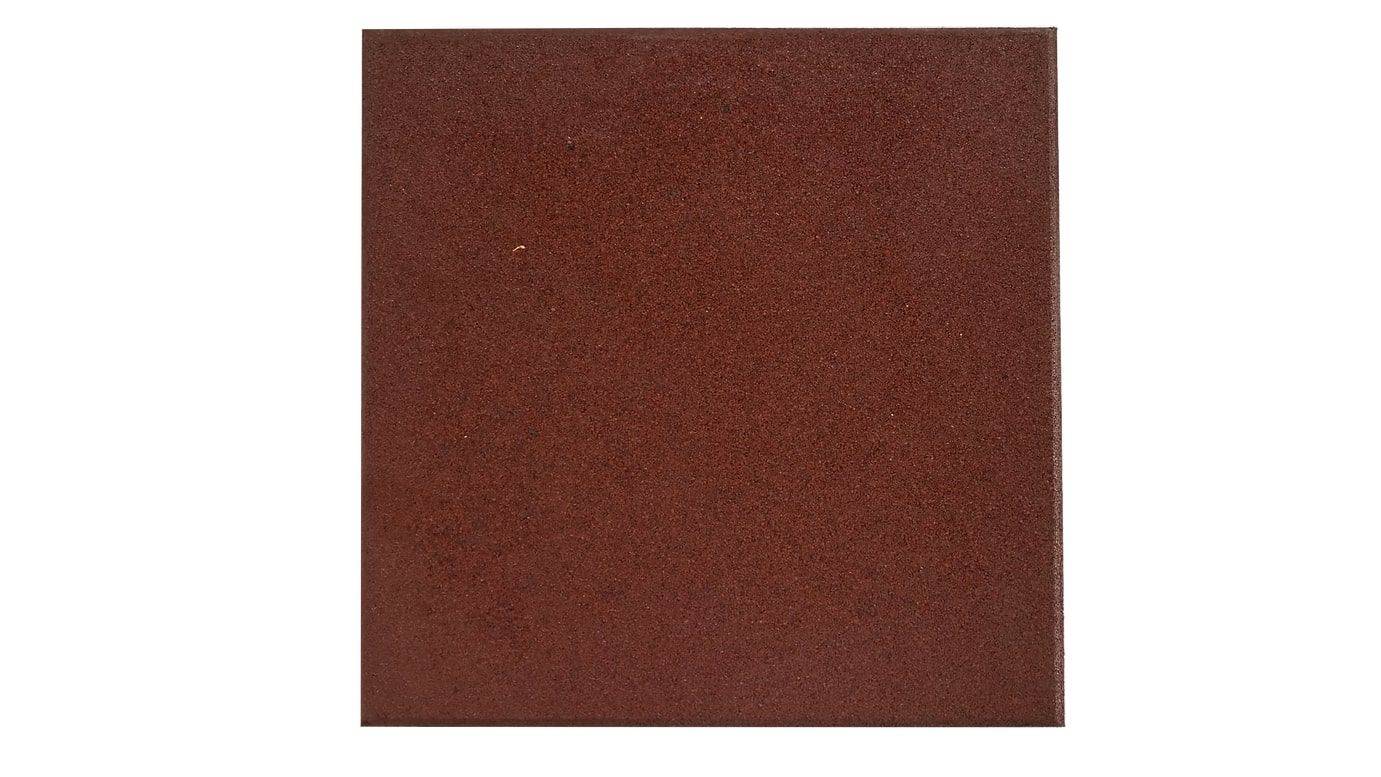
Light oak effect rubber floor tile, 20 mm and Cfl-s1
Light oak effect rubber floor tile, 20 mm and Cfl-s1 : wood effect shock absorbing rubber tiles, marque Light In Fitness, 49,00 EUR excl. VAT. Encombrement 100 × 100 × 2 cm, masse 18 kg. Delivery and installation priced on quotation across Europe.
49.00 € excl. VAT
i.e. 58.80 € incl. VAT · VAT 20% · financement crédit-bail 36 à 60 mois
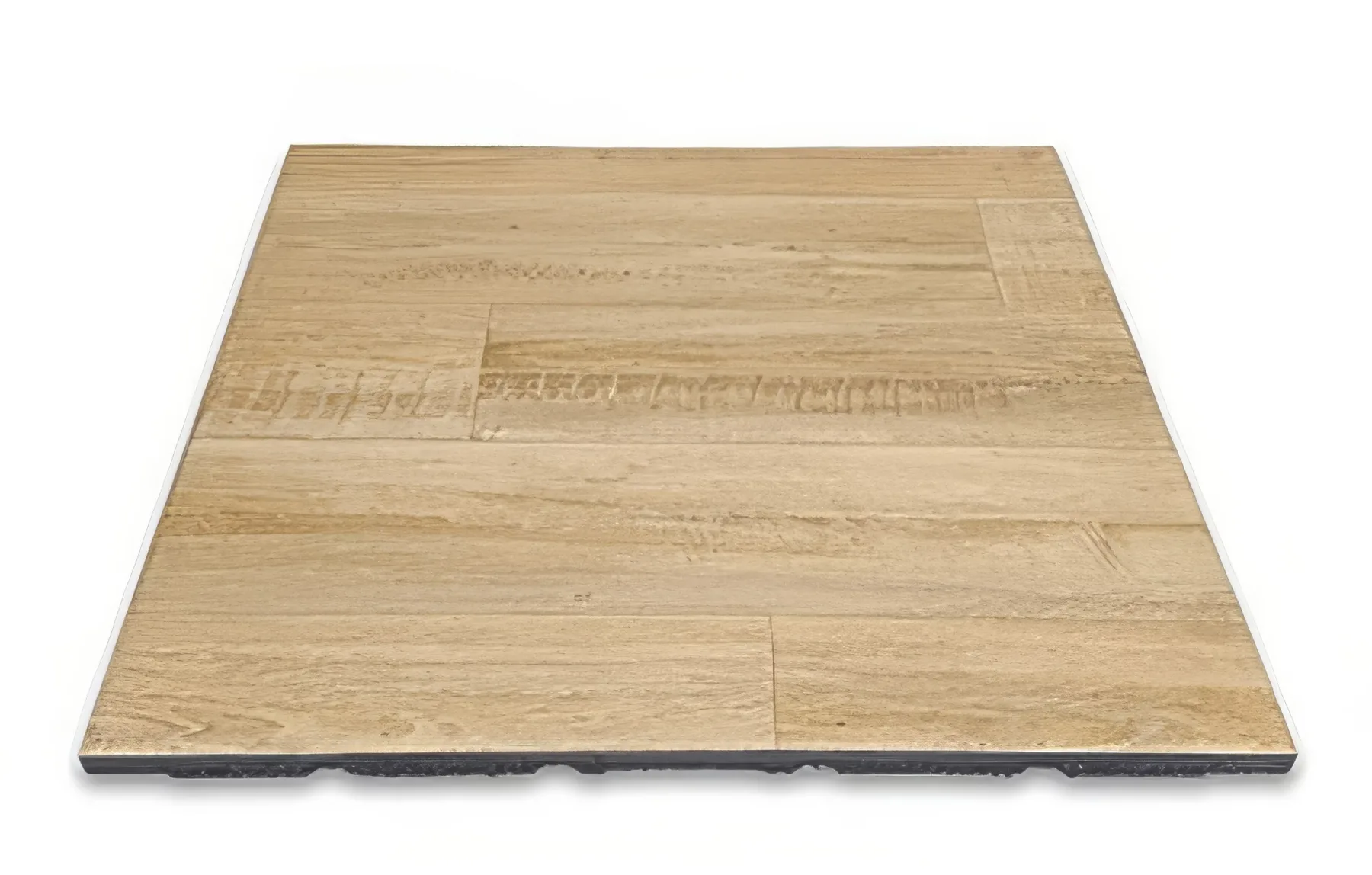
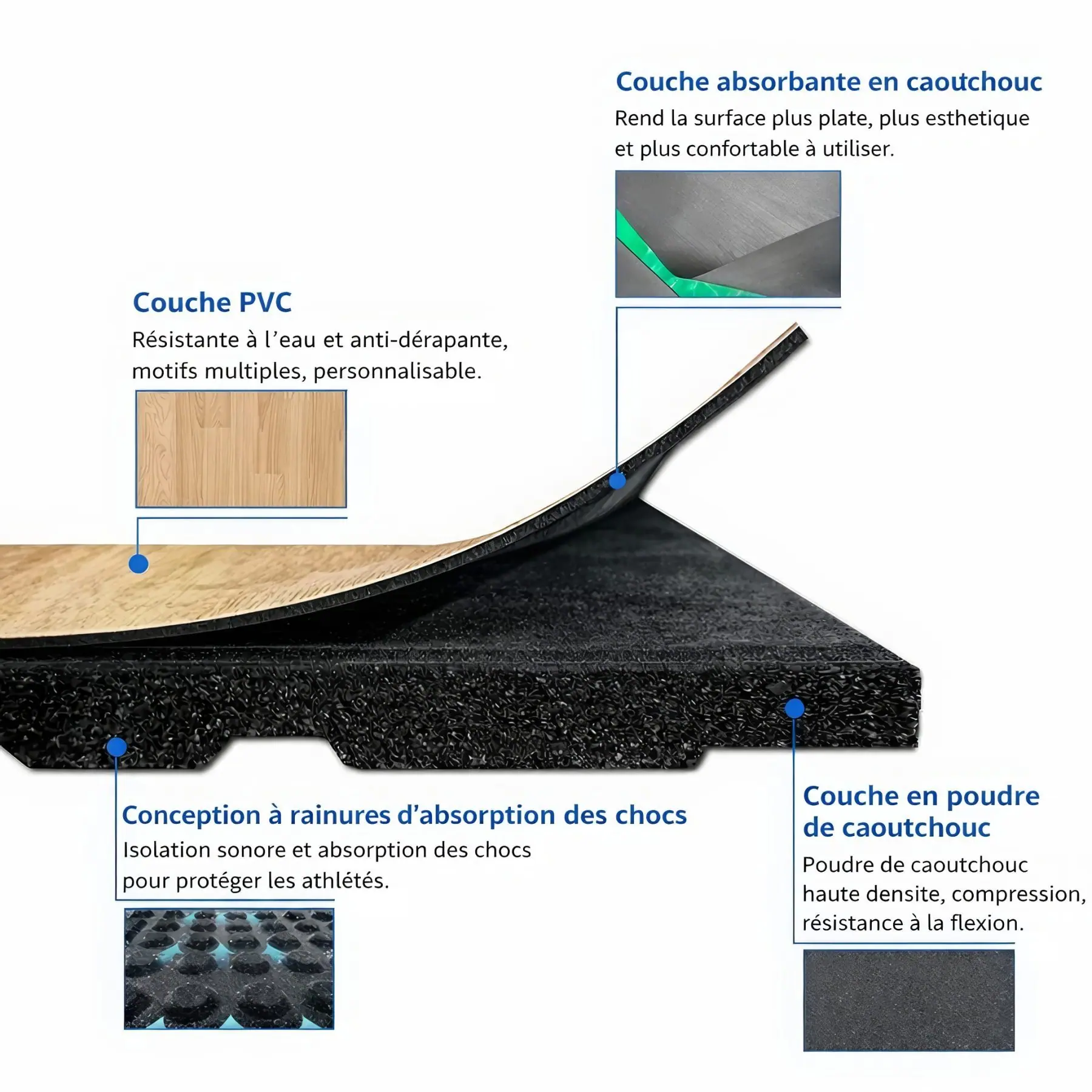
Shock absorbing 20 mm rubber tile with a light oak wood effect finish, classified Cfl-s1 for premises open to the public. Multilayer SBR stud structure with a clip installation and 5 clips supplied per tile.
Quotation = itemised pricing with delivery, installation and trade discounts, within 24 business hours. No commitment. Our commitments
Conformity: the acoustic values and fire classification shown on this page are declared by Light In Fitness on the basis of its suppliers’ tests; the corresponding certificate is supplied on request with the quotation.
Warranty: specified in the quotation for each reference — details of our warranties.
Description
This 20 mm rubber floor tile carries a light oak wood effect finish and is classified Cfl-s1, so it can be installed in premises open to the public. Underneath the decorative surface it is a genuine technical tile: a multilayer structure on SBR studs that ventilates beneath the tile and provides acoustic insulation, with a non slip non porous top surface. Tiles measure 100 x 100 cm, weigh 18 kg each and clip together, with 5 clips supplied per tile. The price is 49 EUR excluding VAT per square metre and the warranty is 5 years.
Technical specification
| Product | Shock absorbing rubber floor tile, light oak wood effect |
| Thickness | 20 mm |
| Format | 100 x 100 cm |
| Weight per tile | 18 kg |
| Structure | Multilayer on SBR studs, under tile ventilation and acoustic insulation |
| Surface | Non slip, non porous, wood effect |
| Fire classification | Cfl-s1, compliant for premises open to the public |
| Installation | Clip system, 5 clips supplied per tile |
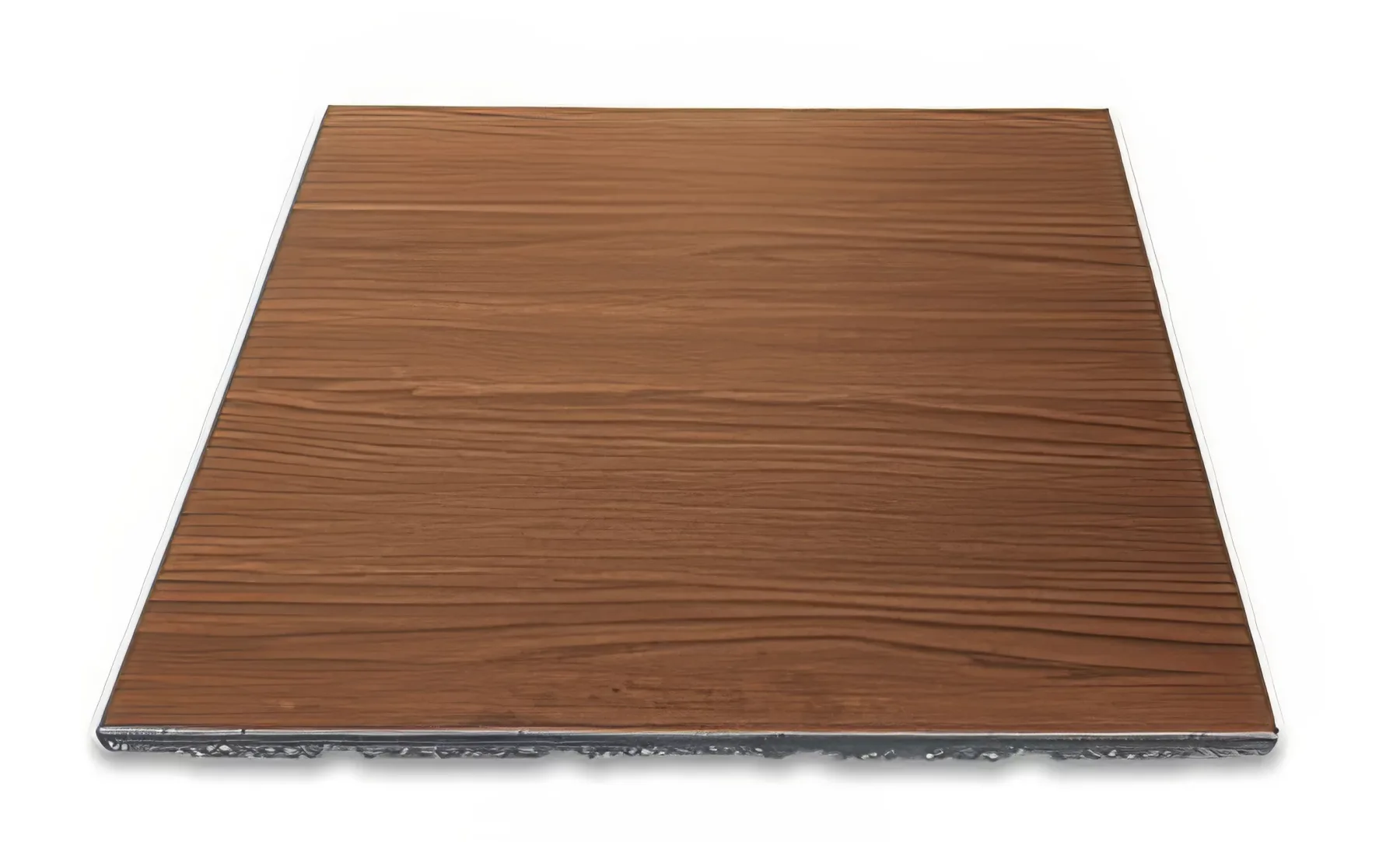
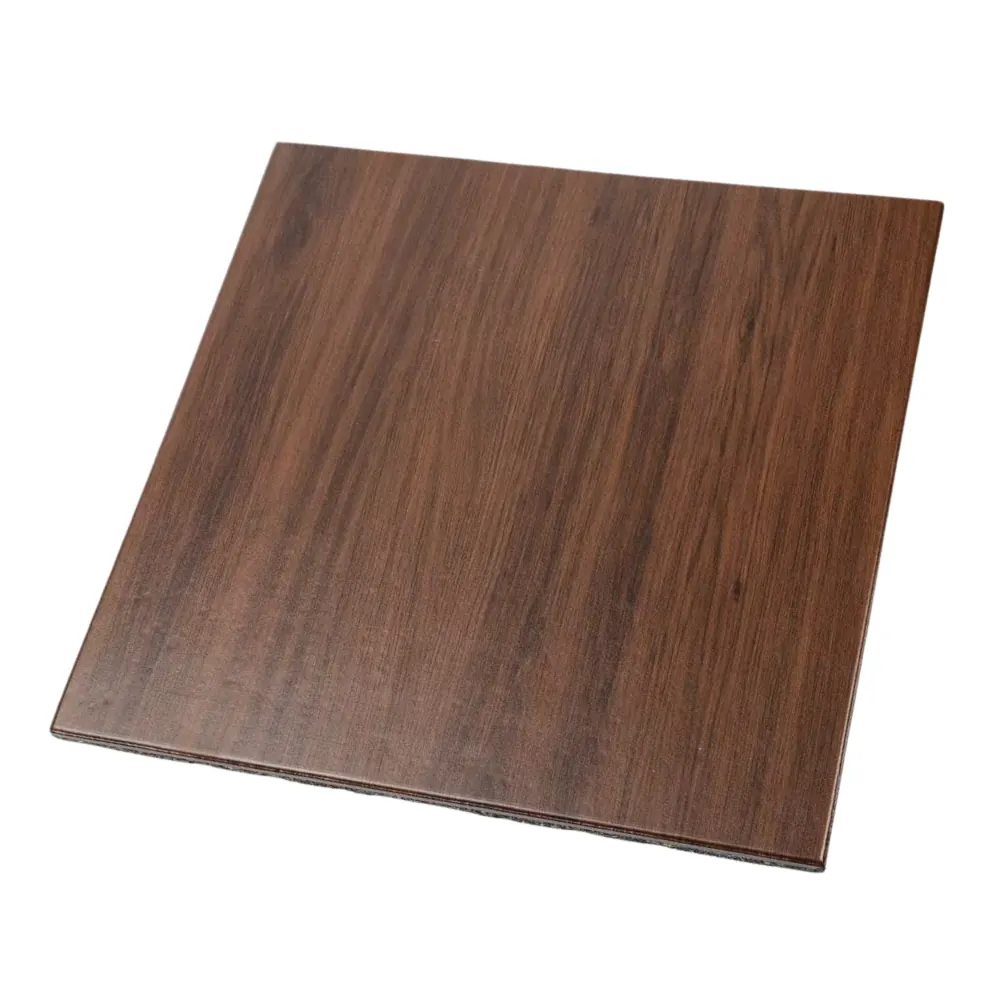
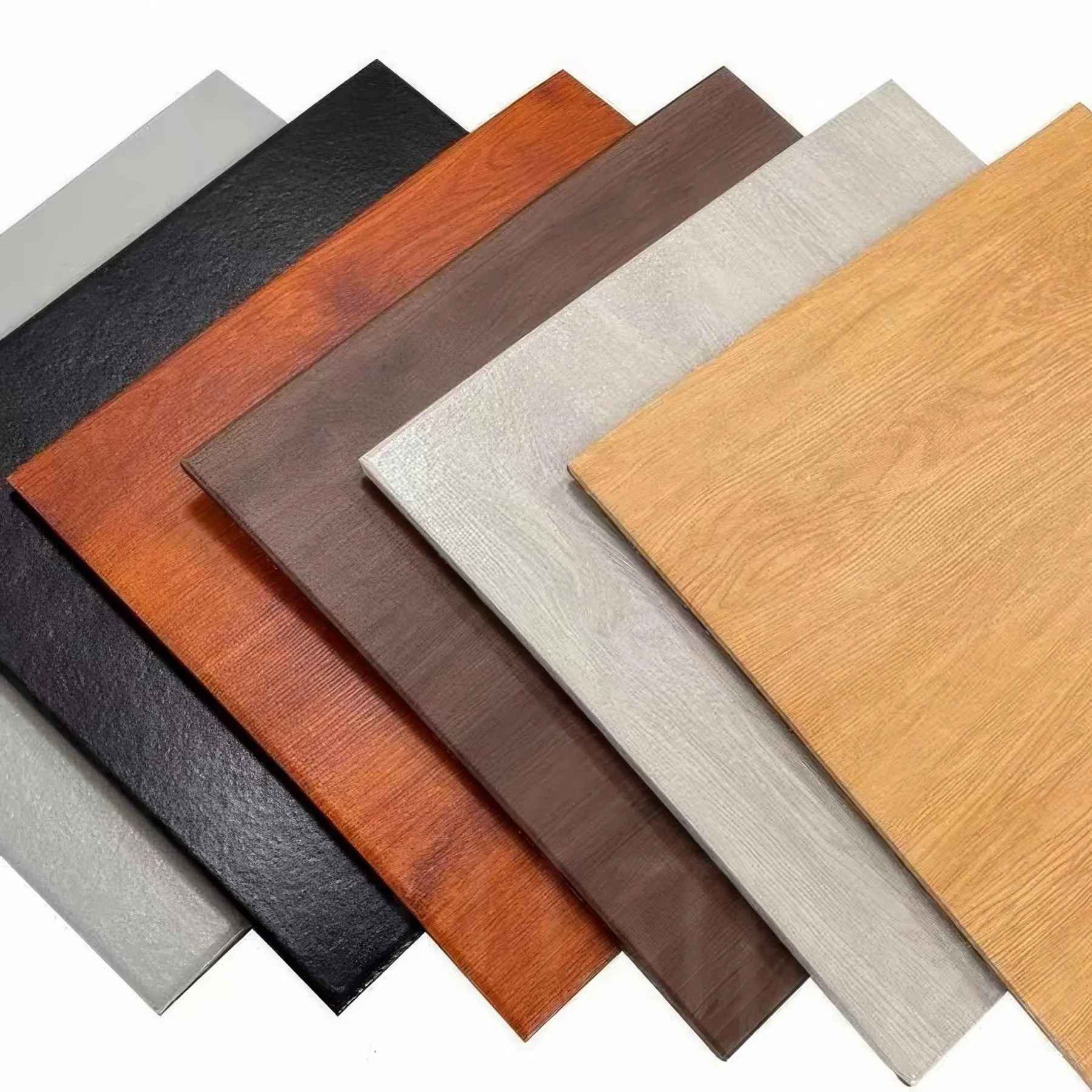
| Matching finish | Dark oak version, identical specification |
| Typical settings | Yoga, Pilates, wellness, physiotherapy, bright studios |
| Warranty | 5 years |
| Price | 49 EUR excluding VAT per square metre |
Specifying a wellness floor that still meets fire regulations
Most technical gym flooring is black, and black is the wrong answer for a yoga studio, a Pilates room, a physiotherapy practice or a coaching space that sells calm and light. This tile family, together with its dark oak twin, is the option in the catalogue that lets those rooms be built inside premises open to the public without giving up rubber cushioning and without an industrial appearance.
The light oak shade specifically suits small rooms, basements and spaces with few windows: it enlarges the space visually and amplifies whatever natural light reaches it. The dark oak version reads better in contemporary dark interiors, premium coaching studios and hotels. Both tones share an identical specification and the same clip system, so they can be combined in one room with a flush junction, for example to mark out a mat zone against a circulation area.
The clip installation is what makes this practical for tenants and for phased projects. There is no adhesive, the floor can be lifted and relaid, and 5 clips per tile are supplied with the order. Two installation warnings are worth noting. Laying over a floating wood floor is not advised, because a floating floor already sits on a resilient underlay and stacking two cushioning layers creates an unstable surface under dynamic loads such as balance work in yoga or pivots in fitness. Existing carpet is equally unsuitable as a substrate.
Shock absorption, critical fall height and floor protection
This 20 mm two-layer rubber tile sits at around 0.6 to 0.8 m critical fall height (HIC ≤ 1,000, EN 1177 method) and 20 to 30 % force reduction (EN 14904). This is the cushioning level expected for yoga, Pilates, physiotherapy, coaching and light functional training. The dense, non-porous top layer takes dumbbells and kettlebells set down on the floor without visible marks; the studded SBR base returns energy progressively and cuts vibration transfer to the subfloor (concrete, screed, timber), protecting both the existing floor and the equipment.
| Criterion | Reference value | Method |
|---|---|---|
| Critical fall height | ≈ 0.6 to 0.8 m | EN 1177 (HIC ≤ 1,000) |
| Force reduction (shock absorption) | ≈ 20 to 30 % | EN 14904 |
| Impact sound reduction | ≈ 18 to 22 dB (ΔLw) | ISO 10140-3 / ISO 717-2 |
| Density | Base 960 kg/m³ · surface 1,600 kg/m³ | – |
| Surface mass | 18 kg/m² | – |
| Top-layer hardness | ≈ 60 to 65 Shore A | – |
Indoor use only: the fall height is given as a guide for people falling in a studio (yoga, Pilates, physiotherapy, coaching), not for an outdoor playground, where EN 1177 requires a certified outdoor tile matched to the equipment fall height. These are reference values for 20 mm two-layer rubber tiles, not a test specific to this reference; a Light In Fitness declaration is available on request. For a higher certified fall height (playgrounds, heavy free-weight areas, weightlifting drops), see our 30 to 100 mm shock-absorbing tiles.
Frequently asked questions
Is Cfl-s1 required for a yoga studio?
It depends on the status of the premises. A studio open to the public, even a very small one, falls under the regulations for establishments receiving the public, where the required class depends on the type, category and zone. Efl, the lowest step of the scale, is insufficient in the large majority of cases. For a strictly private space, a technical Efl tile is the rational choice.
What do the SBR studs do?
They lift the body of the tile off the substrate, which ventilates the underside and contributes to the acoustic performance, while the multilayer structure provides the cushioning.
Can the two wood shades be mixed?
Yes. Light and dark oak share the same thickness, structure and clip system, so they join flush within the same room and can be used to zone a space visually.
Request a quotation with your room dimensions and we will price supply and installation. See the full range of rubber gym flooring tiles.
Installation, edging and maintenance
Lay the tiles edge to edge, with no gap between them, leaving an expansion joint of about 5 mm between the covering and the walls. We recommend a staggered layout: joints are offset from one row to the next, which spreads the loads across the whole surface. The clips push into the pre-formed holes on the underside of the tile without forcing; once clipped, the tiles are perfectly aligned. Where a clip is awkward to fit, along an edge or against an obstacle, half clips can be used.
Matching finishing edges complete the installation: straight edges of 50 x 15 cm and corner pieces of 15 x 15 cm, with a bevelled profile. They use the same clip system as the tiles, with 1 clip supplied per straight edge and per corner piece. They remove the sharp rim around the perimeter, so nothing catches when a trolley or a wheeled machine crosses it, and they give a clean transition to the existing floor.
Maintenance: sweep or vacuum regularly to remove dust, sand and abrasive particles; clean with a slightly damp mop or a scrubber drier fitted with soft brushes; use a pH neutral detergent suitable for rubber floor coverings; rinse with clean water if needed and let the floor dry naturally; wipe up spills quickly to avoid slips; ask users to wear clean indoor sports shoes. Never use wire brushes or abrasive pads, acids (bleach, vinegar, bathroom cleaners), alkalis (butyl based cleaners, high pH strippers) or petrochemical products (cleaners containing oil, grease, solvents or abrasives).
The Cfl-s1 fire classification certificate (EN 13501-1) is supplied with the order, subject to documentary availability. Indoor use. Subfloor preparation and laying conditions are to be confirmed according to the condition of the existing floor and the intended use.
Additional information
| Weight | 18 kg |
|---|---|
| Dimensions | 100 × 100 × 2 cm |