Squat Benefits: 10 Proven Reasons to Make It Your Foundational Exercise
Le squat sollicite simultanément quadriceps, fessiers, ischio-jambiers et stabilisateurs du tronc, ce qui en fait l'exercice le plus complet du bas du corps. Ses effets documentés portent sur la force, la masse musculaire, la densité osseuse et la mobilité de hanche. La progression passe par la maîtrise de l'amplitude avant l'augmentation de charge.
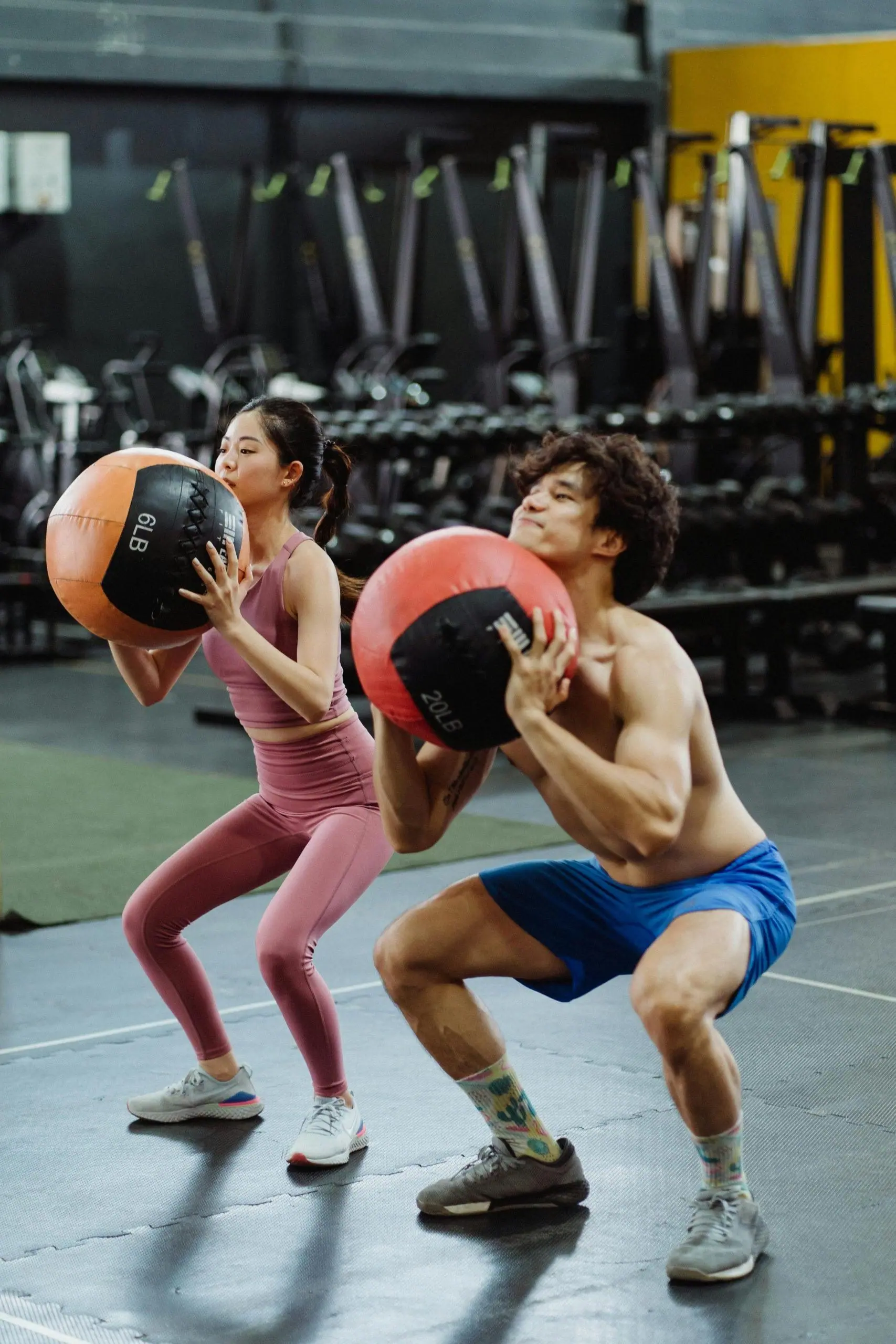
The squat is the most complete foundational exercise for developing strength, muscle mass and general fitness: it works the quadriceps, glutes, hamstrings, calves and trunk simultaneously, and delivers measurable benefits from as little as two or three short sessions a week. Here are ten evidence-supported benefits, followed by technique cues, a four-week beginner programme and answers to the most common questions.
1. Complete lower-body strengthening
A single squat recruits a very large share of the body’s musculature, commonly cited at over 200 muscles, led by the quadriceps, gluteus maximus and medius, hamstrings, adductors and calves. No other single movement builds the lower body as efficiently.
2. High calorie cost, during and after training
Heavy squat sets engage the anaerobic system and trigger elevated post-exercise oxygen consumption (EPOC) for up to 24-48 hours. Research on intense resistance sessions suggests this afterburn can add on the order of a couple of hundred kilocalories of resting expenditure after a hard session, on top of the calories burned during the work itself.
3. Supports bone health
Loads carried during squats stimulate bone formation through mechano-transduction. Resistance-training studies report bone mineral density gains of around 1-2 percent per year in regular loaded-squat practitioners in some populations, a meaningful asset from age 40 onwards. This is general fitness information, not medical advice; anyone with diagnosed osteoporosis should train under professional guidance.
4. Builds the trunk and improves posture
Stabilising a bar demands isometric work from the transverse abdominis, obliques and spinal erectors. A stronger core supports daily posture and is associated with fewer chronic low-back complaints in trained populations.
5. A strong acute hormonal stimulus
Heavy multi-joint lifts such as the squat produce acute hormonal responses (testosterone, growth hormone) two to three times larger than isolation exercises. The long-term significance of these acute spikes is debated in the literature, but the training stimulus that produces them is unambiguously effective for building muscle.
6. Restores hip, knee and ankle mobility
Performed through a full range of motion, the squat works complete joint amplitudes and counteracts the stiffness that accumulates through sedentary, seated days. It is one of the best antidotes to prolonged sitting.
7. Develops explosiveness and sport performance
Every sport draws on leg power. Published strength-training studies report vertical-jump improvements in the region of 12 percent and faster 30 m sprint times after eight-week squat programmes in athletic populations.
8. Contributes to cardiovascular conditioning
Programmed as circuits, short squat sets with minimal recovery, the movement raises heart rate substantially and improves aerobic capacity over time: an efficient strength-cardio hybrid for time-poor trainees.
9. Improves balance and helps prevent falls
Unilateral variants (split squats, Bulgarian split squats) train the stabilising muscles of the ankles and hips. After 50, this balance work matters: falls are the leading cause of fractures in older adults, and lower-body strength is protective. See our guide to Bulgarian split squat technique and equipment.
10. Supports mental wellbeing
Like any vigorous training, squatting is associated with the release of endorphins and dopamine and with increased BDNF. Regular practitioners commonly report lower perceived stress and better sleep, consistent with the broader literature on resistance exercise and mood.
How to perform the squat correctly
- Feet shoulder-width apart, toes turned slightly out (5-15 degrees).
- Torso upright, shoulders back, gaze level or slightly up.
- Descend by bending at the hips first, then the knees, sitting back as if towards a chair.
- Depth: thighs at least parallel to the floor; below parallel for a full squat if mobility allows.
- Drive up through the whole foot without rounding the back.
Four-week beginner programme
| Week | Prescription | Focus |
|---|---|---|
| 1 | 3 x 10 bodyweight squats, 3 times per week | Movement pattern |
| 2 | 4 x 12 bodyweight squats | Technique quality |
| 3 | 4 x 10 with light dumbbells (5-10 kg) | Introducing load |
| 4 | 4 x 8 with a bar or heavier dumbbells | Progressive overload |
Frequently asked questions
Is the squat bad for the knees?
No, contrary to a persistent myth. Performed with sound technique, squatting strengthens the ligaments and tendons around the knee. Injuries come from poor technique or loading too heavy too soon, not from the movement itself; the knees may travel past the toes without danger.
How many squats are needed for visible results?
Three sessions of 30 to 50 quality repetitions per week are enough for visible results within six to eight weeks. A hundred daily reps are unnecessary; load progression and quality matter more than volume.
With or without weights?
Bodyweight only for the first two to four weeks, then dumbbells, kettlebells or a barbell. External load is what sustains progress and maximises the bone and muscle benefits.
Can you squat every day?
Light bodyweight and mobility work, yes. Heavy sessions, no: allow 48 hours between intense sessions for recovery and adaptation.
Squat or lunge?
Both. The squat is more effective for overall strength and mass; lunges train balance and coordination and correct left-right imbalances. A good programme combines them.
Equipping a facility for safe squatting
For clubs, studios and workplace gyms, safe loaded squatting requires proper racks with adjustable safety catches and adequate flooring. Browse our squat racks and power racks, and see our rack and cage specification guide for choosing the right model. For a project quotation within two working days, contact Light In Fitness, professional equipment supplier since 2013.