How to Position a Glute and Hip Thrust Zone in a Women-Focused Gym
An effective glute and hip thrust zone in a women-focused gym is built around six key pieces of equipment on 25 to 35 m2: a dedicated Olympic hip thrust machine, a squat rack with plate storage, a guided hip abductor/adductor, a leg curl, a low cable machine for kickbacks, and a mat area with mini-bands and kettlebells. The indicative equipment budget is 15,000 to 28,000 EUR excluding VAT depending on range, before flooring and installation. The glute-focused market has grown continuously since 2020: a club without an identifiable glute zone today is leaving a large share of its potential clientele to competitors.
For years, strength floors were designed for an average male user: tall, heavy loads, squat-bench-deadlift. That era is over. Female membership share keeps rising across European markets, with specific demand centred on the glute and hip thrust zone. On the women-focused and mixed clubs we have equipped since 2020, the glute zone is no longer a nice-to-have; it is a condition of attractiveness. This article covers how to position it correctly; for the wider equipment picture, see our guide to women’s gym equipment.
Why a dedicated, identifiable zone beats scattered machines
Spreading glute-focused machines across the whole floor is the most common mistake. A dedicated, clearly identified zone works better for three reasons:
- A legible training journey: a member training glutes does not want to hunt for six machines across the floor. An identified zone creates a natural, fluid circuit with no dead time.
- A community effect: a visible zone, with signage, mirrors and good lighting, builds a dynamic among regular users, increases visit frequency and retention.
- Marketing differentiation: an identified glute zone photographs well, features in sales tours and social media, and becomes a membership argument in its own right.
Reference composition: a 30 m2 glute zone
| Equipment | Typical reference | Footprint | Why it is essential |
|---|---|---|---|
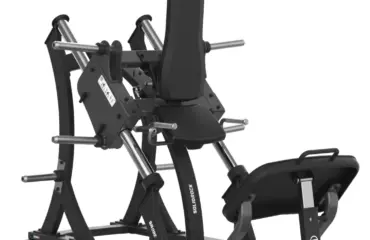
| Dedicated Olympic hip thrust | Bodytone SR11E or Glute Drive type bench | ~4 m2 | The zone’s signature machine and flagship exercise |
| Squat rack with plate storage | Bodytone GT12 plus rubber platform | ~5 m2 | Squats, Bulgarian split squats, B-stance work |
| Guided abductor / adductor | Bodytone Authentique or SRX | ~3 m2 | Gluteus medius and lateral chain work |
| Leg curl (lying or seated) | Bodytone SR08E | ~3 m2 | Hamstrings, posterior-chain balance |
| Low cable machine plus accessories | Dual adjustable pulley | ~4 m2 | Kickbacks, pull-throughs, Romanian deadlifts |
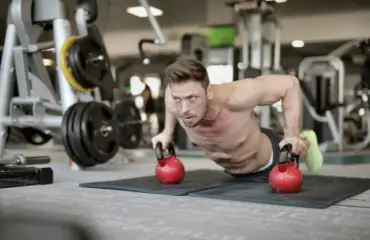
| Mat area, mini-bands, kettlebells | 4 m2 of mats plus Ziva accessories | ~6 m2 | Warm-up, activation, finishers |
| Full-height wall mirror | 3-4 linear metres | 0 m2 (wall) | Form control, sense of space, marketing |
| Circulation and safety | 1.2 m aisles | ~5 m2 | Flow and compliance for publicly accessible premises |
Total usable area: roughly 30 m2, ideally a 6 x 5 m rectangle with the hip thrust and squat rack along the back wall, guided machines and cable machine on the side, and the mat area at the front. Budget: 15,000 to 28,000 EUR excluding VAT depending on the range mix, excluding flooring and installation (project estimates).
Design the zone as a five-station circuit, not a set of machines
A glute zone is a session circuit. Structure it around a coherent user journey:
- Warm-up and activation: 5-10 minutes on mats with mini-bands (clamshells, monster walks, glute bridges) for neuromuscular activation before loading.
- Primary compound: squat or Olympic hip thrust at moderate to heavy loads, 4 sets of 6-12 reps. This creates most of the stimulus.
- Secondary compound: Romanian deadlift or leg curl for the posterior chain, 3-4 sets of 8-12 reps.
- Gluteus medius isolation: guided abductor or lateral cable kickbacks, 3 sets of 12-20 reps per side.
- Finisher: superset of cable kickbacks and banded glute bridges, 3 sets of 15-25 reps with no rest.
The circuit takes 45 to 60 minutes. Print it as a poster in the zone: it doubles as a self-service guide for independent members and a lesson plan for coaches.
Ergonomic details that make the difference
- Adjustable pulley height: a cable machine with adjustable pulleys covers three to four times more exercises than a fixed pulley (low kickbacks, mid pull-throughs, high face pulls).
- 2.5 kg increments: 5 kg jumps are too coarse for a beginner-to-intermediate clientele. Specify 2.5 kg increments with 1.25 kg add-on plates; it transforms the perception of progress.
- Fit for all body sizes: a good glute machine is comfortable from 1.55 m to 1.85 m. Check seat range, adjustable hip strap and modular footplates at purchase, or 30 percent of the target clientele cannot use it.
- Signage and QR posters: a QR-coded poster beside each machine, showing the exercise and two variations, secures unsupervised use.
The most expensive false economy is skipping the dedicated hip thrust machine on the theory that a bench and a barbell will do. Field experience shows a dedicated machine roughly triples usage compared with an improvised set-up: it secures positioning, speeds up loading and encourages progression. For model selection, see our hip thrust machine buying guide.
Sizing the zone by facility type
| Facility type | Recommended glute zone area | Priority composition |
|---|---|---|
| Women-only club | 30-40 m2 (main zone) | Full composition plus class mat space |
| Mixed club, 40%+ female membership | 25-35 m2 (identified zone) | Full composition, strong signage |
| Standard mixed club | 15-20 m2 (partial zone) | Hip thrust, cable machine and abductor as an island |
| Functional box with women’s sessions | 10-15 m2 (modular) | Hip thrust, bands, movable accessories |
| Hotel gym | 5-8 m2 (compact) | Compact hip thrust, bands, stretching mats |
| Workplace gym | 15-20 m2 (depending on mix) | Partial composition, autonomy-first |
For projects wanting a pre-packaged answer, we distribute the Booty Area pack by Bodytone, a coherent set of glute-focused equipment with consistent styling and finish, suitable for both self-service and coached formats.
Frequently asked questions
What is the minimum area for an effective glute zone?
Plan at least 25 m2 for a functional zone with the full five-station circuit. Below that, the identified-zone effect is lost and the circuit becomes disjointed. Above 40 m2 you are in specialist territory for women-only clubs.
What does a 30 m2 glute zone cost?
Between 15,000 and 28,000 EUR excluding VAT for equipment, before flooring and installation. The lower end covers an essential set-up (hip thrust, rack, cable machine, mats); the upper end adds premium guided machines and the complete Booty Area pack. These are project estimates.
Is a dedicated hip thrust machine really necessary?
Yes. Compared with an improvised bench-and-barbell set-up, a dedicated machine roughly triples usage, secures body positioning, speeds up load changes and encourages progressive overload. It is the highest-return investment in the zone.
Does the zone need a dedicated coach?
Both models work. For self-service use, provide QR posters per machine and clear circuit signage. With coaching, a glute-focus class two or three times a week reliably fills the zone and drives retention.
Which brands suit a professional glute zone?
A typical specification combines Bodytone (Booty Area pack, SR11E hip thrust, Authentique or SRX abductors, cable machines) with Ziva accessories (mini-bands, kettlebells, sliders), moving to premium lines on the compound stations for high-end projects.
Get a 3D layout for your glute zone
Send us your floor plan, photos and clientele profile. You will receive a free audit, a personalised 3D layout and a quotation within two working days. Request a quote from Light In Fitness, supplier of professional fitness equipment since 2013.
Réalisations documentées
- Dalles et sols sportifs : livraisons documentées – plusieurs chantiers
- Sol sportif extérieur, square Georges-Vallerey – Taverny (95)