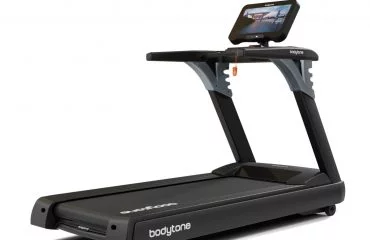
Adding a sports nutrition offer to your gym: space, compliance and margins
Une salle performante repose sur deux piliers indépendants : un équipement fiable et une offre de nutrition cohérente avec le positionnement. Le second génère une marge complémentaire sans surface supplémentaire. Les deux se planifient dès la conception, pas après l'ouverture.
A sports nutrition offer is the cheapest secondary revenue line a gym can add: 2 to 4 m2 of floor, a lockable retail unit, a chilled cabinet and an opening stock investment that is typically a low four-figure sum excluding VAT, against equipment lines that run to tens of thousands. The margin on packaged supplements and ready-to-drink products commonly sits in the 35 to 50 per cent range, and secondary spend is one of the few levers that improves revenue per member without adding a single square metre of training floor. This guide sets out how to structure it, what the European regulatory framework requires, and where operators get it wrong.
Why equipment alone no longer defines a club
Members no longer judge a facility on the strength floor and the cardio bank alone. They compare the whole proposition: coaching, recovery, class programming and nutrition. For an operator, that shift has a straightforward commercial reading. Primary revenue, the membership fee, is competitive and price-sensitive. Secondary revenue is not, and it attaches to members who are already in the building.
Three characteristics make nutrition the natural first secondary line:
- Low capital intensity. A retail corner costs a fraction of a single selectorised machine.
- High frequency. Ready-to-drink and single-serve products are bought on the way out, repeatedly, without a decision process.
- Programme fit. It sits naturally alongside coaching and body composition services, which are themselves higher-margin than membership.
How the two halves actually complement each other
Progress depends on three variables: the training stimulus, recovery and nutritional intake. Equipment determines the quality of the stimulus; nutrition determines the adaptation. Mapping the two together is the simplest way to build a coherent member-facing offer.
| Member objective | Equipment that delivers the stimulus | Nutrition categories that support it |
|---|---|---|
| Muscle gain and strength | Selectorised and plate-loaded machines, racks, free weights | Whey and casein protein, mass gainers, creatine monohydrate |
| Weight management | Commercial cardio: treadmills, bikes, rowers, cross trainers | Low-carbohydrate protein, meal replacements, high-protein snacks |
| Performance and cross training | Rigs, functional accessories, sleds, plyometric equipment | Pre-workout formulas, electrolytes, intra-workout carbohydrate |
| Recovery and wellbeing | Stretching and mobility zones, sports flooring, sauna and cold plunge | Casein, collagen, vitamins and minerals, hydration |
The practical consequence for a fit-out is that the retail unit should sit on the exit path, not next to reception furniture, and that a mobility and recovery zone gives the nutrition conversation somewhere to happen. Our stretching and mobility zone guidance covers the surface and space requirements.
What a nutrition corner actually needs
| Element | Specification | Note |
|---|---|---|
| Floor area | 2 to 4 m2 for a retail corner; 8 to 12 m2 for a serviced shake bar | The serviced format needs plumbing, waste and staffing |
| Retail unit | Lockable glazed display, 1.2 to 1.8 m wide, sightline from reception | Unsupervised open shelving generates shrinkage |
| Chilled cabinet | Glass-fronted, 200 to 400 litres | Ready-to-drink products are the highest-frequency line |
| Back stock storage | Lockable, dry, temperature-stable, away from the training floor | Chalk dust and humidity degrade packaging and labels |
| Point of sale | Integrated with the membership system | Attaching sales to member accounts is what makes the data useful |
Storage is the element most often forgotten at fit-out stage and the one that is most disruptive to retrofit. Our gym storage furniture range covers lockable back-of-house options that suit stock as well as equipment.
Choosing a supplement supplier: five criteria
- Regulatory compliance in your market. In the European Union, food supplements fall under Directive 2002/46/EC, labelling under Regulation (EU) No 1169/2011, and any health claim under Regulation (EC) No 1924/2006. Only claims on the authorised EU register may be used. In the United Kingdom, the equivalent retained framework applies. A supplier who cannot show compliant labelling for your market is a liability, particularly for publicly funded and institutional operators.
- Independent batch testing. For any facility serving competitive athletes, defence personnel or young people, specify products certified under an independent batch-testing programme for substances prohibited in sport. This is the single most important risk control in the category.
- Identified raw materials. Named, traceable ingredient sources rather than proprietary blends. If the dose per serving is not stated in clear figures, neither you nor the member can assess the product.
- Range breadth. A workable club range is 15 to 25 lines, not a full catalogue. Protein, ready-to-drink, creatine, pre-workout, electrolytes and a small snack selection covers the great majority of demand.
- Trade terms. Minimum order value, delivery lead time, sale-or-return on slow lines, and point-of-sale material. Lead time matters more than headline margin for a small operator holding little stock.
What staff can and cannot say
This is where operators create genuine exposure. Fitness staff are not dietitians, and in most European jurisdictions individualised dietary advice for a medical condition is a regulated activity. Three rules keep a club on safe ground:
- Staff may describe a product and repeat only claims authorised for it. They may not diagnose, treat or make claims of their own.
- Members with a medical condition, and those who are pregnant or under 18, are referred to a healthcare professional. Most national food safety agencies specifically advise against muscle-building supplements for adolescents and for people with cardiovascular, renal, hepatic or neuropsychiatric conditions.
- Written product information at the point of sale beats verbal advice, because it is consistent and auditable.
Where a club wants to give members substantive information, publishing evidence-based explanations rather than product claims is both safer and more persuasive. Our article on how long creatine takes to work is an example of the register that works: study data, timelines, and no promises.
Sizing the opportunity
The figures below are planning estimates for a mid-size club, not guarantees, and vary widely by market and membership profile.
| Metric | Planning range |
|---|---|
| Members who buy any supplement in a given month | 5 to 15 per cent |
| Gross margin on packaged supplements | 35 to 50 per cent |
| Opening stock investment, 15 to 25 lines | Low four figures excluding VAT |
| Retail unit and chilled cabinet | Typically 1,500 to 4,000 EUR excluding VAT |
| Payback on the fixture investment | Commonly within the first year at modest attachment rates |
Compare that with the primary equipment budget. A single commercial treadmill starts at around 3,500 EUR excluding VAT, and a full strength floor runs to tens of thousands. Our gym investment and payback guide puts secondary revenue in the context of the whole business case.
The sequence that works
Secure the base first. A durable, warranted, correctly specified equipment floor is what members pay the membership fee for, and no retail corner compensates for a treadmill that is out of service. Build the nutrition offer second, with a supplier whose traceability and market compliance you can verify, and start narrow: a short range, well merchandised, with a chilled cabinet on the exit path. Expand only on the evidence of what actually sells.
Frequently asked questions
Is a nutrition offer profitable for a small gym?
Usually yes, because the fixed cost is small. A lockable display and a chilled cabinet with a short range of 15 to 25 lines requires a fraction of the capital of a single piece of cardio equipment, and gross margins in the 35 to 50 per cent range mean the fixtures typically pay for themselves within the first year at modest attachment rates.
What supplements should a gym stock?
Whey protein, ready-to-drink protein, creatine monohydrate, a pre-workout formula and electrolytes cover the majority of demand in a general club. Ready-to-drink lines produce the highest transaction frequency because they are bought on the way out without a decision. Add specialist lines only when sales data justifies them.
What regulations apply to selling supplements in a gym?
In the European Union, food supplements are governed by Directive 2002/46/EC, labelling by Regulation (EU) No 1169/2011 and health claims by Regulation (EC) No 1924/2006, which permits only claims on the authorised register. Retail also brings the usual national requirements on food business registration, storage temperature and traceability, so confirm the position in your own market before stocking.
Can gym staff give nutrition advice?
They can provide general information and repeat authorised claims for a product. They should not give individualised dietary advice, particularly to members with a medical condition, who are pregnant or who are under 18. Written point-of-sale information is more consistent, more defensible and usually more effective than verbal recommendation.
Does Light In Fitness supply supplements?
No. Light In Fitness specialises in professional B2B fitness equipment: strength machines, cardio, cross training, sports flooring, outdoor structures and turnkey installation. We help operators plan the space, the storage and the fixtures a nutrition offer needs, and leave the product supply to specialist nutrition distributors in each market.
Planning a club fit-out or refurbishment? Light In Fitness has equipped over 2,500 customers across Europe and export markets since 2013, covering audit, layout, equipment, sports flooring, installation and after-sales, including the reception and retail zones that carry your secondary revenue. Request a quote or see our small gym equipment budget guide.
Réalisations documentées
- Dalles et sols sportifs : livraisons documentées – plusieurs chantiers
- Sol sportif extérieur, square Georges-Vallerey – Taverny (95)
Sources et références
- ANSES – avis et rapport sur les compléments alimentaires destinés aux sportifs
- NF V94-001 – prévention du dopage dans le sport : bonnes pratiques visant l’absence de substances dopantes (AFNOR)
À lire aussi sur le même thème
- Equipping an unstaffed 24 hour gym: passive safety, robustness and maintenance
- Anchoring a rig or outdoor structure: chemical anchors, mechanical fixings and foundations
- Rangement du matériel d’une salle de sport : solutions par zone et budget
- Outdoor Fitness Equipment on Military Bases: A Strategic Tool for MWR and Sports Directors