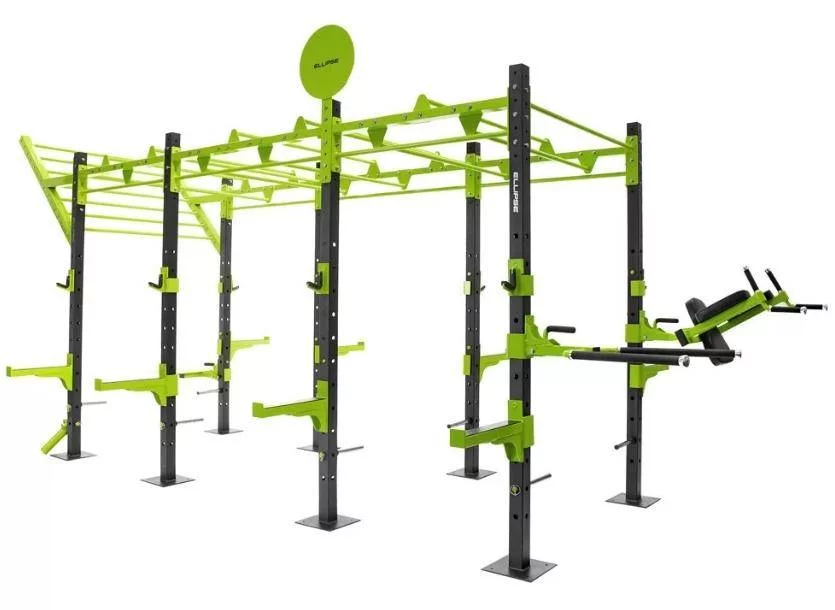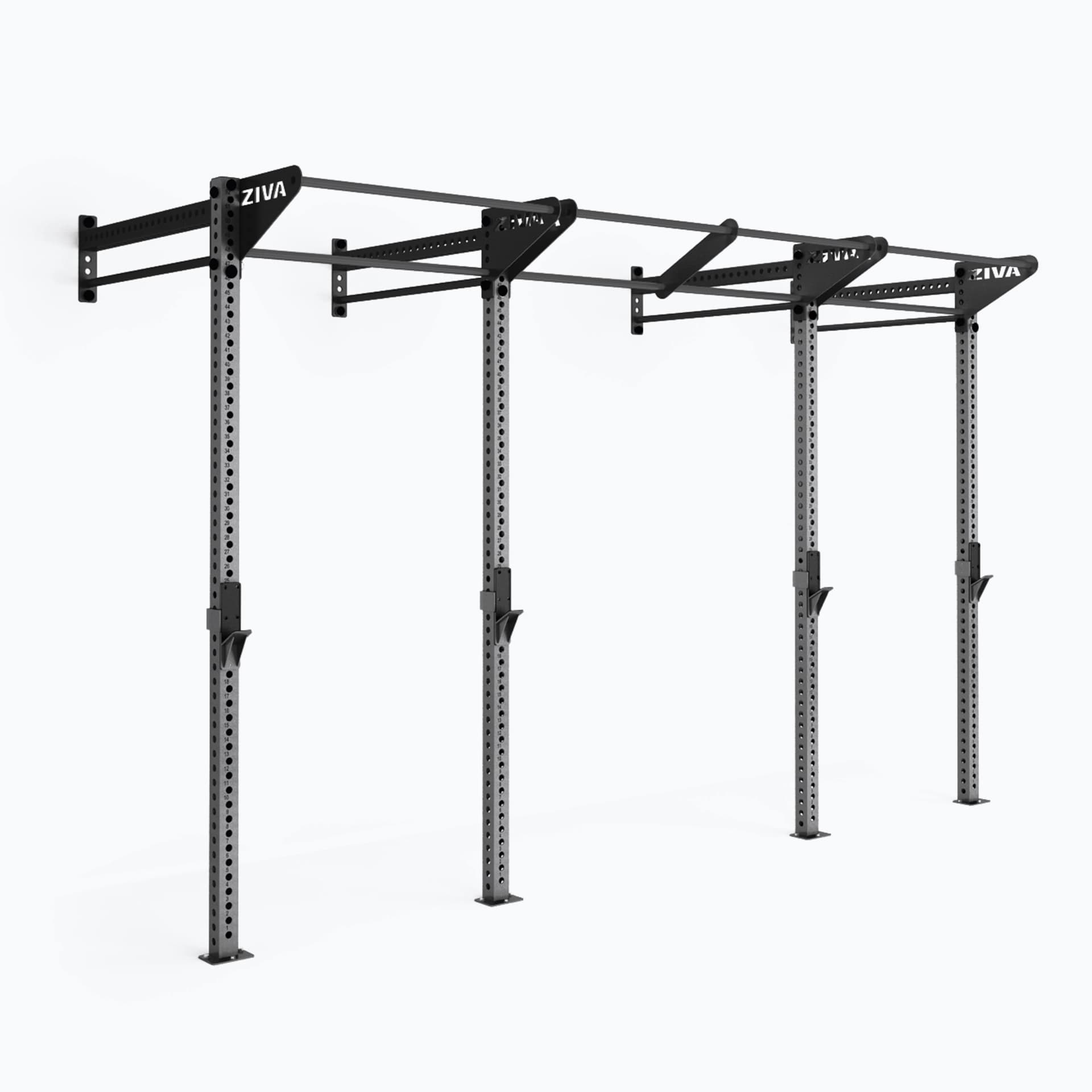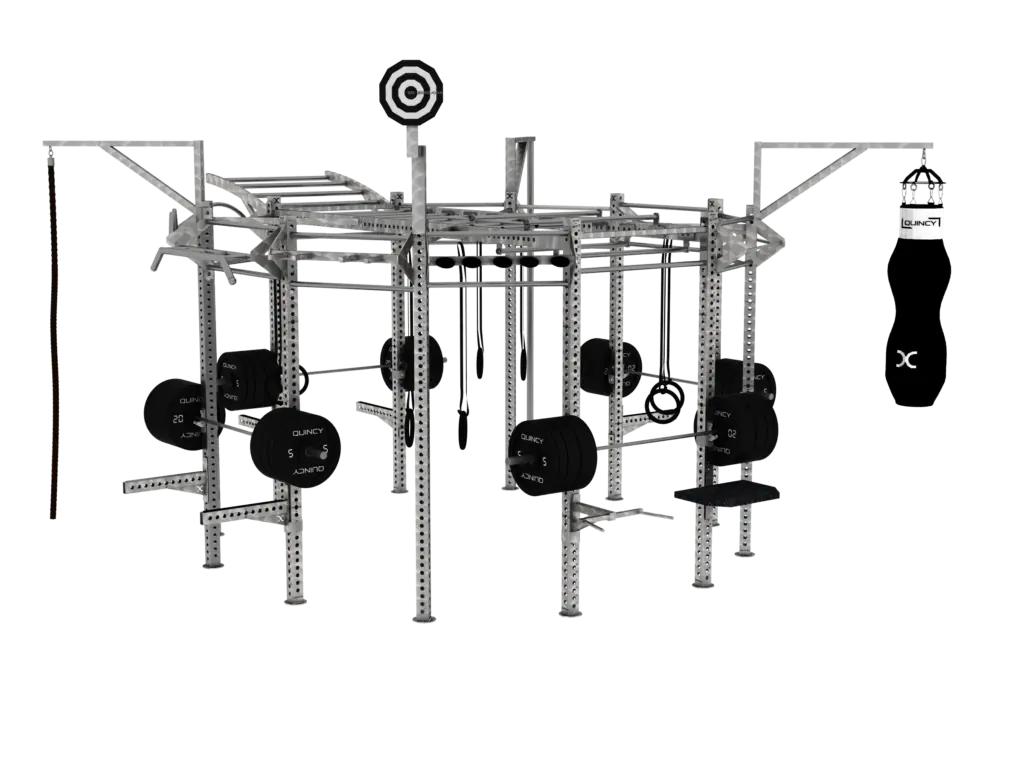
Cross Competition 12 freestanding outdoor stainless steel rig
Cross Competition 12 freestanding outdoor stainless steel rig : outdoor gym equipment for public spaces, marque Light In Fitness, 11 999,00 EUR excl. VAT. Frame material : Acier Inoxydable. Installation included; delivery priced on quotation across Europe.
11,999.00 € excl. VAT
i.e. 14,398.80 € TTC selon la destination de livraison
Shipping quoted separately The shipping cost is confirmed before you approve the order.
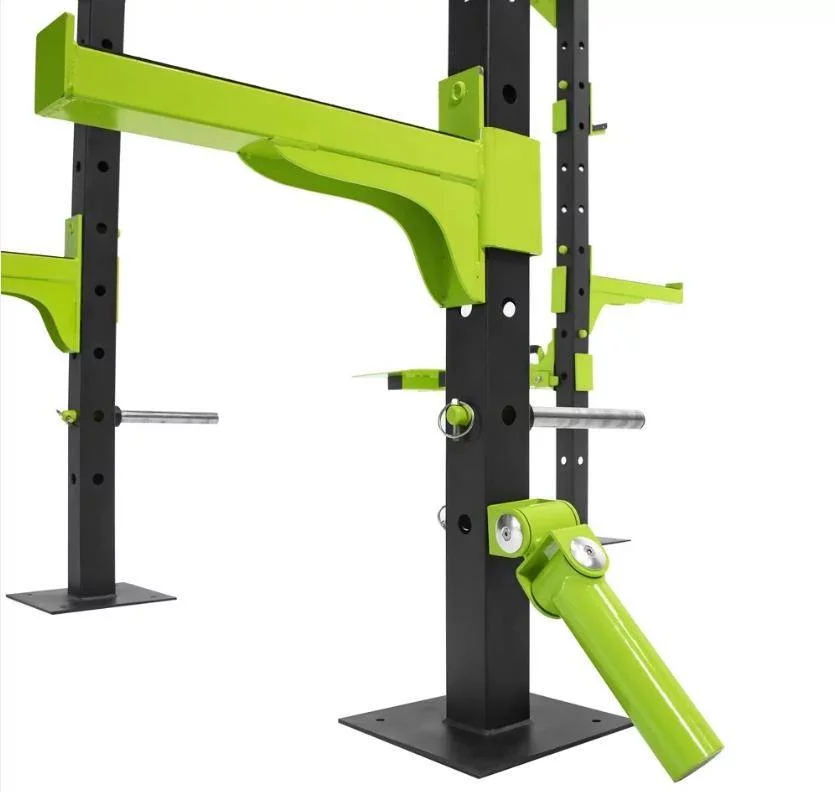
A freestanding outdoor cross training rig in marine grade stainless steel 316L, built to competition spacings and working heights. One of the largest self supporting formats in the range.
Quotation = itemised pricing with delivery, installation and trade discounts, within 24 business hours. No commitment. Our commitments
Conformity: equipment designed to EN 16630 (permanently installed outdoor fitness equipment); the Light In Fitness declaration of conformity for this reference is supplied on request with the quotation.
Light In Fitness warranty: stainless steel frame with lifetime warranty (designed by Light In Fitness in Tours, France, manufactured in Europe), wear parts 6 months — detailed conditions. Our custom design service.
Description
The Cross Competition 12 rig is a freestanding outdoor structure in stainless steel 316L, built to competition standards for centre spacings, grips and working heights. Being self supporting, it needs no wall or building to lean on, which frees the choice of position entirely. The price is 11,999 EUR excluding VAT.
It is one of the largest freestanding formats in the range. Pull-ups, muscle ups, hanging work and ring exercises can be performed along the whole length of the structure, which is what makes it suitable for outdoor cross training zones that carry real traffic.
The competition dimensions matter more than they might appear. Athletes who train on standard spacings and bar heights transfer directly to competition equipment, whereas a rig built to arbitrary dimensions leaves them adjusting on the day.
Technical specification
| Reference | LIF-OCC-12-C |
|---|---|
| Configuration | Cross competition 12, freestanding |
| Material | Stainless steel 316L, marine grade |
| Standards followed | Competition centre spacings, grips and working heights |
| Exercises | Pull-ups, muscle ups, hanging work, rings |
| Applicable standard | EN 16630 for open access outdoor fitness installations |
| Peripheral safety zone | 1.50 m minimum around the structure |
| Surfacing | Impact attenuating to EN 1177, thickness according to free fall height |
| Anchoring | Base plates into concrete foundations, or bolted to an existing slab |
| Environment | Permanent outdoor exposure, including coastal and chlorinated sites |
| Price | 11,999 EUR excluding VAT |
Why freestanding changes the site plan
A wall mounted rig ties the training zone to a facade, which in practice means it is placed wherever the building happens to be rather than where the activity works best. A self supporting structure can sit at the centre of a sports pitch, on a dedicated slab or in the middle of a park, with users approaching from all sides and a coach able to circulate around it.
That freedom comes with a requirement: the anchoring carries all the load, since there is no building to share it. Base plates are cast into concrete foundations sized to the ground, or bolted to an existing slab where its thickness and condition allow. The 1.50 metre clear zone required by EN 16630 applies on every side, and impact attenuating surfacing to EN 1177 goes under and around the structure, sized to the free fall height. We recommend bonded rubber tiles of 40 to 65 mm.
Stainless steel 316L handles permanent outdoor exposure including salt air and chlorinated atmospheres with no coating to renew. Maintenance is cleaning and periodic inspection of the fixings.
Technical data sheet
| Material | Stainless steel 316L |
|---|
Standard equipment
| 100’’ columns | 12 |
|---|---|
| Squat / bench stations | 4 |
| Pull-up stations | 12 |
| Sandwich J-cup pairs | 4 |
| 43’’ triangles | 4 |
| 43’’ single pull-up bars (1.25’’ tube) | 4 |
| 43’’ double pull-up bars (1.25’’ tube) | 4 |
| Monkey bar | 1 |
| Rectangular tube crossmembers | 4 |
| Circle handle pairs | 4 |
Manufacturer technical data checked by Light In Fitness. Layout plan and detailed data sheet on request.
Frequently asked questions
Does it have to be anchored if it is freestanding?
Yes. Freestanding means it does not depend on a building, not that it stands loose. Base plates are set into concrete foundations or bolted to an existing slab.
What does the 12 configuration refer to?
It designates the size of the structure within the cross competition range; the 12 format is one of the largest freestanding versions we supply. The exact station layout is confirmed with the layout study.
Is it suitable for a seafront site?
Yes. Marine grade stainless steel 316L is specified precisely for coastal and chlorinated environments.
For a free layout study and a quotation within 24 hours, use Request a quotation. Comparable structures are listed under freestanding CrossFit rigs.
Additional information
| Frame material | Acier Inoxydable |
|---|
Delivery and installation
Lead times are confirmed in the quotation according to the product, available stock and destination.
Access requirements and delivery appointments for heavy equipment are agreed before dispatch.
Installation is included when stated for the product or in the quotation; otherwise it is quoted separately.
Related products
-
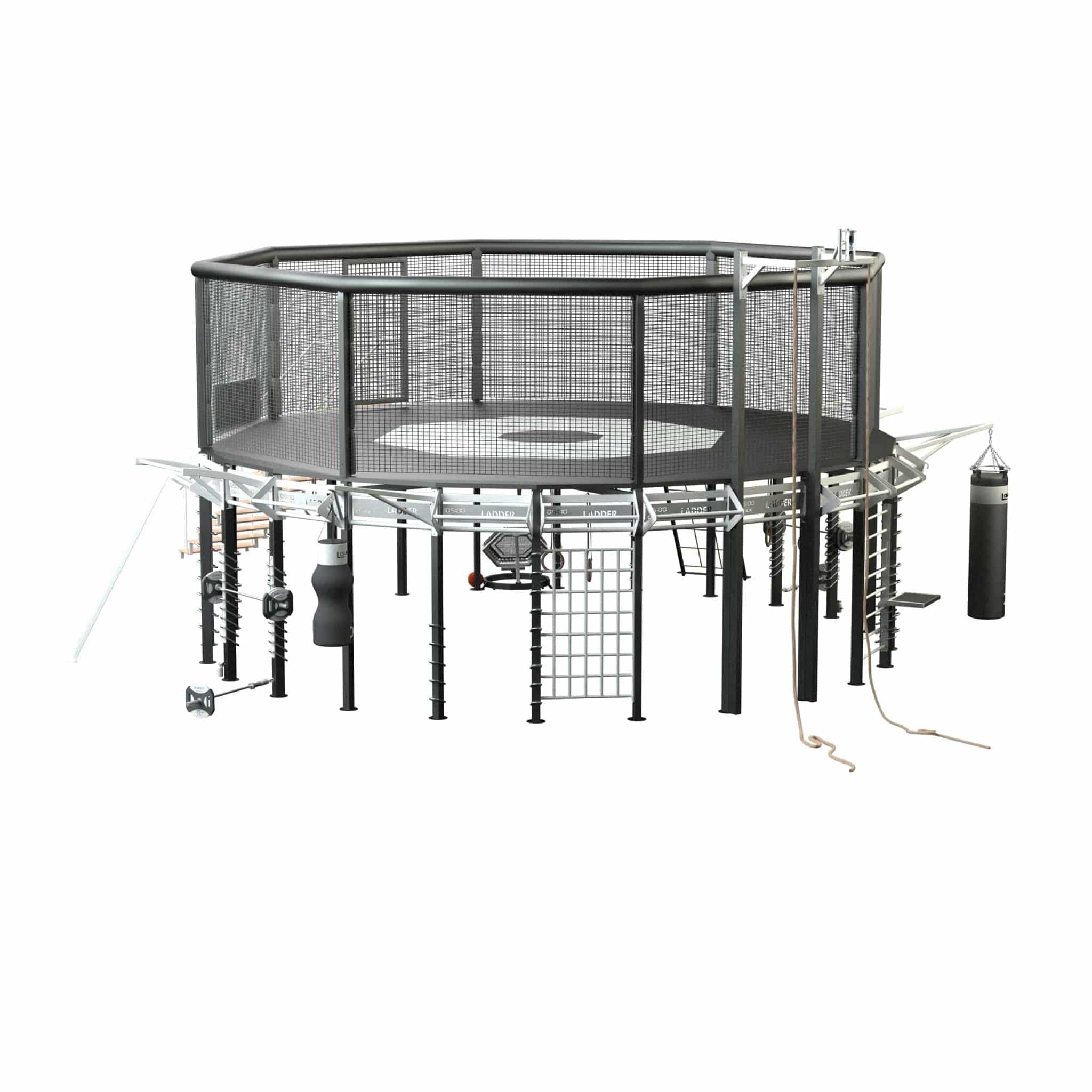
C24 Fight, 2 in 1 MMA cage and CrossFit rig to Pinterest (opens in a new window)Save on Pinterest : C24 Fight, 2 in 1 MMA cage and CrossFit rig
 Add to cartMORE INFO
C24 Fight, 2 in 1 MMA cage and CrossFit rig
35,500.00 € excl. VAT -
Rig Area 1 freestanding cross training cage, in stock to Pinterest (opens in a new window)Save on Pinterest : Rig Area 1 freestanding cross training cage, in stockSALE!
![Rig Area 1 freestanding cross training cage, in stock]()
 Add to cartMORE INFO
Rig Area 1 freestanding cross training cage, in stock
Original price was: 4,550.00 €.3,850.00 €Current price is: 3,850.00 €. excl. VAT -
Ziva 9' wall mounted modular rig, 427 x 122 x 274 cm to Pinterest (opens in a new window)Save on Pinterest : Ziva 9' wall mounted modular rig, 427 x 122 x 274 cm
![rack mural 9' high wall mounted modular rig crossfit ziva]() Add to cartMORE INFO
Add to cartMORE INFOZiva 9' wall mounted modular rig, 427 x 122 x 274 cm
1,750.00 € excl. VAT