Equipping a military or emergency services gym: specification and budget
Operational physical preparation is not standard fitness training, and a unit gym cannot be specified from a catalogue. Soldiers, gendarmes and firefighters train to stay operational under load, in tactical dress, breathing apparatus and protective equipment, and to pass codified tests whose failure affects their assessment and their career. The equipment plan therefore starts from the applicable testing framework, then from the operating constraints of a barracks or fire station: very heavy collective use, uncontrolled movements, limited floor area and maintenance carried out in house.
Start from the test framework, not the product range
Every armed force and emergency service runs its own periodic fitness assessment, and the equipment that prepares personnel for it follows directly from the events tested. Using France as a worked example, the general physical fitness check applied to all serving military personnel rests on three abilities, each scored out of 20 for a total of 60 points: cardio-respiratory endurance, water competence and general muscular capacity. A specific check, tailored to the service, the unit or the specialisation, sits alongside it.
Two points are routinely mishandled in equipment plans. The third ability is water competence, not coordination. It carries a third of the score and cannot be equipped for in a gym, so a serious plan states this explicitly and provides for pool access under agreement rather than pretending the subject does not exist. And the periodicity is not uniformly annual: the gendarmerie, for instance, validates on a two-year cycle. Check the rule applicable to your own service before building a preparation reference.
A second distinction matters just as much. Selection tests for candidates are a different reference from the in-service check. A training school or selection centre needs a lat pulldown station with fine load selection so the exact test load can be reproduced, and clear wall space for isometric wall-sit work. Equipping for the wrong reference is public money badly spent.
Equipment matrix by tested quality
| Event or ability | Quality trained | Priority equipment |
|---|---|---|
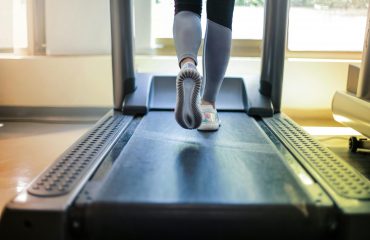
| Shuttle run, 12-minute run, incremental field test | Aerobic endurance and maximal aerobic speed | Treadmills with programmable speed for stage work, rowers and bikes for low-impact intervals |
| Pull-ups and rope climb | Relative upper-body strength | Rig or cage with bars at multiple heights, climbing rope, assistance bands |
| Lat pulldown | Back strength at a calibrated load | Stack station with fine selection, to reproduce the exact test load |
| Wall sit and trunk holds | Isometric endurance of legs and trunk | Clear wall, tatami mats, wall bars. Minimal spend, direct effect on the score |
| Squat and lower-body strength | Maximal and explosive strength | Rack, Olympic bar, plates, platform, or plate-loaded machines for inexperienced personnel |
| Job-related course and loaded movement | Power, agility, bracing under load | Sleds, kettlebells, weighted bags, suspension straps, plyo boxes, agility ladders |
| Water competence | Swimming, immersion, breath control | Not equippable indoors. Pool access agreement plus land-based bracing and breathing work |
Four constraints that civilian specifications ignore
Collective use is far heavier than in a club, over a much wider daily window, with group slots that concentrate traffic. Domestic ranges are excluded immediately. Movements are often uncontrolled, because sessions run in groups, under time pressure, with personnel who are not experienced lifters, so the equipment has to tolerate dropped bars, misaligned loads and rushed use. Plate-loaded machines with articulated arms and thick-steel racks survive this markedly better than machines built on fine cables, which account for most breakdowns in intensive use.
Floor area is tight. A unit gym typically runs to 60 to 120 m2 and has to house endurance, maximal strength, strength endurance and bracing work, which points to equipment with a high exercise-per-square-metre ratio: multi-station rigs, kettlebells, sleds, plyo boxes and ropes. And routine maintenance is carried out by the sports office without a specialist technician, so equipment must be simple to inspect, with standard, sourceable wear parts. Proprietary technology requiring an external contractor for every operation is poorly suited to the tempo of a unit, not because of quality but because of availability.
Use classes: a correction worth making in the specification
EN ISO 20957-1 defines use classes, and they are widely misread. Class S covers professional and commercial use. Class H covers domestic use. Class I covers professional use intended to be inclusive for people with specific needs. Classes A, B and C are accuracy classes applying to equipment that displays training data. Semi-professional is a commercial category, not a class of the standard, and class I does not designate a level of robustness above class S.
For a tender, specify class S as the baseline and class I on stations intended for personnel returning from injury or with specific needs, which is a real requirement in a unit. Then justify durability separately on enforceable criteria: steel thickness, bearing type, endurance testing, warranty duration and a commitment on parts availability. That list is what protects a public buyer, not a misinterpreted class letter.
Indicative layout and budget for a 60 to 120 m2 unit gym
| Zone | Equipment | Indicative budget, excl. VAT |
|---|---|---|
| Endurance | 2 programmable treadmills, 2 rowers, 1 air resistance bike | 18 000 to 25 000 euros |
| Strength | Multi-station rack, 2 Olympic bars, rubber plate set, platform | 8 000 to 12 000 |
| Rig | 4 to 6 station rig: pull-up bars, band pegs, J-hooks, rings, climbing rope | 6 000 to 12 000 |
| Functional | Kettlebell series, weighted bags, sleds, plyo boxes, agility ladder | 3 500 to 5 500 |
| Cable work | High and low pulley station with fine selection, for pulldown test preparation | 2 500 to 4 500 |
| Bracing and mobility | 15 to 20 m2 of tatami, mirror, wall bars, individual mats | 1 500 to 3 000 |
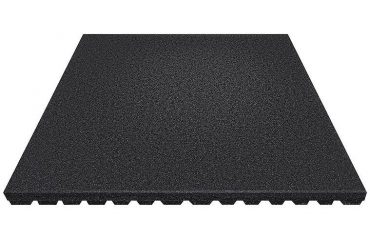
| Flooring | 40 mm rubber tiles under the strength zone, 20 mm elsewhere | 3 000 to 6 000 |
| Total | 42 500 to 68 000 euros |
Ranges exclude delivery, installation and building works. The total is the sum of the seven lines.
The outdoor extension, consistently underused
A barracks or fire station almost always has outdoor space. A street workout station, a parkour module or an obstacle course built to the outdoor standards multiplies peak-hour capacity, suits training in dress and under load, and costs less per station than an equivalent indoor item. On a saturated unit gym it is generally the most profitable addition available without building works.
Procurement routes and site access
Standardised ranges, treadmills, bikes, rowers and common stack machines, are efficiently bought through a central public purchasing body where one exists, since the framework contract is already in place and the legal position is secure. The catalogue will not cover every range or manufacturer, and terms are not automatically the best available. For bulky, technical or bespoke items, rigs configured to the room, platforms and zoned flooring, a direct tender with a specialist supplier produces better results. The two routes combine well.
Sites with security constraints impose clauses that must appear in the consultation rather than at delivery: clearance or nationality requirements for installation technicians, access and badging procedures, confidentiality of drawings, and intervention slots compatible with the operational tempo. A supplier discovering these on delivery day costs the project several weeks.
Frequently asked questions
Which use class should a unit gym specification demand?
Class S under EN ISO 20957-1, which covers professional and commercial use, as the baseline. Add class I on stations intended for inclusive use by personnel with specific needs. Class I is not a higher robustness tier than class S, and semi-professional is not a class of the standard. Specify durability separately through steel thickness, bearings, endurance testing, warranty and parts availability.
How do you prepare for the water component without a pool?
It cannot be prepared in a weights room, which is exactly why it belongs in the plan. Two levers: a formal access agreement with a municipal or neighbouring pool, treated as seriously as an equipment purchase, and land-based work on bracing, breath control and shoulder and hip mobility, which improves swimming efficiency without water time.
Which equipment minimises breakdowns?
Plate-loaded machines with articulated arms, thick-steel racks and rigs, none of which have fine cables or power electronics. Cables and pulleys account for most downtime in intensive collective use. On cardio, where electronics are unavoidable, the requirement is availability of wear parts, belts, rollers and boards, and simplicity of replacement by non-specialist staff.
How can a saturated unit gym take more users at peak?
Outdoors. A street workout station or obstacle course on the site absorbs group slots, suits training in dress and under load, and costs less per station than indoor equipment.
Specify your operational training facility
Light In Fitness has equipped professional facilities from Tours, France, since 2013, including military units, fire stations and security training establishments, and supplies the tender documents public buyers need. Quotations are issued within 24 working hours. Browse strength training machines and street workout rigs, or request a quote.
Réalisations documentées
- Cage street workout ultime, Carcassonne – armée française
- Cage street workout ultime, Tahiti – armée française, Polynésie
- Cage SP Max, centre EPIDE de Combrée – établissement public d’insertion
- Cage SP Max, lycée Saint-Bénigne de Dijon – établissement scolaire
Sources et références
- Code de la commande publique – texte intégral en vigueur (Légifrance)
- Direction des affaires juridiques, ministère de l’Économie – réglementation de la commande publique et fiches techniques
- NF EN ISO 20957-1 – équipement d’entraînement fixe, partie 1 : exigences générales de sécurité et méthodes d’essai (AFNOR)
- AFNOR Normalisation – dossier thématique sur les appareils d’entraînement fixes et leurs classes d’usage