How to Equip a 30 m2 Strength Training Space for Under 3,000 EUR
Avec moins de 3 000 € sur 30 m², l'équipement se limite à un sol adapté, un rack ou une barre de traction, une barre avec disques et un banc réglable. Cette base couvre les mouvements fondamentaux sans compromis de sécurité. Ajouter des postes supplémentaires à ce budget se ferait au détriment de la robustesse.
Yes, you can equip a functional 30 m2 strength training space for under 3,000 EUR excluding VAT — provided you spend roughly half the budget on one solid rack, bar and plates, protect the floor properly, and resist the temptation to fill the room with single-purpose machines. This guide sets out a realistic layout, a costed equipment list and the mistakes we see most often on small-space projects.
Who this budget suits — and who it does not
A 3,000 EUR envelope is realistic for a home gym, a small studio used by one client at a time, a staff training corner in an office or workshop, or a first personal-training cell inside a larger premises. It is not enough for a commercial gym floor open to paying members: equipment used unsupervised by the public should be certified Class S under EN ISO 20957-1:2024, and Class S racks, benches and bars alone typically absorb the whole budget. At this price point you are largely buying Class H (home use) or entry professional equipment, so match the intended use honestly before you order.
Step 1: plan the space before the equipment
On 30 m2, layout errors are more expensive than equipment errors because they cannot be refunded. Check three measurements first:
- Ceiling height: 2.5 m is the practical minimum. Overhead pressing and pull-ups need clearance above the bar; a rack with pull-up bar wants 2.4 m plus head room.
- Circulation: keep at least 1 m of free passage around loaded bars and moving parts. On 30 m2 that means one training zone, not three.
- Floor build-up: a lifting zone needs 15–20 mm rubber tiles minimum on a concrete slab; on an upper floor or timber structure, plan thicker tiles over the deadlift area and check the permissible load.
A proven split for 30 m2: a 12 m2 rack-and-barbell zone along one wall, a 10 m2 free zone for dumbbell and accessory work, and 8 m2 for circulation and storage.
Step 2: the costed equipment list
The figures below are indicative project estimates, excluding VAT, based on entry-level professional ranges. Exact prices depend on the models selected — ask us for a line-by-line quotation.
| Item | Indicative budget (EUR excl. VAT) | Why it earns its place |
|---|---|---|
| Compact squat rack with pull-up bar and spotter arms | 700–900 | The backbone of the room: squat, bench, press, pull-up on 1.5 m2 of footprint |
| 20 kg Olympic bar | 180–250 | One good bar outlasts three cheap ones; check knurling and spin |
| 100 kg rubber-coated plate set | 350–450 | Rubber coating protects the floor and keeps noise down |
| Adjustable bench (flat to incline) | 250–350 | Replaces flat and incline benches in one footprint |
| Adjustable dumbbell pair or starter fixed set | 150–300 | Covers accessory work without a full dumbbell rack |
| Rubber floor tiles, 15–20 mm, approx. 15 m2 | 400–550 | Protects slab and equipment; defines the training zone |
| Resistance bands, mat, skipping rope, collars | 100–150 | Warm-up, mobility and exercise variety |
| Wall-mounted storage (bar and plate holders) | 100–200 | Keeps the floor clear — decisive on 30 m2 |
Total: roughly 2,300–3,100 EUR excluding VAT. If you need to trim to stay under 3,000 EUR, cut the adjustable dumbbells first and add them in a second phase — never cut the flooring or the rack quality.
Step 3: spend where failure hurts
On a tight budget, the rule is simple: spend on the items that hold load over your body (rack, bar, bench) and on the floor; economise on accessories. A collapsing 40 EUR ab wheel is an annoyance; a collapsing bench is an injury and, in a professional setting, a liability claim.
The five mistakes we see most often
- No circulation space: equipment pushed together until the room is unusable with two people in it. Keep 1 m clear around the lifting zone.
- No storage plan: plates stacked on the floor consume the space you paid to free up. Wall storage costs little and returns square metres.
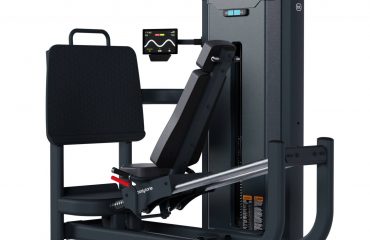
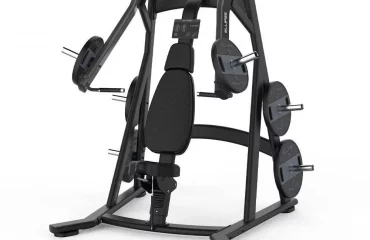
- Single-purpose machines: a leg extension machine on 30 m2 costs you 2 m2 for one exercise. A rack, bar and bench cover dozens.
- Skipping the floor: dropped dumbbells crack screed and resin floors. Budget the rubber tiles from day one; see our rubber gym flooring range for thickness options.
- Buying home-grade kit for commercial use: if members will train unsupervised, Class H equipment is the wrong purchase whatever the price. Check the EN ISO 20957-1:2024 class on the data sheet.
Maintenance: protecting a small investment
A 3,000 EUR fit-out lasts a decade if you treat it like a professional installation: check rack bolts and bench pivots monthly, wipe bars and lightly oil them against corrosion, and inspect cable or band accessories for fraying every quarter. A well-kept adjustable bench routinely serves 10 years; a neglected one can fail in two.
When the project grows
Most 30 m2 projects evolve. Phase two is usually a cardio unit and more dumbbells; phase three is a second rack or a cable station. If your floor area or budget is larger than this scenario, see our guide to gym equipment cost by floor area and our small gym budget tiers for the 10,000–50,000 EUR brackets.
Frequently asked questions
Is 30 m2 big enough for a squat rack and a bench?
Yes. A compact rack with a 2.8 m barbell zone in front of it fits comfortably along one wall of a 5 x 6 m room, leaving space for a bench zone and circulation. The limiting factor is usually ceiling height, not floor area.
Can I open a commercial gym with a 3,000 EUR equipment budget?
No. Equipment for unsupervised commercial use should be Class S under EN ISO 20957-1:2024, and a compliant commercial starter package for even a small floor starts at several times this figure. A 3,000 EUR budget suits home, office or supervised one-to-one settings.
What floor thickness do I need for deadlifts?
For barbell work with controlled lowering, 20 mm rubber tiles over concrete are the workable minimum. If bars will be dropped from lockout, move to 30–40 mm in the drop zone.
Should I buy adjustable or fixed dumbbells?
On 30 m2, adjustable pairs win on footprint and cost per kilogram. Fixed rubber dumbbells win on durability and speed of use; they make sense once you can afford a rack and the space for it.
What should I upgrade first when the budget allows?
Flooring coverage first if you compromised on it, then a heavier plate set, then a cardio unit. The rack and bar you bought correctly at the start should not need replacing.
Get a costed layout for your space
Light In Fitness has equipped more than 2,500 customers since 2013, from 30 m2 training corners to full commercial clubs. Send us your room dimensions and budget and we will return a layout plan and an itemised quotation, free of charge, within 24 working hours. Request your free quote.