How to Choose a Good 40 mm Puzzle Tatami: The Complete Guide
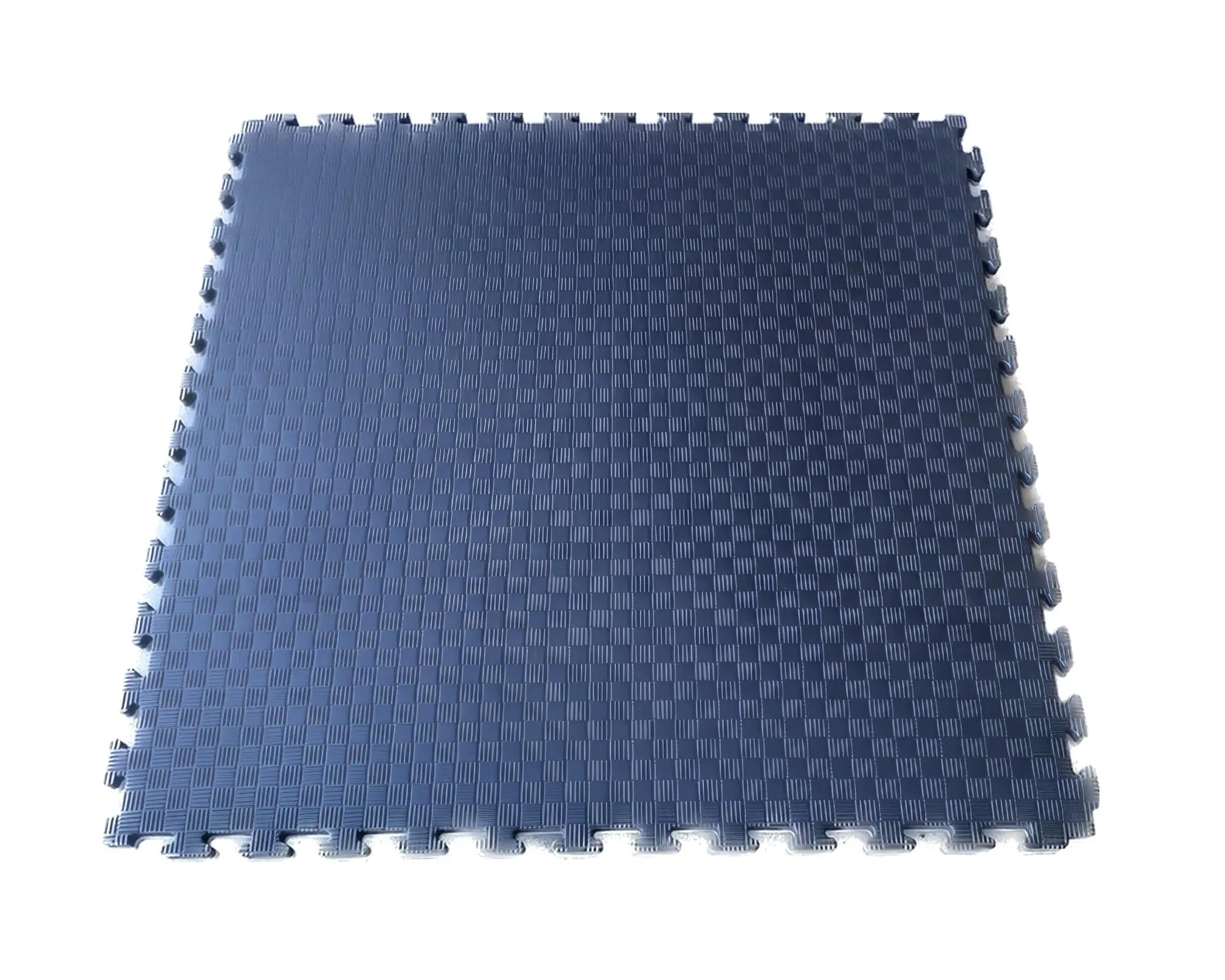
In short: a 40 mm puzzle tatami suits disciplines involving throws. Thickness alone is not enough: it is the density of the foam that determines the real level of shock absorption. A thick but low-density tile collapses under load and stops doing its job. Check the interlocking edges as well, since they are the first point of wear in intensive use.
Puzzle tatami is a popular solution for fitting out spaces dedicated to martial arts, fitness or any sport that needs a protective, comfortable floor. With interlocking pieces and straightforward installation, this type of surface is particularly common in sports halls and dojos. If you are considering a 40 mm puzzle tatami, knowing the selection criteria is what guarantees comfort, safety and durability. This guide sets them out.
Why choose a 40 mm puzzle tatami?
Thickness has to be matched to the discipline practised and the intended use. A 40 mm tatami offers several advantages, particularly in disciplines where falls and impacts are frequent, such as judo, taekwondo, jiu-jitsu and MMA. Three reasons make this thickness a common choice.
1. Effective impact absorption
The main advantage of a 40 mm tatami is its ability to absorb impact effectively. At this thickness impacts are cushioned, reducing the risk of injury during falls and throws. That makes it a sound choice for disciplines where throwing and ground techniques are routine.
2. Greater comfort
At 40 mm, the tatami is noticeably more comfortable for practitioners. Whether the session involves wrestling, grappling or ground movement, the tile provides the support that prevents the aches associated with repeated contact against a hard floor.
3. Versatility
A 40 mm puzzle tatami is thick enough to suit a wide range of activities. Beyond martial arts it works for gymnastics and general fitness sessions. Note that it is a sports mat, not an impact-attenuating playground surface: children’s play areas fall under EN 1177 and require a surfacing tested to that standard.
The criteria that matter
1. Foam density
Foam density is the key factor in achieving good shock absorption while keeping the surface firm enough to stand on. A tatami with a high-density foam, in the region of 90 kg per cubic metre, gives a workable balance between comfort and stability.
- The benefit of dense foam: the foot does not sink in too far, which keeps footing stable during fast movement, particularly in disciplines such as karate and taekwondo.
- The drawback of foam that is too soft: an overly soft tatami makes movement unstable, increases the risk of ankle injury and makes precise technique harder to execute.
2. Texture and grip
The surface finish matters as much as what is underneath it. It has to offer good grip while remaining non-slip, so that unintended slides are prevented.
- Textured or embossed surface: a textured tatami maintains traction during fast movement and changes of direction.
- Non-slip underside: check that the underside of the tile has a non-slip finish so that the assembled floor stays in place even under intensive training.
3. Ease of assembly and transport
One of the advantages of puzzle tatami is how easily it goes down and comes up again. It is made of interlocking pieces that assemble like a jigsaw, which allows the space to be reconfigured as needs change.
- Tile size: for fast, straightforward assembly, choose tiles in the standard 1 metre by 1 metre format, which covers a large area quickly.
- Modularity: the puzzle format lets you reshape training areas. Make sure the pieces interlock firmly, so that no movement or gapping appears during use.
4. Strength and durability
Tatami is subjected to intensive use, so choosing a product that is genuinely resistant and durable matters. The material has to withstand repeated impact without deforming or wearing out quickly.
- Quality materials: tatami made from EVA foam, ethylene-vinyl acetate, is known for its durability. The material is both flexible and resistant, providing good protection and a long service life.
- Tear resistance: a good tatami should also resist scuffing and tearing, so that it stays both functional and presentable over time, even after intensive sessions.
5. Standards
A quality tatami should meet recognised safety requirements, particularly in settings where user safety is a priority, such as sports schools and judo halls. The relevant reference is the EN 12503 series on sports mats, of which part 3 covers judo mats and their safety requirements.
Some tiles are additionally treated for slip resistance and fire performance. Where a reaction-to-fire class is required by the building, ask the supplier for the exact classification of the product concerned and check it against your own requirement, since fire classifications are product-specific and cannot be assumed from the material alone.
6. Value for money
The price of a 40 mm puzzle tatami varies with the brand, the quality of the materials and the specific characteristics of the product. To get the best value, compare offers while taking durability and performance into account rather than price alone.
Indicative price levels, per square metre:
- Entry level: between 15 and 25 EUR excluding VAT. These offer decent cushioning but may prove less durable under intensive use.
- Mid range: between 25 and 40 EUR excluding VAT. These combine resistance and comfort and suit regular use.
- Upper range: from 40 EUR excluding VAT upwards. Designed to withstand repeated impact and deliver a long service life, suited to professional installations.
For reference, the 40 mm dojo puzzle tatami tile in our range is listed at 36.00 EUR excluding VAT, placing it in the mid-range band described above.
Choosing the right format for your facility
Puzzle tiles are not the only option. Where a hall is shared between disciplines and the surface has to be laid and lifted around a timetable, roll-out mats are often the better answer, since a large area can be deployed and stored by a small team. Where the surface stays down permanently, puzzle tiles usually win on cost and on the ability to replace a single damaged tile.
The full tatami range covers both approaches and several thicknesses, so the choice can be made on discipline and operating pattern rather than on what happens to be in stock.
Frequently asked questions
Is 40 mm always the right thickness?
It suits disciplines involving throws and ground work. Striking disciplines with less falling often work well on a thinner tile, and the decision should follow the discipline rather than a general rule.
Does thickness alone determine safety?
No. Foam density determines the real level of shock absorption. A thick, low-density tile compresses fully on impact and provides less protection than a thinner, denser one.
Which standard applies to judo mats?
The EN 12503 series covers sports mats, with part 3 addressing judo mats and their safety requirements. Ask your supplier which parts of the series the product has been tested against.
Can puzzle tatami be used as playground surfacing?
No. Impact-attenuating surfacing for children’s play areas is governed by EN 1177, which uses a different test method and a different performance requirement. A sports mat is not a substitute.
Choosing your tatami
The choice of a 40 mm puzzle tatami comes down to foam density, grip, ease of assembly, durability and, of course, price. If you are looking for a durable, high-performing surface for a dojo, a fitness room or a martial arts space, investing in a quality tatami that combines comfort, safety and durability is what pays back over the life of the floor.
Light In Fitness supplies tatami and sports flooring to dojos, clubs, schools and professional training facilities. Send us the dimensions of the area and the disciplines practised, and we will come back with a specification and a costed proposal. Request a quote to get started.
Réalisations documentées
- Dalles et sols sportifs : livraisons documentees – plusieurs chantiers
- Sol sportif exterieur, square Georges-Vallerey – Taverny (95)
À lire aussi sur le même thème
- Obtenir un appareil de musculation outdoor : Un guide complet avec Light In Fitness
- Quel est le mieux entre tous les régimes pour maigrir ? Guide complet pour faire le bon choix
- La Presse Oblique Professionnelle : L’Équipement Essentiel pour un Entraînement Complet
- Machines de Sport pour Professionnels : L’Équipement Essentiel pour des Performances Haut de Gamme